Hamster Heat Stress: Safe Cage Setup and Emergency Signs
Evidence ExplainerA hamster cannot move away from a hot room, sunny window, or overheated enclosure on its own. The reliable prevention plan is simple: measure the room where the habitat sits, keep it out of direct sun and heat sources, provide clean water, and make a cooler refuge available without creating a cold shock or a draft.
Merck identifies high environmental temperature and humidity as stressors for hamsters and notes that sudden environmental temperature changes can contribute to illness. A room thermometer is more useful than guessing from the weather app, because glass tanks, upper shelves, and window-facing walls can be much warmer than the rest of the home.
Move the habitat before the hottest part of the day
Place the habitat in an interior, shaded room rather than next to a window, radiator, kitchen appliance, laundry machine, or electronics cabinet. Check the sun path in the afternoon: a cage that is shaded at breakfast can receive direct sun later. Do not rely on a closed blind as the only protection if the room itself is hot.
Keep a thermometer probe at bedding height, away from the water source and from a direct fan stream. If the room is becoming uncomfortably warm for people, relocate the hamster to the coolest safe room before it becomes a crisis. Air conditioning is more dependable than opening a window during a heat wave, which may bring in hot air, noise, and predators.
Give the hamster a choice of microclimates
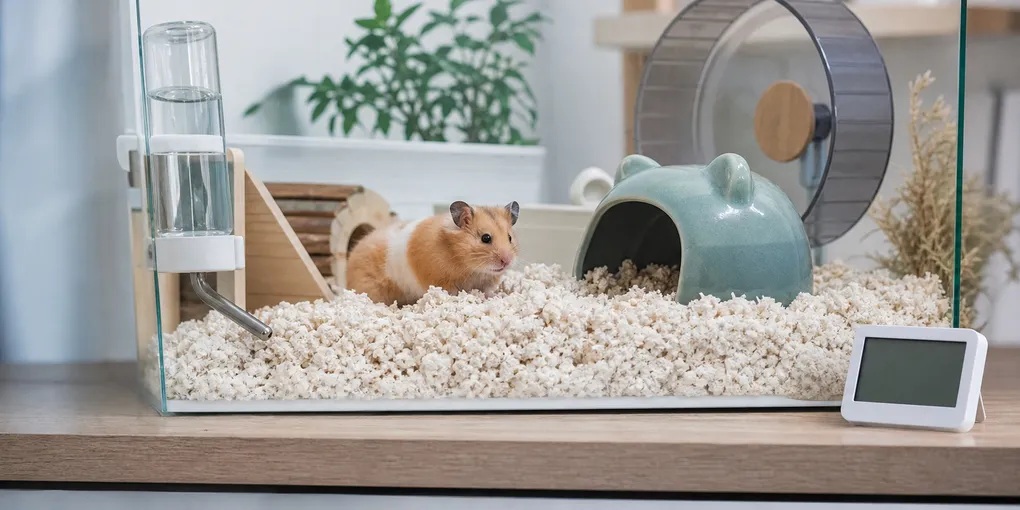
Maintain deep, dry bedding for burrowing, a normal hide, and a water source that is checked daily. A ceramic tile or ceramic hide that has been kept at room temperature can offer a cooler surface; place it so the hamster can move on or off freely. Do not use a frozen tile, wet bedding, exposed ice, or a chemical cold pack inside the enclosure.
A fan should circulate room air rather than blow directly onto the hamster. Direct airflow can disturb bedding, dry the animal, and create a draft without actually lowering the room temperature. Never place the habitat outside, in a garage, or in a parked vehicle to “get air.” Those locations can change temperature rapidly.
Treat humidity, sun exposure, and enclosure material as part of the same heat-stress problem. A glass-sided habitat near a sunny wall can hold heat even after the room feels tolerable, while a deep plastic bin can have a warmer still-air corner. Check the temperature where the hamster actually sleeps rather than near the door or ceiling. If moving the habitat, keep the familiar hide and a small amount of dry nesting material so the hamster has a recognizable refuge. The goal is a cooler stable room, not a dramatic temperature drop.
Know the signs that need a veterinarian now
Call an exotic-animal veterinarian urgently for weakness, collapse, poor responsiveness, breathing difficulty, a hunched or unusual posture, loss of appetite, or a hamster that cannot move normally. Hamsters are small and can worsen quickly. Scoop a sick hamster into a small secure ventilated carrier rather than chasing or tightly gripping it.
While you call, move the carrier to a cooler quiet room and follow the clinic’s directions. Do not force water, syringe-feed, bathe the hamster, or give human medicine. A weak animal can aspirate, and sudden cold exposure can add stress. Bring the normal food, a photo of the enclosure, and the room-temperature history if possible.
Check the system, not just the hamster
During hot weather, inspect the habitat morning, midafternoon, and evening. Confirm that the water bottle works by touching the ball valve, then look for leaks that could soak bedding. Replace wet bedding promptly. Check that the hide is not blocking airflow, the wheel turns normally, and no food is spoiling in a warm corner.
If power loss is possible, identify a cooled room or safe temporary carrier before the forecast demands it. Keep the carrier out of sun, give familiar dry bedding and food, and minimize handling. The emergency plan should not involve a sealed container, a car, or a freezer pack.
Make the decision point explicit for everyone in the home: if the room thermometer rises and cannot be brought down promptly, move the hamster rather than waiting for visible illness. One person should be responsible for checking the water bottle and the other for checking sun exposure when the home is empty. A written plan prevents a well-meaning person from adding ice, moving the habitat outdoors, or using a direct fan without understanding the risk.
Avoid a full cage clean during a heat event unless a leak or contamination makes it necessary. Keeping the familiar hide and dry nesting material reduces handling and allows the hamster to choose cover. If bedding is wet, replace only the affected section with dry material, then recheck the bottle and room temperature.
After the room has cooled, continue checking it through the next warm period instead of assuming the problem has passed. Confirm the bottle still works, the bedding remains dry, and the hamster is moving, eating, and using its usual resting area. A return to normal activity does not rule out illness after a collapse, breathing change, or poor responsiveness; those signs still warrant veterinary advice. This follow-through also helps identify the source of the heat, whether it was direct sun, a failed air conditioner, or a location that traps warm air.
Sources
- Merck Veterinary Manual, Hamsters
- Merck Veterinary Manual, Disorders and Diseases of Hamsters
Frequently Asked Questions
- Avoid loose or leaking cold packs and do not force the hamster against a frozen surface. Cool the room and offer a safe cool area the hamster can leave voluntarily.
- A fan may move room air but does not replace an air-conditioned or otherwise safely cooled room. Avoid a direct draft on the hamster or bedding.
- Treat unusual weakness, collapse, breathing changes, or poor responsiveness as urgent. Move the habitat out of the heat and contact an exotic-animal veterinarian immediately.