How We Score This Protocol
| Criterion | Weight | Score | Weighted | Why it matters here |
|---|---|---|---|---|
| Research | 30% | 8.5 | 2.55 | Veterinary nutrition guidance consistently supports gradual transitions, appetite monitoring, and caution with cats that stop eating. |
| Evidence Quality | 25% | 8.0 | 2.00 | The protocol is based on clinical consensus, feline digestive physiology, and well-established risks of food refusal rather than one product claim. |
| Value | 20% | 9.0 | 1.80 | A careful transition prevents wasted food, stress, and avoidable vet calls, especially for cats with sensitive stomachs. |
| User Signals | 15% | 8.5 | 1.28 | Owners report better success when texture, temperature, bowl location, and small ratio changes are managed deliberately. |
| Transparency | 10% | 9.0 | 0.90 | This guide explains when to pause, when to revert, and when a diet change should be veterinarian-led. |
| Composite Score | 8.5/10 | A high-value household protocol because cats are both digestive-sensitive and behaviorally resistant to abrupt food changes. |
The Short Answer
Switch a healthy cat’s food gradually over 14 days unless your veterinarian gives a different plan. Start with mostly old food and a small amount of new food. Increase the new food only when appetite, stool, vomiting, and behavior remain normal. If the cat refuses, vomits repeatedly, develops diarrhea, or eats much less, slow down or call your veterinarian. The most important rule is that cats should not be allowed to go without food in order to “wait them out.”
Cats are not small dogs. Many cats are cautious about smell, texture, temperature, and routine. A food that looks superior on paper can fail if the transition ignores those details. The goal is not just digestive tolerance; it is acceptance. You want the cat to keep eating enough calories every day while the gut and preferences adapt.
Useful transition supplies are simple: the old food, the new food, clean bowls, a way to measure portions consistently, and notes on appetite, stool, vomiting, water intake, and behavior. Use supplements only if your veterinarian agrees, especially for kittens, seniors, cats with kidney disease, pancreatitis history, inflammatory bowel disease, diabetes, or prescription diets.
Before You Start: Confirm the Reason for Switching
A routine flavor change is different from a medical diet change. If you are switching because of vomiting, diarrhea, itchy skin, weight loss, urinary signs, kidney disease, diabetes, constipation, or suspected food allergy, involve your veterinarian before experimenting. Diet changes can hide symptoms, delay diagnosis, or interfere with a food trial.
If the switch is for life stage, cost, availability, or preference, you can usually proceed at home with careful monitoring. Choose the new food before the old bag or case is empty. Running out forces a sudden change and removes your ability to slow down.
Check that the new food is complete and balanced for your cat’s life stage. Kittens, pregnant cats, seniors with disease, and cats on therapeutic diets have different needs. Marketing words like natural, premium, or human-grade do not replace an AAFCO nutritional adequacy statement or veterinary guidance.
Day 0: Record current food and symptoms
For one or two days before changing anything, record what normal looks like. Note how much the cat eats, stool quality, vomiting frequency, water intake, litter box habits, and energy. If you have a multi-cat home, feed separately long enough to know which cat eats what. Without a baseline, you may blame the new food for a problem that was already present.
Weigh portions if possible. A small digital kitchen scale is more accurate than scoops, especially for calorie-dense dry food. Write down calories per can or cup. Switching foods without checking calories can accidentally overfeed or underfeed.
The 14-Day Transition Schedule
Use this as a starting schedule for a healthy adult cat:
| Days | Old Food | New Food |
|---|---|---|
| 1-3 | 90% | 10% |
| 4-6 | 75% | 25% |
| 7-9 | 50% | 50% |
| 10-12 | 25% | 75% |
| 13-14 | 0-10% | 90-100% |
Move to the next step only if the cat is eating normally and stools are acceptable. If stool softens, vomiting appears, or appetite drops, return to the previous tolerated ratio for several days. There is no prize for finishing in exactly two weeks. Sensitive cats may need tiny changes over a month.
How to Mix Wet Food
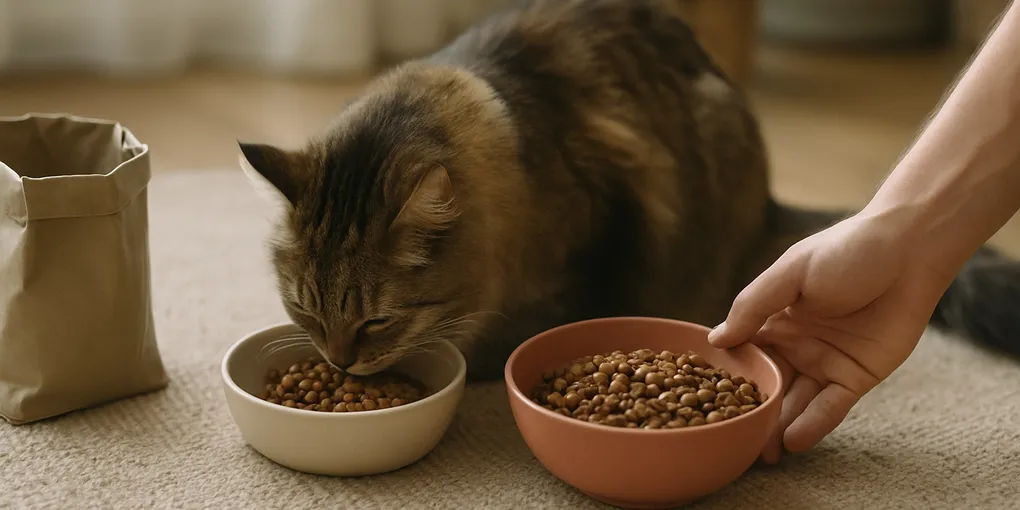
Wet food transitions are often about texture and temperature. If the old food is pate and the new food is shreds, a simple ratio may not be enough because the cat can pick around the new texture. Mash thoroughly or choose a closer texture for the first transition. Slightly warming refrigerated wet food can improve aroma, but it should be warm, not hot.
Do not leave wet food out for long periods in an attempt to force acceptance. Offer a measured meal, give the cat a calm window to eat, then refrigerate or discard according to food safety guidance. Wash bowls daily. Cats are sensitive to odor, and a stale bowl can look like food refusal when the real problem is hygiene.
How to Mix Dry Food
Dry food transitions look easier, but cats can still sort kibble by shape or smell. Mix thoroughly in the bowl, not the storage container, so you can adjust daily. If the new kibble has a very different size, consider using puzzle feeders only after acceptance is established. During transition, simple feeding helps you see whether the cat is eating enough.
Store both foods in airtight containers or the original bag inside a sealed bin. Fat oxidation changes smell and can reduce acceptance. Do not combine a fresh new food with an old stale bag and then assume the cat dislikes the formula.
What If the Cat Refuses the New Food?
Go back to the last ratio the cat ate well. Make the next change smaller: 95/5 instead of 90/10, or even a dusting of new food aroma near the old food. For wet food, try matching temperature, adding a teaspoon of warm water, or using the same bowl in the same location. For dry food, try a small amount as treats before mixing into meals.
Do not use hunger as leverage. Cats that eat too little are at risk for hepatic lipidosis, a serious liver condition, especially if overweight. If your cat eats nothing for 24 hours, eats dramatically less, or seems lethargic, call your veterinarian. Kittens and medically fragile cats need help sooner.
What If Stool Gets Soft?
Mild stool softening can happen during diet change. Pause at the current ratio or return to the previous ratio until stool normalizes. Make sure treats, table scraps, and flavored medications are not changing at the same time. Multiple changes make it impossible to identify the cause.
Call your veterinarian if diarrhea is watery, bloody, persistent, accompanied by vomiting or lethargy, or occurs in a kitten, senior, or cat with chronic disease. Do not start random over-the-counter medications. Some products safe for humans or dogs are unsafe for cats.
What If the Cat Vomits?
One isolated hairball-like event may not be meaningful. Repeated vomiting, vomiting after every meal, or vomiting with appetite loss is different. Stop increasing the new food and call your veterinarian if vomiting persists. Bring the food names, lot numbers, transition schedule, and a description of timing.
Vomiting immediately after eating may reflect speed, texture, hairballs, gastritis, or another issue. Vomiting hours later may suggest a different digestive pattern. Your notes help the veterinarian decide whether this is diet intolerance, disease, or coincidence.
Special Case: Prescription Diets
Prescription diets should follow veterinary instructions. Some cases require a faster switch because the old diet is worsening disease; others require a very slow transition because acceptance is critical. If the prescription diet is for urinary crystals, kidney disease, diabetes, food allergy, gastrointestinal disease, or weight loss, do not mix in toppers without asking. Toppers can alter minerals, calories, allergens, or carbohydrate balance.
If the cat refuses a prescription diet, call the clinic rather than abandoning the plan. There may be another texture, brand, flavor, or transition strategy that keeps the medical goal intact.
Multi-Cat Homes
Feed separately during the transition. Otherwise, one cat may eat the new food while another eats the old food, and you will not know who developed soft stool or who skipped dinner. Separate rooms, microchip feeders, or timed meals can help. Keep notes by cat, not by household.
Do not switch every cat just because one cat needs a change. Therapeutic diets can be inappropriate for healthy cats, kittens, or cats with different conditions. Ask your veterinarian before making a shared household diet the default.
Product Selection Tips
Choose a food that solves the actual problem. For hairballs, fiber and grooming matter. For urinary issues, mineral balance and moisture matter. For weight, calories and satiety matter. For picky eating, texture and aroma may matter more than exotic proteins. Avoid rotating through many formulas rapidly; that can create a cat that expects novelty while the gut never gets time to settle.
If you are comparing foods online, use current product pages to verify formula, life stage, calories, and package size. Reviews can reveal palatability patterns, but they cannot tell you whether the food fits your cat’s medical needs.
The Maintenance Phase
Once the cat is fully transitioned, keep feeding consistent for at least two weeks before judging the final result. Monitor weight, stool, coat, energy, and litter box habits. If the change was meant to solve a symptom, decide in advance what improvement would count and when to revisit the veterinarian.
Keep a small amount of the old food until the transition is stable, but do not keep opened food past freshness. Label containers with opening dates. If a future bag smells different or the cat suddenly refuses, check lot numbers and contact the manufacturer or veterinarian if illness occurs.
Common Transition Mistakes
The first mistake is changing too many variables at once. A new food, new bowl, new feeding location, new probiotic, and new treat make troubleshooting impossible. Change the food first while keeping the rest of the routine stable. Once the cat is eating reliably, you can improve bowls or feeding enrichment separately.
The second mistake is buying a large case before the cat accepts the formula. Start with the smallest practical package, especially for wet food textures. Cats may accept one flavor from a line and reject another with the same label claims. If the first choice fails, a smaller purchase reduces waste and frustration.
The third mistake is rewarding refusal with an endless buffet. Offering five new foods in one evening can teach the cat that waiting produces novelty, and it can also upset the stomach. Instead, return to the last accepted ratio, make a small planned adjustment, and keep notes. Calm consistency is usually more successful than panic sampling.
Finally, do not ignore water intake. If the switch moves from wet to dry food, discuss hydration with your veterinarian and consider adding wet meals or water if appropriate. Diet form changes moisture intake as well as flavor. If hydration is part of the reason for switching, compare this plan with our guide to cat water fountains for hydration.
FAQ
How long should it take to switch cat food?
Many healthy cats do well with a 7- to 14-day transition, but sensitive cats may need three to six weeks. Prescription diets and medical cases should follow the veterinarian’s plan.
What if my cat refuses the new food?
Do not force a sudden change or let a cat go without food. Go back to the last accepted ratio, warm wet food slightly, improve texture match, and call your veterinarian if appetite drops.
Can cats switch food cold turkey?
Sometimes, but it increases the risk of refusal and digestive upset. Sudden changes are safest only when directed by a veterinarian for a medical reason.
When is vomiting or diarrhea serious during a food change?
Repeated vomiting, blood, lethargy, dehydration, complete food refusal, or diarrhea lasting more than a day in a kitten, senior, or ill cat warrants veterinary advice.
Bottom Line
A safe cat food switch is slow, measured, and reversible. Start with a baseline, change ratios gradually, protect daily calorie intake, and respond quickly to refusal, vomiting, or diarrhea. The best transition is boring: the cat keeps eating, the litter box stays normal, and the new food becomes routine without a battle.
Sources
- American Association of Feline Practitioners guidance on feline feeding behavior and environmental needs.
- Cornell Feline Health Center resources on feline nutrition, appetite, and hepatic lipidosis risk.
- Tufts Clinical Nutrition Service articles on pet food transitions and interpreting pet food labels.
- Merck Veterinary Manual overviews of feline gastrointestinal signs and when veterinary evaluation is needed.