Leopard Gecko Retained Shed: When Toes or Eyes Need a Reptile Vet
ProtocolQuick picks
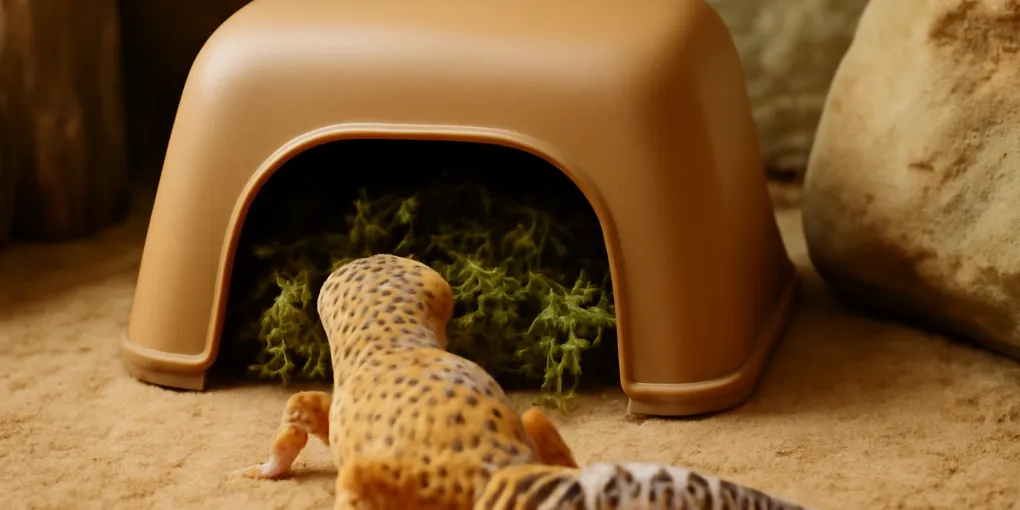
Leopard gecko humid hide cave
★ Top pick Best enclosure support- Note: A humid hide supports normal shedding but cannot safely remove retained skin from toes or eyes.
Reptile sphagnum moss for humid hide
Best removable moisture medium- Note: Keep it damp rather than dripping and replace it when soiled; use paper towel if loose material is a concern.
Retained shed is skin that remains after a leopard gecko should have shed cleanly. Skin stuck around a toe, tail tip, or eye is not a cosmetic detail: it can constrict tissue or conceal a problem. A reptile veterinarian should guide removal and assess repeated shedding trouble.
Quick picks for normal-shed support
- See price on Amazon for a leopard gecko humid hide cave: choose a stable, opaque hide that lets the gecko enter and turn without scraping.
- See price on Amazon for reptile sphagnum moss for humid hides: use only damp, clean, replaceable substrate. It should never pool water or become a dirty swamp.
What deserves prompt veterinary help
Contact a reptile veterinarian promptly when skin is tight around a toe or tail tip, covers an eye, appears swollen or discolored, or is accompanied by weakness, appetite loss, weight loss, discharge, or repeated bad sheds. Do not wait through another shed cycle if circulation or an eye may be involved.
Never peel, cut, tweeze, or scrub skin off. Do not use oil, adhesive remover, or a human skin product. Those actions can tear living tissue or introduce a chemical where a gecko will lick it. The Association of Reptile and Amphibian Veterinarians maintains a directory for reptile-experienced care.
Check the enclosure without creating a swamp
A humid hide is an optional, localized retreat with damp substrate. It does not replace a correct warm-to-cool gradient, fresh water, clean housing, appropriate nutrition, or veterinary care. Place it away from direct heat so it does not dry immediately or overheat. Lift the lid to inspect it rather than poking through the entrance.
Squeeze moss until it is moist but not dripping. Replace it after feces, urates, uneaten insects, mold, or a sour smell. Plain damp paper towel can be easier to monitor temporarily when a gecko mouths loose substrate. The useful target is a clean choice the gecko can enter, not a constantly wet enclosure.
Check the whole setup in a sensible order
Start with the things that are easy to verify without handling the gecko: the heat source is controlled, the warm and cool areas are available, water is clean, and the humid hide is not directly under a lamp. Then review the last several days: food acceptance, stool, weight trend if your veterinarian has asked you to track it, and whether any enclosure product or diet changed before the bad shed.
Do not keep changing every variable in one afternoon. A new substrate, new lighting schedule, new supplement, and a soaking routine at the same time make it hard for a clinician to assess what happened. If a veterinarian recommends a correction, write down the exact change and date. That record is more useful than trying several internet tips in sequence.
Reduce handling during a difficult shed
Watching a gecko closely does not require repeatedly lifting it. Observe its movement, whether all toes contact the surface normally, its use of hides, and whether the eye looks open and comfortable. A gecko that is rubbing intensely, holding an eye shut, bleeding, or avoiding normal movement should be seen rather than handled repeatedly for photos.
Keep other pets and curious children away from the enclosure while you arrange care. A quiet, stable environment protects the gecko from an additional stressor. Bring the product list, setup temperatures, and photographs to the appointment if asked.
Prevention is maintenance, not a one-time purchase
Humid-hide substrate needs inspection and replacement. Thermostatic heat control needs independent checks. A hide that was suitable for a young gecko may no longer provide room to enter and turn comfortably as the animal grows. Regular cleaning makes these details visible before a shed goes wrong.
Avoid treating a humid hide as a cure-all. It cannot correct injury, infection, malnutrition, or another health concern. The same caution applies to social-media “shed hacks”: a method that looks gentle on a video may be unsafe around an eye or a constricted toe.
If the gecko has a history of difficult sheds, ask the veterinarian for a written home-monitoring plan rather than relying on a fixed humidity number found online.
Our leopard gecko humid-hide cleaning protocol covers the sanitation routine. This page has a different job: knowing when stuck skin has become a veterinary problem.
Take a useful photo, then stop handling
If you need veterinary advice, take a clear photo in normal light without restraining the gecko for repeated attempts. Include the affected toe, tail tip, or eye, and note the last normal shed, appetite, stool changes, enclosure temperatures, and recent changes in heat, substrate, or diet. Keep the animal in its usual secure environment while arranging care.
Leopard gecko retained shed FAQ
Can a warm bath remove stuck shed?
Do not use a bath as a substitute for a reptile-veterinary assessment, especially for skin around eyes, toes, or the tail. Improper water temperature, handling, or aspiration risk can add stress and does not identify why shedding failed.
Why does retained shed keep happening?
Repeated incomplete sheds can relate to husbandry, nutrition, dehydration, injury, infection, or other illness. A veterinarian can assess the gecko and the specific setup rather than assuming humidity is the only cause.
Sources
- Association of Reptile and Amphibian Veterinarians: https://arav.org/
- RSPCA, Leopard gecko care: https://www.rspca.org.uk/adviceandwelfare/pets/other/leopardgecko
- Merck Veterinary Manual, Management of reptiles: https://www.merckvetmanual.com/exotic-and-laboratory-animals/reptiles/management-of-reptiles
Frequently Asked Questions
- No. Pulling can injure delicate skin and toes. Shed constricting toes, the tail tip, or an eye requires reptile-veterinary advice promptly.
- No. It is a husbandry support, not treatment. Repeated or severe retained shed can reflect an enclosure or health problem that needs examination.