Outward Hound Fun Feeder Review: Helpful Slow Bowl or Frustrating Maze?
We may earn a commission if you buy through our links.
Quick picks
| Product | Key Specs |
|---|---|
| See price on Amazon |
|
| See price on Amazon |
|
| See price on Amazon |
|
Medical Disclaimer
Fast eating, regurgitation, vomiting, choking, coughing, weight loss, food guarding, dental pain, and bloat risk deserve veterinary attention. This review covers a feeding tool, not a diagnosis. Bloat (gastric dilatation-volvulus, GDV) is an emergency: if your dog has unproductive retching (trying to vomit with nothing coming up), drooling, restlessness, standing and stretching, a swollen or tight belly, panting, weakness, or collapse, go to an emergency veterinarian immediately (ACVS; Merck Veterinary Manual).
PSR Review Score
| Criterion | Weight | Score | Weighted | Why it matters for a slow feeder review |
|---|---|---|---|---|
| Research | 30% | 7.5 | 2.25 | Slow feeding is plausible for meal-speed control, but health outcomes depend on the dog and problem. |
| Evidence Quality | 25% | 7.0 | 1.75 | The product is assessed through design logic, owner fit, and veterinary caution rather than direct clinical proof. |
| Value | 20% | 8.5 | 1.70 | The bowl is inexpensive and can be useful when matched to the right dog. |
| User Signals | 15% | 8.5 | 1.28 | Fit depends on muzzle shape and frustration tolerance, which a timed first meal reveals. |
| Transparency | 10% | 9.0 | 0.90 | The review names specific dogs that should avoid or modify the product. |
| Composite Score | 7.9/10 | Useful budget tool for selected kibble gulpers, not a universal medical fix. |
Verdict
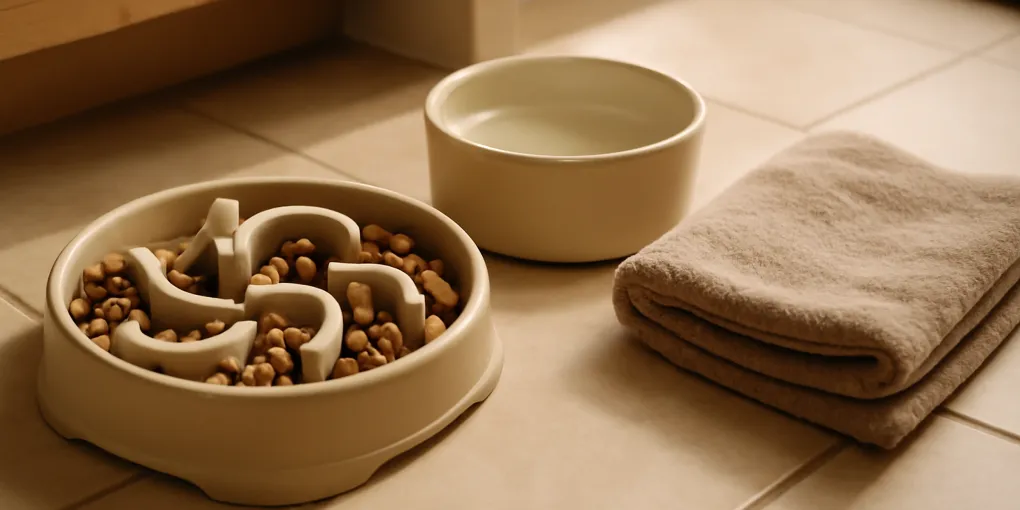
The Outward Hound Fun Feeder Slo Bowl is worth considering if your dog eats dry kibble too quickly and handles puzzle-like feeding without frustration. Its maze ridges make the dog work around the bowl instead of inhaling a pile of food. For the price, that is useful.
It is not the right first pick for every dog. Flat-faced breeds, dogs with dental pain, anxious eaters, resource guarders, plastic chewers, and senior dogs with neck or mobility discomfort may do better with a shallower slow feeder, a stainless insert, smaller hand-fed portions, or a supervised snuffle mat.
We may earn a commission if you buy through our links.
You can search Amazon for the Outward Hound Fun Feeder Slo Bowl, compare it with a Search Amazon for stainless steel slow feeder inserts, or choose a Search Amazon for washable dog snuffle mats if your dog benefits more from sniffing than maze licking.
What the Fun Feeder Does Well
The main benefit is simple: it spreads kibble across channels so a dog cannot take one giant mouthful. That can lengthen meals and reduce the frantic gulping pattern many owners notice with standard bowls.
The product is inexpensive, widely available, and offered in several patterns and sizes. The plastic is lightweight, which is convenient for washing and moving. The maze design also adds a little mental work at mealtime, especially for dogs that enjoy nose and tongue problem-solving.
For dogs that eat too quickly but are otherwise healthy, a maze bowl can be a practical part of the plan. If you need a broader slow-feeding protocol, see our dog slow feeder bowl protocol.
Where It Can Go Wrong
The same ridges that slow eating can frustrate the wrong dog. Some dogs paw the bowl across the room, chew the raised plastic, bark at it, or give up before eating enough. A dog with a wide or flat muzzle may struggle to reach food in narrow channels. A dog with dental pain may show sudden avoidance because eating from the maze hurts.
The bowl also does not diagnose why a dog gulps. Hunger, food competition, anxiety, underfeeding, medication effects, gastrointestinal disease, and prior food insecurity can all change eating behavior. A bowl can slow mechanics, but it cannot tell you why the behavior started.
Cleaning is another real tradeoff. Dry kibble crumbs collect in corners. Wet food smears into channels. If your household will not wash it promptly, a simpler bowl or insert may be safer.
Best Fit
The Fun Feeder is strongest for:
- Medium-muzzle dogs that eat dry kibble too quickly.
- Dogs that enjoy puzzle feeders and do not chew plastic.
- Owners who can supervise the first several meals.
- Households that wash bowls often.
- Dogs that need a low-cost trial before buying pricier feeding systems.
Start with a partial meal. Time the meal in a standard bowl, then compare with the Fun Feeder. A useful slow-down is enough to change the gulping pattern without making the dog frantic.
Who Should Skip It
Skip or use professional guidance first if your dog:
- Has repeated vomiting, regurgitation, coughing, or choking.
- Has suspected dental pain or oral injury.
- Guards food from people or other pets.
- Chews plastic bowls.
- Has a very flat face or cannot reach channels comfortably.
- Is at high risk for gastric dilatation-volvulus and needs a veterinarian-directed feeding plan.
For these dogs, the safer first step may be a veterinary exam, smaller meals, food separation, a different bowl shape, or a behavior plan.
Cleaning and Durability
For dry kibble, the bowl is reasonably easy to wash if you rinse it soon after use. For wet food, canned diets, or rehydrated kibble, the channels become a cleaning commitment. Use a brush that reaches corners and inspect for scratches if your dog paws or mouths the plastic.
Plastic bowls can develop wear. If the surface becomes gouged, rough, or chewed, replace it. Deep scratches can hold residue and are harder to sanitize.
If dishwasher use matters to you, verify the current listing and packaging because product versions can change. Even dishwasher-safe bowls may need pre-rinsing around maze corners.
How to Test It Safely
Use a simple first-week plan:
- Offer half a meal in the Fun Feeder while you watch.
- Keep water available nearby.
- Remove the bowl if the dog chews, paws hard, guards, or panics.
- Wash the bowl after use.
- Compare meal time, stress, stool, vomiting, and satisfaction over several days.
- If the dog improves, continue. If stress increases, switch tools.
A good result is not just a longer meal. It is a calmer meal with no new guarding, chewing, vomiting, or avoidance.
Alternatives Worth Considering
A stainless steel slow feeder insert can be better for dogs that chew plastic or for owners who prefer metal contact surfaces. Check that the insert cannot be lifted out and that it does not create sharp edges or unstable sliding.
A snuffle mat can be better for dogs that need scent work and relaxed foraging. It is not ideal for wet food, unsupervised chewers, or multi-dog feeding areas. Our snuffle mat routine guide covers setup without overfeeding.
For some dogs, the best solution is not a product. Dividing meals into smaller portions, feeding in a separate room, or using training rewards throughout the day may reduce urgency without creating a bowl battle.
FAQ
Is the Outward Hound Fun Feeder good for every fast-eating dog?
No. It can help many kibble gulpers, but flat-faced dogs, anxious dogs, determined chewers, and dogs with dental pain may need a different feeding setup.
Can a slow feeder bowl prevent bloat?
No bowl has been shown to prevent bloat. Eating rapidly was associated with higher GDV risk in observational studies (Glickman et al., 1997, JAAHA, PMID 9138229; Glickman et al., 2000, JAVMA, PMID 11128539), so slowing a gulper is reasonable. Deep-chested or high-risk dogs need a veterinary feeding plan; the 2000 study also linked raised feeding bowls with higher risk in large and giant breeds, so use the Fun Feeder at floor level. Unproductive retching, a swollen belly, drooling, restlessness, weakness or collapse means going to an emergency vet immediately.
Is the Fun Feeder easy to clean?
It is manageable for dry kibble if washed promptly, but the maze ridges trap wet food and crumbs. Cleaning difficulty should be part of the buying decision.
When should I stop using a maze bowl?
Stop if the dog paws hard, chews plastic, guards the bowl, vomits, skips meals, rubs the muzzle, or seems more stressed than slowed.
Sources
- American College of Veterinary Surgeons: Gastric dilatation-volvulus
- Merck Veterinary Manual: Gastric dilation and volvulus in small animals
- Glickman LT et al. Multiple risk factors for the gastric dilatation-volvulus syndrome in dogs. J Am Anim Hosp Assoc. 1997. PMID 9138229
- Glickman LT et al. Non-dietary risk factors for gastric dilatation-volvulus in large and giant breed dogs. J Am Vet Med Assoc. 2000. PMID 11128539
- American Kennel Club: Bloat in dogs
- VCA Animal Hospitals: Bloat, gastric dilatation and volvulus in dogs
- WSAVA Global Nutrition Committee: Nutrition toolkit