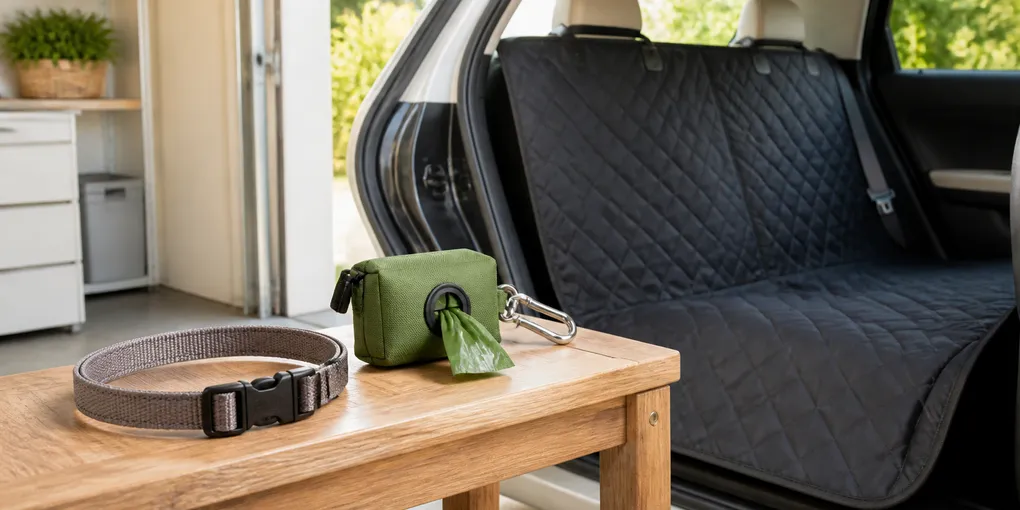
Pet Collar, Harness, and Car-Cover Formats Compared
Evidence ExplainerWhen the dog-walk drawer, the cat-collar box, and the back seat all use the word “attachment,” it is easy to treat unlike gear as if it answered the same question. Start with the listed job: a collar has a neck adjustment and buckle, a harness has its own maker-specified body measurements, a bag dispenser has a carrying attachment and refill closure, and a rear-seat cover has vehicle-facing coverage and attachment points.
The locked product-evidence batch contains one collar, two bag dispensers, and one rear-seat cover. It has no harness listing. For harness measurements, use the maker’s guide and keep that record separate from collar and cover dimensions.
Put each format in its own column
The comparison asks which question each product page is equipped to answer.
| Format | Copy from the named listing | Match it to | Keep separate from |
|---|---|---|---|
| Collar | Adjustment range, width, buckle type, and personalization details | The maker’s neck-measurement instructions | A harness’s chest, girth, or body-fit instructions |
| Harness | Maker’s stated measurement points and adjustment locations | The model’s harness size chart | A collar range or a general breed label |
| Bag dispenser | Loop, clip, or carabiner; closure; refill-roll wording | The strap or bag location where it will be carried | A collar or harness attachment point |
| Rear-seat cover | Listed width, bench or hammock configuration, and headrest attachment points | The rear-bench and headrest layout in the vehicle | A restraint or protection claim |
That separation keeps one compact shopping note from turning into a pile of unrelated numbers. When a listed field is absent, leave a blank cell. A photo of a similar product cannot replace the named model’s instructions.
Read collar sizing as neck sizing
GoTags lists its personalized embroidered breakaway collar with an 8-to-12-inch adjustment range and a 3/8-inch width. Those are collar details: record the stated range, the closure type, and any personalization wording with the named collar.
A harness begins from a different set of measurements. Julius-K9’s harness-measurement article distinguishes chest and neck measurements from a collar’s neck range. Keep the collar range in the collar column, then use the harness size chart and its named body-measurement point.
The distinction matters even when both products use adjustable webbing. “Adjustable” names a feature; sizing remains model-specific.
Treat a walk-kit dispenser as a carrying format
The two current dispenser listings illustrate why attachment wording belongs in its own column. Earth Rated documents a silicone loop, a click-and-lock closure, and a capsule-style refill sequence. Pogi’s documents a metal carabiner, a screw-top cap, and standard-roll compatibility. Those details stay in the dispenser column, apart from collar fit, harness fit, and vehicle coverage.
Before opening a listing, note the place where the dispenser will travel: a leash, harness strap, bag strap, or another named carry point. Then compare the listing’s attachment type and refill route with that location. The result is a clear record of the clip and its carrying position.
Current dispenser listings
- Check the current Earth Rated bag holder and leash dispenser on Amazon.
- Check the current Pogi’s bag dispenser with metal carabiner on Amazon.
Read rear-seat coverage as vehicle fit
4Knines separates several rear-seat-cover layouts in its fit guide. Its regular and XL bench-cover guidance lists widths of 54 and 60 inches, and its hammock descriptions use front and rear headrest attachment points. The maker distinguishes a bench configuration from a hammock configuration and asks buyers to check vehicle fit.
Make a vehicle note before you compare styles: rear-bench width, headrest positions, seat split, buckle access, and whether the cover’s stated configuration matches the way the seat is used. When a listing names a split-seat feature, match it to the actual split in the vehicle.
Current collar and rear-seat-cover listings
- Check the current GoTags personalized breakaway cat collar on Amazon.
- Check the current 4Knines rear-seat cover on Amazon.
Make a four-line listing note
Use four separate lines while comparing product pages:
- Collar: neck range, width, closure, and model-specific size instructions.
- Harness: the named model’s measurement points and size chart.
- Dispenser: carrying attachment, closure, and refill-roll wording.
- Seat cover: stated width, configuration, headrest attachment, and vehicle-fit details.
Those lines make it easier to spot a missing fact before checkout. They also keep a manufacturer description attached to the product category it actually describes.
Evidence boundary
This is a documentation-led format guide built from maker pages and a fresh availability record for the four named listings. It does not test fit, restraint, escape prevention, crash performance, or protection in a particular pet or vehicle. Product details, included parts, and vehicle compatibility can change, so confirm the current manufacturer and listing information before buying or using travel gear.
Frequently asked questions
Is a collar measurement the same as a harness measurement?
A collar listing usually gives a neck adjustment range, while a harness maker may ask for chest or girth measurements. Use the named product’s measuring instructions for each item.
What attachment detail should I check on a bag dispenser?
Read whether the listing names a loop, clip, or carabiner, then compare that attachment with the strap or location where you intend to carry it. Also check the closure and refill wording.
What should I measure for a rear-seat cover?
Start with the maker’s stated cover width and configuration, then compare them with the rear bench and headrest layout in the vehicle. A hammock attachment is a separate configuration from a fitted bench cover.
Does a rear-seat cover replace a travel restraint?
A seat cover’s coverage and attachment details are separate from a restraint or protection function. Follow the vehicle, product, and appropriate pet-care guidance for travel decisions.