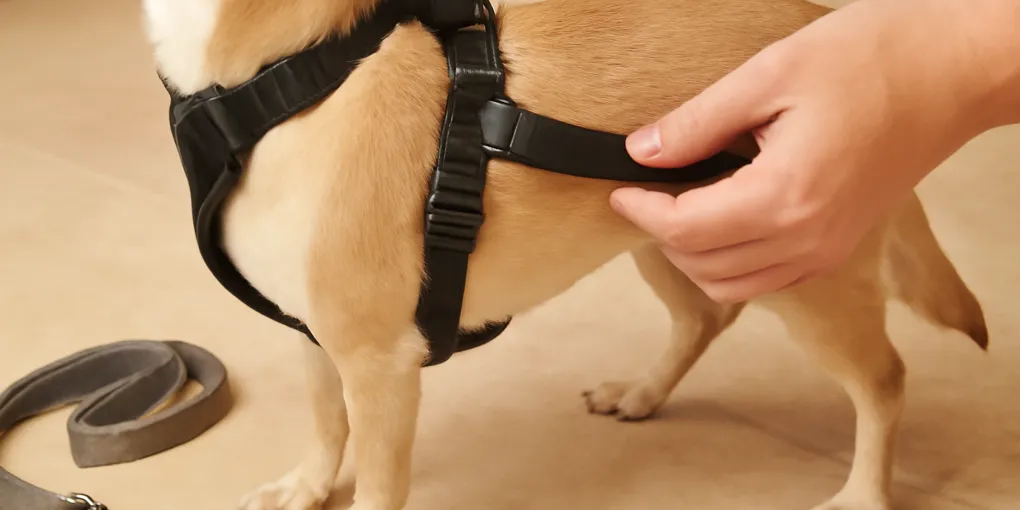
Best Escape-Proof Dog Harnesses for Small Dogs: Fit Checks That Matter
Buyer's GuideRuffwear Flagline Harness
Best three-strap security fitBest for: Narrow-chested dogs that reverse out of regular harnesses
$60-$80
Quick picks
| Product | Key Specs |
|---|---|
| See price on Amazon |
|
| See price on Amazon |
|
| See price on Amazon |
|
Product availability, certifications, and retailer details can change; check the current Amazon page before buying.
Small dogs do not escape harnesses in one dramatic way. Most slip-outs start with a loose neck opening, a chest strap that sits too far forward, or a dog that plants its feet and reverses while the leash stays tight. The best escape-resistant harness is the one that changes that geometry for your dog’s body: a third belly strap for deep security, a back-tightening small-dog design for short walks, or a heavily adjustable padded harness when comfort is the bigger problem.
If your dog has already backed out near traffic, treat this as a safety setup, not a style upgrade. Measure the neck base, deepest chest girth, and body length before buying. Then test indoors with gentle backward leash pressure before trusting the harness on a sidewalk.
Quick picks for small dogs that slip harnesses
- Ruffwear Flagline Harness - the strongest pick for narrow, flexible, or panic-prone small dogs because the rear belly strap sits behind the rib cage. Search Amazon for Ruffwear Flagline.
- Gooby Escape Free Easy Fit Harness - a lower-cost small-dog harness for toy breeds that pull backward during short leash walks. Search Amazon for Gooby Escape Free.
- Hurtta Weekend Warrior Harness - a padded everyday harness when rubbing and poor adjustment are the main issues, not extreme escape risk. Search Amazon for Hurtta Weekend Warrior.
The fit problem escape-proof marketing cannot solve
A small dog’s shoulders are often narrower than the chest, especially in Italian Greyhounds, Chihuahuas, terrier mixes, and young dogs that have not filled out. When the leash pulls forward and the dog backs up, a loose neck opening can slide toward the ears. Once one elbow clears the chest strap, the harness is gone.
That is why the product type matters. A simple step-in harness can be comfortable but easy to reverse out of. A vest harness spreads pressure but can still have a wide neck opening. A three-strap harness adds a rear anchor point behind the rib cage, which is the most useful design change for repeat escape artists.
Center for Pet Safety publishes crash-test information for vehicle harnesses, and those tests are not the same as walking escape resistance. Still, its harness work is a useful reminder that hardware, stitching, and fit are safety details, not decoration (Center for Pet Safety harness results). For everyday walking, the practical test is whether the harness stays behind the shoulders during backward pressure without compressing the throat.
How we evaluated these picks
We weighted five owner-visible factors: whether the design resists backward slip, whether sizing covers dogs under 20 pounds, whether the straps can be adjusted independently, whether the chest panel avoids throat pressure, and whether the leash attachment sits where the dog can walk naturally. We did not give extra credit for generic claims like “escape proof” unless the harness shape explained how it helps.
The most important inspection points are:
- Rear strap location. On a true escape-resistant harness, the rear strap should sit behind the deepest part of the ribs, not directly in the armpit.
- Neck opening size. The opening should not slide over the point of the shoulder when the dog backs up.
- Hardware scale. Tiny dogs need light buckles; heavy hardware can make a safe harness rotate.
- Adjustment symmetry. Uneven strap lengths can pull the harness sideways and create an escape path.
Which dogs need a third strap most?
A third strap is most useful for dogs with a narrow front end and a deeper rib cage. Sighthound mixes, toy breeds with sloped shoulders, and newly adopted dogs that freeze on leash are common examples. It is also useful for dogs that escape during transitions: apartment doors, parking lots, vet-clinic entrances, and trailheads.
A third strap is less important when the problem is simple pulling. If your dog pulls forward but never reverses, a front-clip harness or training plan may be a better first purchase. Escape-resistant design matters most when the dog can move backward faster than the handler can release leash tension.
Leash handling matters as much as hardware
Even the best harness is easier to escape when the leash stays tight in a straight line from the dog’s chest to your hand. If your dog stops, step toward the dog and soften the leash instead of pulling forward. Turn sideways, use a cheerful cue, and reward movement toward you. The goal is to remove the backward pressure that helps peel the harness over the shoulders.
For the first week, walk in low-distraction areas and avoid retractable leashes. A fixed six-foot leash gives you better control of tension and makes it easier to notice when the harness starts shifting. If your dog startles at trucks, bikes, or other dogs, use a backup connector from harness to collar until the fit has proven reliable.
Measuring checklist for online orders
Do not rely on breed weight alone. Measure the neck base where the harness will sit, the deepest chest girth behind the front legs, and the distance from shoulder to rib cage if the product uses a rear belly strap. Compare those numbers with the brand’s size chart, then choose the size where your dog sits near the middle of the adjustment range.
After delivery, check fit with the dog standing, not sitting. Sitting changes the chest angle and can make a loose harness look tighter than it is. If the harness rotates more than an inch sideways during a gentle leash test, adjust again or try a different shape.
Best overall: Ruffwear Flagline Harness
The Flagline is the first harness to consider if your dog has slipped more than once. Its third strap changes the escape path because the dog has to pull the harness past the rib cage instead of only past the shoulders. That matters most for narrow, deep-chested, or flexible dogs.
It is also more harness than every small dog needs. The longer body panel can look bulky on toy breeds, and the price is high if your dog only needs better leash manners. Buy it when the escape risk is real: apartment elevator doors, busy streets, trailheads, or a new rescue dog that freezes and reverses.
Fit note: measure carefully and do not size up for growth. A too-large three-strap harness can still shift forward and rub behind the elbows.
Best budget option: Gooby Escape Free Easy Fit Harness
Gooby’s Escape Free line is built around small-dog proportions. The main advantage is that the harness tightens slightly when backward leash tension is applied, which can help prevent the wide-neck slip that defeats many soft step-in harnesses.
This is a good pick for a five- to fifteen-pound dog that walks on sidewalks, not for hard pulling, hiking, or panic bolting. It has less body coverage than the Flagline, so it should be paired with calm leash handling and a backup clip during the first week.
Best padded everyday option: Hurtta Weekend Warrior Harness
Hurtta’s Weekend Warrior is not the most escape-resistant design here, but it solves a different problem: small dogs that hate thin straps, rub in the armpits, or need a padded chest panel. Four-point adjustment makes it easier to tune the fit than many vest harnesses.
Choose it for a dog that has wiggled out of a poorly fitted harness once or twice, not for a dog that has a reliable backing-out routine. If your dog can reverse out of almost anything, the third strap of the Flagline is the safer first test.
Setup protocol before the first walk
- Put the harness on indoors and clip the leash to the back ring.
- Check two-finger clearance under each strap.
- Apply gentle backward leash pressure while your dog stands on a rug.
- Watch the neck opening and shoulder points, not just the buckle.
- Add a short backup connector from harness to flat collar for the first outdoor week.
- Recheck fit after ten minutes because fur compression can loosen the straps.
For car travel, do not assume a walking harness is a crash-tested restraint. Use a properly rated carrier or vehicle restraint and follow travel safety guidance for pets (ASPCA general dog care). If your dog panics in tight spaces before walks, the same gradual setup logic in our adult dog crate-training guide applies to harness handling.
FAQ
Why does the rear belly strap matter on an escape harness?
A correctly fitted rear belly strap sits behind the rib cage, so the harness cannot slide over the shoulders as easily when the dog reverses. It still has to fit snugly; if the rear strap hangs loose, the extra strap becomes decoration rather than safety.
Should I use a martingale collar instead?
A martingale collar can reduce collar slip for some dogs, but it does not distribute pressure across the chest and should not be used as the only tool for dogs that lunge, cough, or panic. Many owners use a harness as the primary leash point and a flat collar as backup identification.
Can puppies wear escape-resistant harnesses?
Yes, but puppies change size quickly. Check strap fit weekly and avoid buying a large harness for future growth. A loose harness is the main escape risk.
Bottom line
For repeat small-dog slip-outs, start with the Ruffwear Flagline because the third strap addresses the actual escape path. For toy-breed neighborhood walks, Gooby Escape Free Easy Fit is the budget pick. If rubbing and comfort are the main problem, Hurtta Weekend Warrior is the better everyday harness.