Puppy Teething Toy Safety Protocol: What to Buy and What to Skip
ProtocolQuick picks
KONG Puppy Rubber Toy
★ Top pick Best starter fillable chew- Softer puppy rubber
- Can be stuffed and chilled
- Easy to wash
- Needs correct size
- Not for unattended chewing
Nylabone Puppy Chew Starter Kit
Best supervised texture variety- Multiple textures
- Puppy-specific options
- Easy to rotate
- Retire when rough or small
- Not all pieces suit every puppy
Puppy teething is a chewing-management problem, not a reason to give the hardest chew in the aisle. Baby teeth, sore gums, and poor judgment make puppies different from adult dogs. The safer setup is a small rotation of soft-to-medium chews, chilled fillable toys, and supervised texture changes that keep the puppy chewing without inviting cracked teeth or swallowed chunks.
The goal is not to stop chewing. The goal is to aim chewing at objects that are sized correctly, washable, and easy to retire before they become dangerous.
Quick picks: the starter teething kit
For most puppies, start with three categories:
- Soft fillable rubber toy: A puppy-specific KONG-style toy that can hold soaked kibble or a thin smear of canned puppy food. Search Amazon for KONG Puppy toy.
- Puppy chew texture set: A puppy-labeled chew kit with softer textures than adult power-chewer products. Search Amazon for puppy chew starter kit.
- Washable fabric option: A damp, twisted washcloth chilled in the refrigerator or freezer for short supervised sessions.
Do not buy the biggest, hardest chew because the puppy is destructive. Harder is not automatically safer. A chew that can damage teeth or splinter into swallowed pieces is a worse trade than a toy you have to replace sooner. If the household needs a broader adult-dog rotation later, use the inspection rules in our safe dog chew rotation protocol rather than jumping straight to bones or antlers.
The thumbnail test
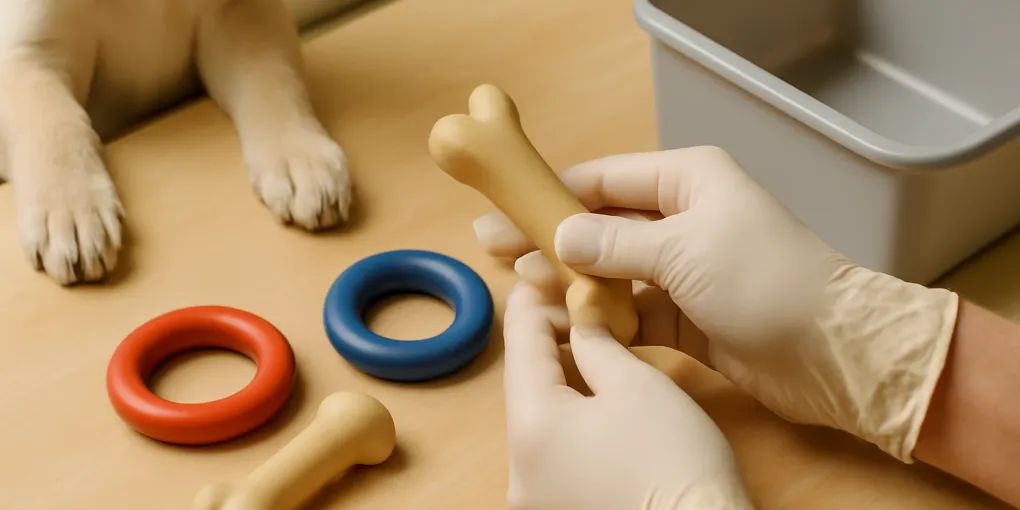
Use the thumbnail test before handing over a new teething object. Press your thumbnail into the chew with firm pressure. For a teething puppy, you generally want some give, especially during the months when baby teeth are loosening and adult teeth are coming in.
Avoid routine use of:
- antlers
- cooked bones
- hooves
- hard nylon adult chews
- rocks, sticks, or ice cubes
- toys small enough to fit fully behind the canine teeth
The FDA’s pet-food and treat handling guidance is also relevant for teething setups because stuffed toys and food chews can carry residue. Wash food-contact toys and your hands after handling treats or raw ingredients (FDA pet food and treat handling tips).
Protocol: the first two weeks
Day 1: Size the chewing zone
Pick one room or pen where the puppy can chew on approved toys only. Remove shoes, cords, children’s toys, socks, and anything with stuffing that resembles a household item you do not want chewed later. Put two approved chews in the zone and keep the rest out of reach.
Days 2-4: Add cold relief
Use a chilled fillable rubber toy once or twice per day. Keep the filling thin and simple: soaked kibble, a little canned puppy food, or plain water-soaked kibble packed loosely. The toy should soothe gums, not become a frozen brick.
Days 5-7: Rotate textures
Offer a softer rubber toy during active evening chewing and a different texture after meals. If the puppy gets frantic, switch to a food puzzle or training session rather than escalating to harder chews.
Week 2: Start retirement checks
Inspect every toy daily. Retire anything with missing pieces, sharp ridges, cracks, or a shape that has become small enough to swallow. Puppies can change chewing strength quickly as adult teeth erupt.
Product notes
KONG Puppy Rubber Toy is the best first fillable chew because the puppy version is softer than many adult rubber toys and can be chilled with food. Choose a size that cannot lodge in the back of the mouth. Wash it after food use and supervise enthusiastic chewers.
Nylabone Puppy Chew Starter Kit is useful when you want texture variety without guessing at adult chew hardness. The key is rotation and retirement. If a piece becomes ragged, sharp, or small, throw it away.
Washable cloth chews are cheap and useful, but only under supervision. A puppy that shreds and swallows fabric should not get cloth chews.
Red flags that mean stop and call your vet
- broken tooth or visible pulp
- bleeding that does not stop quickly
- swelling of the face or gums
- repeated gagging after chewing
- vomiting after a chew session
- a missing toy piece that may have been swallowed
- refusal to eat with one side of the mouth
Chewing should not make a puppy yelp, hide, or paw at the mouth. If a toy changes your puppy’s behavior, remove it.
How to prevent furniture chewing without unsafe chews
Puppies often chew furniture when they are tired, overstimulated, or left with too much freedom. Use management before stronger products: pen time, naps, leash supervision in the house, and predictable toy rotation. Praise the puppy for choosing an approved toy, then trade calmly when they pick up the wrong item.
ASPCA’s general dog-care guidance stresses routine veterinary care, safe environments, and training basics for young dogs (ASPCA dog care). For teething, that means the environment should make the right chew easy and the dangerous chew unavailable.
FAQ
How soft should a puppy teething toy feel?
Choose puppy chews that flex slightly or yield under firm thumbnail pressure. During teething, skip very hard objects such as bones, antlers, hooves, and adult nylon chews unless your veterinarian gives a specific reason.
What is the safer way to chill a puppy chew?
Chill soft fillable toys or damp cloth-style chews for short supervised sessions. Avoid loose ice cubes and rock-hard frozen blocks because they can encourage biting pressure your puppy is not ready to manage.
How long should a puppy chew at one time?
Ten to twenty supervised minutes is enough for many young puppies. End the session earlier if your puppy starts tearing off pieces, guarding the toy, or chewing with frantic intensity.
Bottom line
A safe teething setup uses softer puppy-specific chews, short chilled sessions, and daily inspection. Start with a KONG Puppy rubber toy, add a puppy chew starter kit for texture variety, and retire products early when edges or pieces change.