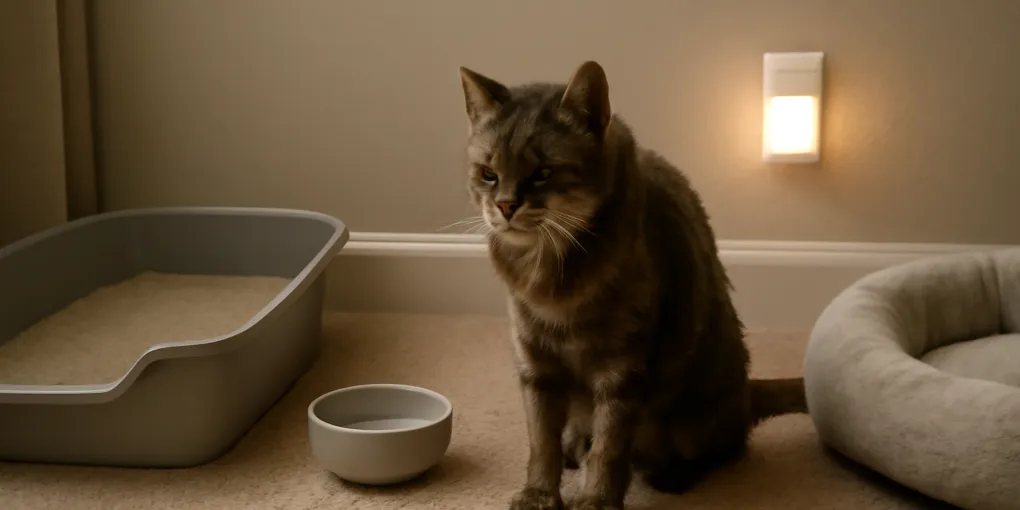
Quick picks
Low-entry senior cat litter box
★ Top pick Best first change- Note: Choose a box with one easy entry side and enough floor area for the cat to turn without balancing on the edge.
Shallow ceramic cat water bowl
Best hydration support- Note: Place water away from litter and food, and choose a stable bowl that does not slide under weak paws.
Motion night light for hallway and litter area
Best path marker- Note: Use low glare light to mark the route without turning the room into a bright, stressful space.
Direct answer
A senior cat night station is a quiet, same-floor setup that gives an older cat easy access to water, a low-entry litter box, a soft resting spot, and a safe path in low light. It is not a replacement for veterinary care. It is a practical way to remove friction when age, arthritis, vision change, kidney disease, or cognitive change makes the normal nighttime route harder. Use it alongside a broader senior cat care routine, not as a way to ignore new symptoms.
The American Association of Feline Practitioners senior care guideline page frames aging-cat care around regular exams, pain recognition, mobility support, nutrition, and monitoring changes (AAFP senior care guidelines). Cornell’s Feline Health Center also notes that older cats can experience arthritis, dental disease, kidney disease, sensory changes, and behavior shifts (Cornell loving care for older cats). The night station is built around those real changes.
What to set up first
Start with the barrier that causes the most trouble after dark. For many cats, that is the litter box. For others, it is the jump to a favorite bed, the long walk to water, or a dark hallway. Do not buy a whole room of equipment before watching the cat’s actual route for two evenings.
A basic setup can be simple: a Search Amazon for low-entry senior cat litter boxes, a Search Amazon for shallow ceramic cat water bowls, a washable mat, a soft bed on the floor, and a Search Amazon for motion night lights in the route. If the cat already uses a fountain well, keep it, but do not make the only water source a device that can clog, hum, or fail overnight.
Quick picks for a senior cat night station
| Buy/search | Best job overnight | Fit or safety check |
|---|---|---|
| Search Amazon for low-entry senior cat litter boxes | Reducing painful hops when the cat is stiff or sleepy | Choose one low entry with enough floor space to turn without balancing on the rim |
| Search Amazon for shallow ceramic cat water bowls | Providing a stable backup water source near the sleeping floor | Put it on a non-slip mat and away from litter dust |
| Search Amazon for motion night lights | Marking the hallway, box, or ramp route without bright room lights | Test for flicker, clicking, and glare before relying on it all night |
Step 1: choose the room by the cat’s path
Put the station where the cat already sleeps or passes through at night. A spare bedroom, quiet office corner, or low-traffic hallway can work. Avoid basements if the cat hesitates on stairs. Avoid laundry rooms if machines startle the cat. Avoid closets and tight corners where another pet can block the exit.
The station should be boring and predictable. Keep food, water, and litter separated enough that odor and splashing do not make the resources unpleasant. If space is limited, place water on one side of the room and litter on the other, with a clear path between them.
Step 2: make the litter box senior-friendly
A senior cat may stop using a box because the entry is too high, the box is too cramped, the route hurts, or another cat guards it. Choose a low-entry box with a wide floor and stable sides. If the cat urinates over low edges, use a box with one low entry and higher sides around the rest, not a tall box that requires a painful hop.
Keep litter depth comfortable and familiar. Sudden litter changes can cause avoidance. Scoop before bedtime when possible. If accidents appear suddenly, do not treat the box as the only problem. Increased urination, constipation, pain, arthritis, and urinary disease all need veterinary attention.
Step 3: add water without creating a spill hazard
Older cats may drink more because of kidney disease, diabetes, thyroid disease, diet, or medication. A night station should make water easy to reach, but it should not put a sliding bowl in the middle of the walking path. Use a stable bowl on a non-slip mat. Shallow, wide bowls can be easier for whisker-sensitive cats and easier to clean.
If your cat loves fountains, keep the fountain in the daytime area and add a plain bowl at night as backup. Clean water matters more than gadget features. If the bowl is empty every morning, or the litter box is much wetter, schedule a veterinary visit instead of simply buying a larger bowl.
Step 4: create a low-impact route
Watch for jumps. A senior cat may still reach the bed or sofa, but the landing can hurt. Add a low ramp, pet stairs, or a floor-level bed near the station. If the cat uses stairs, make sure the surface grips and the steps do not wobble. A beautiful ramp that slides on hardwood is a fall risk.
Use mats where paws need traction: in front of the box, near the water bowl, and at the base of ramps. Trim nails appropriately so claws do not catch in loops. Avoid thick rugs that bunch and become trip ridges.
Step 5: use light carefully
A tiny night light can help cats with vision changes find the box or water. Place it so the route is visible without shining directly into the resting spot. Motion lights are useful in hallways, but test them; some click, flicker, or flash too brightly for a nervous cat.
Do not solve nighttime vocalizing with bright lights alone. Calling, pacing, disorientation, and changed sleep patterns can occur with pain, thyroid disease, hypertension, sensory loss, or cognitive dysfunction. The station may reduce stress, but a sudden behavior change belongs on the vet list.
Step 6: separate pets and protect exits
Senior cats should not have to negotiate with a younger cat or dog at 2 a.m. Place the station where exits are visible and there is more than one route around furniture. If another pet steals food or guards the litter box, use a gate, door, microchip feeder, or different room arrangement.
Do not put the bed, food, and litter all in a dead-end corner. Older cats may avoid resources if they feel trapped. A low-sided bed with the opening facing the room is often better than a cave bed for a cat that has stiff hips or poor vision.
Vet-warning signs to track
Write down what changed and when. Important signs include increased thirst, larger urine clumps, accidents, constipation, weight loss, appetite change, bad breath, reluctance to jump, hiding, nighttime crying, stumbling, weakness, and confusion. Bring that list to the veterinarian.
The night station should make daily life easier while you investigate causes. It should not normalize pain or disease. If the cat suddenly needs a litter box next to the bed after years of normal mobility, that is information.
Senior cat night station FAQ
Should food be in the night station?
Only if it solves a specific problem, such as a prescribed feeding routine or a cat that needs small meals. Water and litter usually matter more overnight. If food attracts other pets, skip it or use a controlled feeder.
Can I use puppy pads instead of a litter box?
Pads can protect floors temporarily, but they should not replace a usable litter box unless your veterinarian recommends it for a specific medical or mobility reason.
What should I buy today?
Buy one low-entry litter box if entry height is the problem, one stable shallow water bowl if the cat walks far for water, and one low-glare night light if the route is dark. Add ramps or mats only where you see slipping or jumping strain.
Frequently Asked Questions
- Not every senior cat does, but it helps when stiffness, low vision, increased drinking, or nighttime confusion makes distant resources harder to use.
- Place it on the same floor where the cat sleeps, away from noisy appliances, blocked corners, and stairs the cat avoids.
- Sudden crying, accidents, increased thirst, weight loss, weakness, pain, or confusion should be discussed with a veterinarian.