Quick picks
| Product | Key Specs |
|---|---|
| See price on Amazon |
|
| See price on Amazon |
|
| See price on Amazon |
|
Product availability, certifications, and retailer details can change; check the current Amazon page before buying.
The Practical Goal
A senior dog night safety station is a small, predictable route from the sleeping spot to water, a door or potty backup, and a safe return path. It is not a new training program and it is not a substitute for a veterinary exam when accidents, thirst, pain, or confusion change quickly.
The station matters because older dogs often have several small problems at once: weaker traction on hard floors, dimmer vision, slower rising, more urgent bathroom needs, and less tolerance for being startled awake. The setup below borrows from the same logic as our senior dog traction setup and senior dog mobility checklist, but narrows it to the hours when people are asleep and small hazards are easy to miss.
Product Starting Points
- Search Amazon for hallway motion night lights if your dog crosses dark hard floors or a hallway before reaching water or a door.
- Search Amazon for washable senior dog pads if accidents are predictable but you do not want slippery disposable pads bunching under paws.
- Search Amazon for non-slip hallway runners when the route includes tile, laminate, polished wood, or a tight turn.
How to Judge the Setup
| Factor | Weight | Score | Weighted | Why it matters at night |
|---|---|---|---|---|
| Research | 30% | 8.0 | 2.40 | Geriatric-care guidance consistently emphasizes mobility support, pain recognition, hydration, and household safety. |
| Evidence Quality | 25% | 7.5 | 1.88 | Most station choices are risk-reduction measures rather than products with clinical trials. |
| Value | 20% | 8.5 | 1.70 | Lighting, washable pads, and one good runner are cheaper than buying random ramps or beds first. |
| User Signals | 15% | 8.5 | 1.28 | Owner complaints usually involve slipping, pacing, water trips, missed door signals, and hard-to-clean accidents. |
| Transparency | 10% | 9.0 | 0.90 | The protocol separates household support from diagnosing cognitive decline or urinary disease. |
| Composite Score | 8.16/10 | Strong first setup for older dogs with predictable nighttime friction. |
Step 1: Map the Night Route
Start at the exact place your dog sleeps. Walk the route your dog takes at 2 a.m. without turning on overhead lights. Note every hard-floor stretch, threshold, rug edge, stair, furniture corner, water bowl location, and door path.
Pick one route instead of leaving the whole house open. Close doors to slick rooms, block basement stairs if needed, and avoid moving furniture after your dog has learned the path. For dogs with reduced vision or hearing, consistency can matter more than buying another bed.
Step 2: Add Low-Glare Visibility
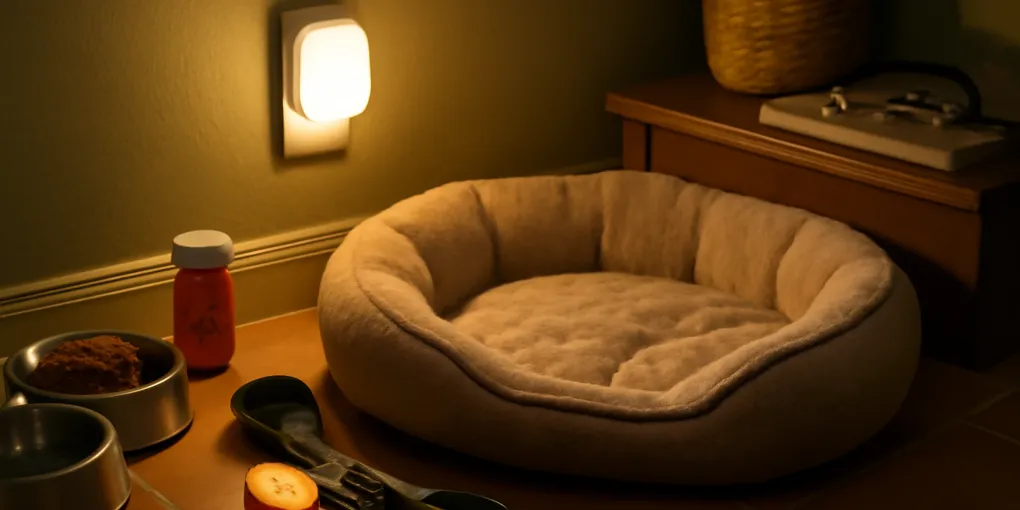
Use warm, low-glare night lights near turns, water, and doorways. Motion lights are useful when they do not startle the dog or create sharp shadows. Avoid bright lights pointed into the sleeping area; the goal is a visible path, not a room that feels daytime-bright.
Keep cords out of the walking lane. Battery lights can work for renters, but check batteries before travel or storm season. If your dog hesitates at shadows, test one light at a time rather than installing several new visual triggers in a single night.
Step 3: Build a Traction Lane
A traction lane should cover the first few steps after rising, the turn out of the room, and the path to water or the door. Low-profile runners are better than thick loose rugs that curl or slide. Tape edges only if the tape is secure and does not leave sticky residue where paws land.
If your dog already uses boots or toe grips, keep the night route simple anyway. Products that help on walks do not remove the need for stable indoor footing when a sleepy dog stands up too quickly.
Step 4: Place Water Where It Helps
Do not hide water across a slippery kitchen if your dog wakes thirsty. Use a stable bowl on a washable mat near the sleeping area or along the route. Keep it away from cords and litter boxes, and clean it often using the logic in our pet water dispenser cleaning protocol.
Call your veterinarian if thirst increases suddenly, your dog drains bowls overnight, urinates more, loses weight, pants at rest, vomits, or seems weak. Water access is humane; unexplained thirst is medical information.
Step 5: Add Accident Backup Without Creating a Slip Hazard
Washable pads work best as a landing zone, not a maze. Place one near the door, one near the bed if accidents happen on rising, or one beside the water station if drips are common. The underside should grip the floor. Thin disposable pads can slide unless they are held in a tray or on carpet.
Track accidents for two weeks: time, volume, stool or urine, medication timing, water intake, and whether your dog seemed aware. That log is more useful to a veterinarian than a vague report that the dog is “getting old.”
When to Call the Veterinarian
Schedule a visit promptly for sudden accidents, straining, blood in urine, increased thirst, weight loss, new nighttime pacing, repeated falls, yelping on rising, weakness, collapse, vomiting, diarrhea, or signs of pain. Cognitive dysfunction, arthritis pain, urinary tract disease, kidney disease, diabetes, medication effects, and anxiety can all show up at night.
Senior Dog Night Station FAQ
Should my senior dog sleep in my bedroom?
If your dog settles well there and the route is safer, yes. If stairs, slippery floors, or startled wakeups make the bedroom harder, a downstairs sleeping area with a clear route may be kinder.
Do night lights bother dogs?
Most dogs tolerate low, warm lighting. If your dog startles or stares at shadows, move the light lower, reduce brightness, or switch to a steady plug-in light instead of a motion trigger.
How many pee pads should I use?
Use the fewest pads that protect predictable spots. Too many pads can confuse the route, slide under paws, and hide whether accidents are clustered near a door, bed, or water station.
Sources
- AVMA, senior pet care and age-related health monitoring: https://www.avma.org/resources-tools/pet-owners/petcare/senior-pets
- VCA Animal Hospitals, helping senior dogs age gracefully: https://vcahospitals.com/know-your-pet/helping-our-senior-dogs-age-gracefully
- Cornell Richard P. Riney Canine Health Center, senior dog health owner resources: https://www.vet.cornell.edu/departments-centers-and-institutes/riney-canine-health-center
Frequently Asked Questions
- Restlessness can come from pain, urinary urgency, thirst, hearing or vision changes, cognitive changes, anxiety, medication timing, or household triggers. A safer station can reduce hazards, but new or worsening signs deserve a veterinary call.
- Most senior dogs should have access to water unless a veterinarian gives a specific medical restriction. Sudden increased thirst or accidents should be discussed with a veterinarian.
- Pee pads protect floors, but they do not explain why accidents are happening. Use them as backup while tracking timing, volume, medication changes, and other symptoms for your veterinarian.