Quick picks
| Product | Key Specs |
|---|---|
| See price on Amazon |
|
| See price on Amazon |
|
Product availability, certifications, and retailer details can change; check the current Amazon page before buying.
Medical Disclaimer
This checklist is educational and cannot diagnose a mobility problem. Slipping can come from slick floors, long nails, arthritis pain, muscle loss, neurologic disease, vestibular disease, paw injury, medication effects, or sudden illness. Call your veterinarian promptly for new or worsening weakness, collapse, toe dragging, severe pain, inability to rise, or loss of bladder or bowel control.
Direct answer
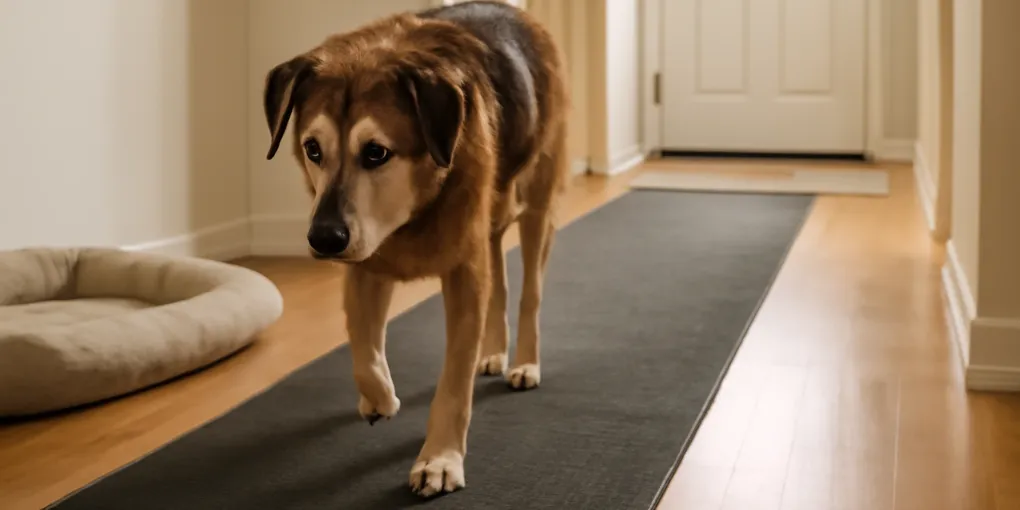
A good senior dog traction setup is a route, not a rug. The goal is to give the dog grippy footing from the place they stand up to the place they need to go: bed to door, couch to water bowl, hallway to yard, or car ramp to landing. If you are choosing products, use the buying guide to non-slip mats for senior dogs for mat types, then use this checklist to place them safely.
For a senior dog that slips on hardwood, start with three zones:
- A low-edge mat at the bed or favorite resting spot.
- A continuous runner across the slick travel route.
- A washable landing mat at the door, bowl station, or ramp base.
If you need a starting search, compare current low-edge options such as washable non-slip dog mats on Amazon and longer non-slip runner rugs on Amazon. Check dimensions, edge height, backing material, floor-finish warnings, and return terms before buying.
Do not wait for a fall to map the route. Watch one normal bathroom trip, one meal trip, and one bedtime trip. The risky spots are usually where the dog plants, pivots, or accelerates, not the center of the room.
Step 1: Map the slipping route
Walk behind your dog without calling or rushing them. Mark every place where a paw slides sideways, the dog widens stance, pauses before a surface, or turns in a tight circle. Common senior-dog traction failures include:
- Rear feet sliding when the dog stands up from a bed.
- Front feet slipping while leaning toward a bowl.
- A quick scramble at the first step inside a wet door.
- A hallway turn where one rear foot lands off the runner.
- A ramp base that ends on slick flooring.
- A stair landing where the dog has to pivot before the next step.
The mat should cover the movement, not just the destination. A small square under a bowl may still leave the rear feet on tile. A decorative runner may look long enough but fail if the dog turns with one paw on bare floor.
Step 2: Build continuous traction before buying extras
Continuous traction means the dog can walk the full path without stepping from grip to slick floor and back again. For many homes, that means one long runner or several low-profile pieces placed tightly together. Avoid thick borders, curled corners, loose washable mats that bunch, and rug pads that slide under the rug.
If you already own rugs your dog trusts, secure them first. A familiar surface can be better than a new texture, as long as the backing is stable and the edges lie flat. Check the product label and your floor warranty before using rubber, latex, or PVC-backed products on hardwood, luxury vinyl plank, heated floors, or freshly refinished surfaces.
Step 3: Fix the high-risk transitions
Bed exits need enough grippy area for all four feet. Put the mat where the dog lands after standing, not halfway under the bed. If the dog sleeps on furniture, reduce the jump with a ramp or steps and make sure the landing surface is grippy.
Food and water stations need room for the dog to stand squarely. If the bowl sits on a small mat but the rear paws are on tile, the dog may slide while leaning forward. A washable runner under the full stance is safer than a tiny decorative feeding mat.
Door landings need wet-paw traction. Choose a low-profile mat that will not catch dragging toes. If the dog comes inside fast, extend the grippy surface beyond the first plant point.
Ramps need traction at both ends. A grippy ramp is not enough if the dog steps from the ramp onto slick flooring. Pair the ramp with a landing mat and keep the angle low enough that the dog does not scramble.
Step 4: Check nails, paws, and pain signals
Floor traction works best when the dog can place paws normally. Long nails can change paw contact and make slipping worse. Overgrown hair between pads can reduce contact with the floor. Ask a veterinarian, groomer, or rehab professional for help if nail trims are painful or stressful.
Watch for signs that the slipping is not just a floor problem. Reluctance to rise, limping, yelping, toe dragging, stumbling on grippy surfaces, sudden back-leg weakness, or a new fear of stairs can point to pain or neurologic disease. VCA’s arthritis overview notes that canine arthritis care often combines weight management, exercise modification, pain control, and home adjustments, which is why a traction setup should support a veterinary plan rather than replace it (source: https://vcahospitals.com/know-your-pet/arthritis-in-dogs).
Step 5: Test the setup like a dog will use it
After placing the mats, test them the way your dog loads them. Push each corner sideways with your hand, then step on the runner in socks at the hallway turn, bowl stance, door landing, and ramp base. Open the door, slide the water bowl into its normal position, and check whether the mat shifts when your foot plants at an angle. If the runner exposes a slick strip at a turn, add another low-edge piece so the grippy surface extends at least one full stride past the pivot, and avoid raised borders that stand more than about 1/4 inch above the floor.
Watch the dog use the route without prompting. A dog that walks beside the runner may dislike the texture, edge height, odor, or location. Recheck after the first wash because washable mats can curl, shrink, or lose backing grip. If an edge lifts even slightly, remove or replace that piece before it becomes a toe-catching trip point.
Room-by-room traction checklist
| Area | What to check | Safer setup |
|---|---|---|
| Bed or crate exit | Rear feet slide when standing | Low-edge mat big enough for all four paws |
| Hallway | Dog slips while walking or turning | Continuous runner with flat edges |
| Food and water | Rear paws on tile while leaning | Full-stance washable mat |
| Door | Wet paws and quick pivot | Absorbent low-profile landing mat |
| Ramp or steps | Good ramp, slick floor at base | Traction on ramp plus landing mat |
| Stairs | Hesitation, rushing, or missed steps | Vet check, lighting, gates if needed, and grip only if safely installed |
When to call the veterinarian
Call your veterinarian if the traction setup does not match what you see. A dog that suddenly starts slipping on surfaces they handled last week may have pain, weakness, vestibular signs, paw injury, or another medical problem. The AVMA’s pet pain-management guidance notes that behavior, movement, and daily routine changes can be signs of pain, so do not dismiss mobility change as normal aging (source: https://www.avma.org/resources-tools/pet-owners/petcare/pain-management-pets).
Use products to remove home hazards. Use veterinary care to understand why the dog is slipping.
Senior dog traction FAQ
How much of the floor should I cover?
Cover the routes your dog uses every day, especially bed to door, bed to water, and the path to outdoor breaks. A few continuous routes usually help more than covering every open floor area.
Are yoga mats safe for senior dogs?
Yoga mats can work as temporary traction, but some slide, curl, tear, or absorb odors. Use them only if they stay flat, do not move under the dog, and are easy to clean.
Should I use traction stickers on paws?
Paw stickers or grips may help some dogs briefly, but they can fall off, irritate skin, or change gait. Ask your veterinarian if your dog has paw disease, neurologic deficits, or frequent slipping despite floor changes.
What should I read next?
For product selection, compare non-slip mats for senior dogs. If the issue is broader than flooring, the massage tools for senior dogs guide can help you separate gentle comfort work from situations that need a veterinarian first.
Frequently Asked Questions
- Cover the exact route where the dog slips with low-edge, non-slip runners or mats, starting with bed exits, door landings, food stations, and hallway turns. Do not rely on one small mat if the dog slips while walking between rooms.
- No. Traction reduces a home hazard, but sudden slipping, one-sided weakness, toe dragging, pain, collapse, or trouble rising deserves veterinary evaluation.
- Floor runners are usually easier to use all day. Socks or boots can help some dogs for short periods, but they must fit correctly and be supervised so they do not twist, rub, or change gait.
- Start with the route the dog actually uses. A continuous path from bed to door is more useful than scattered mats in decorative spots the dog must step around.