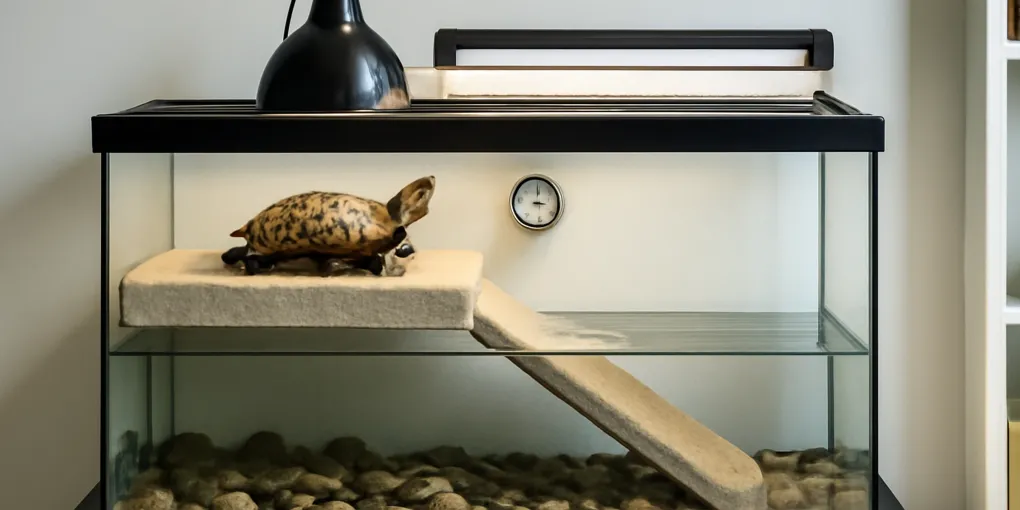
Turtle Basking Platform Setup: Heat, UVB, Ramp Grip, and Water Safety
ProtocolQuick picks
Large floating or above-tank turtle basking platform
★ Top pick Best dry zone- Note: Choose by shell size, weight rating, ramp grip, and whether the turtle can fully dry off.
Reptile UVB fluorescent fixture
Best lighting upgrade- Note: Use species-appropriate UVB at the distance listed by the lamp maker, not through ordinary glass.
Digital probe thermometer and infrared temp gun
Best measurement tool- Note: Measure both basking surface temperature and water temperature instead of guessing by hand.
Direct answer
A turtle basking platform is safe only if the turtle can climb onto it easily, rest fully out of the water, warm under a measured basking spot, receive appropriate UVB, and return to the water without tipping, trapping, or escaping. The platform is not just a decoration. For aquatic turtles, it is part of thermoregulation, shell health, and daily behavior.
VCA’s aquatic turtle feeding guidance discusses the importance of appropriate diet and calcium support for captive turtles (VCA aquatic turtle feeding). The AVMA also warns that reptile care depends on species-specific heat, light, diet, and veterinary planning (AVMA reptiles as pets). Use product listings only after you know the turtle’s size, species needs, and the distances your lamps require.
Quick picks for the basking setup
- Choose a Search Amazon for large turtle basking platforms when the dock supports the turtle’s current weight with room to grow.
- Add a Search Amazon for reptile UVB fixtures for turtles so the basking area receives usable UVB at the right distance.
- Use a Search Amazon for reptile thermometers and temp guns to check basking surface and water temperature separately.
Step 1: size the platform for the turtle, not the tank photo
A platform is too small if the turtle’s shell hangs over the edge, the ramp sinks under its weight, or the animal cannot turn around without sliding. Juvenile docks that look roomy in product photos may fail quickly for growing sliders, cooters, and map turtles. Check weight ratings and dimensions, then compare them with the turtle’s shell length.
The turtle should be able to leave the water completely. A dock that keeps the belly or rear shell wet is not a true basking area. If a floating platform tips as the turtle climbs, use a stronger dock, an above-tank platform, or a custom fixed platform designed with safe materials.
Step 2: make the ramp easy to climb
Ramp grip matters. Smooth plastic ramps can become slippery with algae and biofilm. Look for textured ramps, gentle slopes, and edges that do not scrape the plastron. The turtle should climb without frantic paddling or repeated falls. If the turtle avoids the ramp for several days, the problem may be slope, instability, temperature, or fear of an exposed location.
Do not create underwater pinch points. Suction cups, brackets, cords, and platform legs should not trap a head or limb. Inspect the setup from the turtle’s level, not only from above.
Step 3: measure basking heat
The basking area needs a heat gradient that fits the species. Do not guess by putting your hand under the bulb. Measure the platform surface where the turtle actually rests, and measure again after the lamp has warmed up. Too cool and the turtle may not bask effectively. Too hot and the animal can overheat or avoid the dock.
Keep the heat lamp secure. Clamp lamps should be backed up so they cannot fall into the water. Cords should drip-loop below outlets, and bulbs should be away from splashes. Replace damaged fixtures immediately.
Step 4: place UVB correctly
UVB is distance-dependent and blocked by ordinary glass and many plastics. Put the lamp over the basking zone according to the bulb and fixture instructions. Fine metal screen can reduce output, so use manufacturer guidance and replace bulbs on schedule even if visible light still works.
UVB does not replace heat, and heat does not replace UVB. Many setups need both a basking heat source and a UVB source aimed at the dry zone. If your turtle spends time under a bright heat bulb but receives no usable UVB, the lighting setup is incomplete.
Step 5: control escape and falls
A basking platform raises the turtle closer to the tank rim. That can create an escape route. Add a secure cover or above-tank enclosure walls high enough to prevent climbing out. Turtles are stronger and more determined than many owners expect.
Keep the area around the tank safe too. A turtle that falls from a tank can crack shell, dehydrate, or disappear under furniture. If cats, dogs, or children can access the enclosure, the basking area needs protection from outside interference as well as from escape.
Step 6: keep the dry zone clean
Basking platforms collect feces, shed skin, algae, and food residue. Remove and scrub removable docks with reptile-safe cleaning routines, rinse thoroughly, and inspect for cracks or rough edges. Do not use household disinfectant residue near the turtle. If the platform smells after cleaning or the surface flakes, replace it.
Water quality still matters. A good platform cannot compensate for poor filtration, overcrowding, or infrequent water changes. If shell odor, soft spots, swelling, or appetite changes appear, contact a reptile veterinarian.
Turtle basking FAQ
Why will my turtle not use the dock?
Common reasons include a slippery ramp, unstable platform, basking spot that is too cool or too hot, exposed location, or illness. Measure temperatures and watch whether the turtle can climb easily.
Is a floating cork bark platform enough?
Cork can work for some small turtles if it stays stable, dry, and clean. It is not enough if it sinks, molds, traps the turtle, or cannot hold the animal fully out of water.
Should food go on the basking platform?
Usually no. Many aquatic turtles eat in water, and food on the platform can foul the dry area. Use the feeding routine appropriate to the species and keep the basking zone mainly for drying and thermoregulation.
Internal next step
Before upgrading lights, review the bearded dragon UVB light setup protocol and the bearded dragon basking setup protocol for measurement habits that also apply to turtle fixtures.
Sources
- VCA Hospitals: Aquatic turtle feeding
- AVMA: Reptiles as pets
Frequently Asked Questions
- Yes. Aquatic turtles need a dry area where the shell and skin can leave the water, warm up, and dry safely.
- Ordinary glass and many plastics block useful UVB. Follow the lamp maker's distance and screen guidance.