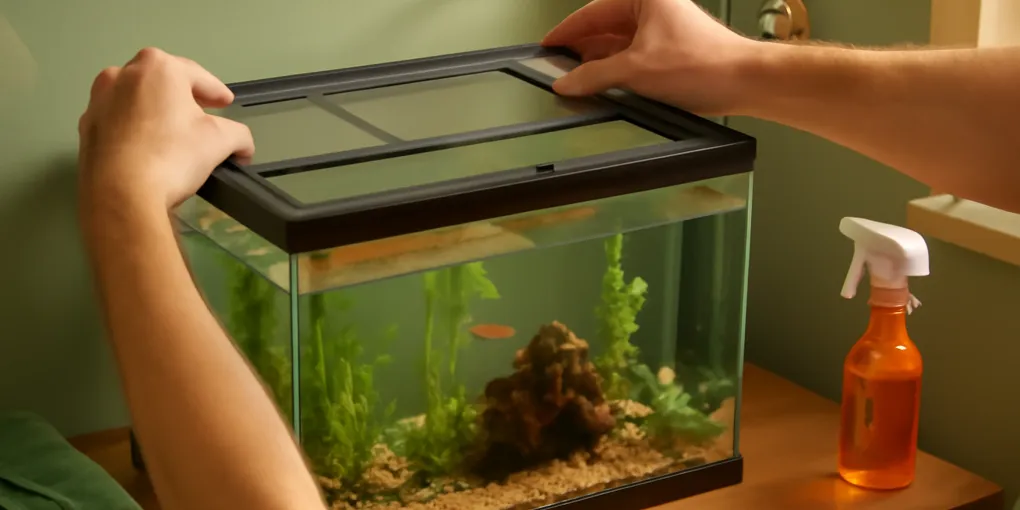
Aquarium Lid Escape Prevention Protocol: Keep Jumping Fish Safer
ProtocolQuick picks
Aquarium glass canopy with plastic back strip
★ Top pick Best for standard rectangular tanks- Reduces evaporation
- Cuts cable gaps
- Easy feeding door
- Must match tank rim
- Can trap heat in warm rooms
DIY aquarium mesh lid kit
Best for airflow and custom gear- Custom cutouts
- Better gas exchange
- Works around hang-on gear
- Needs careful assembly
- Small fish need fine mesh
A fish on the floor is not always the result of bad luck. Many aquarium escapes happen through predictable gaps: the filter cutout, the heater cord corner, the feeding door left open, or the back strip that was never trimmed. A good lid protocol closes those gaps while still allowing oxygen exchange, feeding, and maintenance.
This is especially important for bettas, killifish, hatchetfish, wrasses, shrimp tanks with adventurous invertebrates, and any open tank in a home with cats.
Quick comparison: aquarium lid choices for escape prevention
Start with the tank shape and equipment, not the lid brand:
- Standard rectangular tank: A glass canopy with a plastic back strip is often the cleanest fit. Search Amazon for glass aquarium canopy.
- Tank with hang-on filters or unusual gear: A mesh lid kit lets you cut around equipment more precisely. Search Amazon for aquarium mesh lid kit.
- Warm room or high-light planted tank: Prioritize airflow and temperature monitoring so escape prevention does not create heat stress.
If temperature stability is also a concern, combine this with our aquarium thermometer placement protocol so you can see whether a tighter lid changes heat retention.
The top-down gap check
Stand above the tank and look for every opening larger than the smallest fish’s body depth, not just the adult show fish. On a 10-gallon betta tank, that often means the rear plastic strip around a hang-on-back filter. On a rimless nano tank, it may be the corner where an airline exits. Check:
- the U-shaped notch behind hang-on-back filters, especially if the filter was moved to one side
- heater and thermometer cord exits where suction cups pull the cable away from the rim
- airline tubing corners for sponge filters or air stones
- automatic feeder openings after the feeder is removed from a weekend trip
- missing feeding-door tabs on hinged glass canopies
- warped or over-trimmed plastic back strips that leave a slot along the whole rear edge
- rimless tank corners where mesh frames stop short of the glass
- new gaps created after trimming tall plants, moving a light bracket, or adding a breeder box
Do the same check at night with room lights off and tank lights on. Reflections can hide a back-corner gap during the day, and hatchetfish or killifish often use the open surface lane you barely notice while feeding.
Glass canopy vs mesh lid
Glass canopy
Glass is useful when evaporation is high, cats are curious, or the tank has a standard rim. The plastic back strip can be trimmed so cords pass through without leaving a large rectangular escape route. Clean mineral deposits so light still reaches the tank.
The tradeoff is heat and gas exchange. In a warm room, a tight glass lid can hold heat. Watch temperature after installation, especially in summer.
Mesh lid
Mesh is better when equipment changes often, airflow matters, or lights sit close to the water. Use a mesh size that matches the animal. A large reptile-style mesh is not enough for tiny fish or shrimp.
Mesh can sag if poorly built. A sagging lid near the water gives jumpers a ramp and may wick water onto the frame.
Protocol: install and test the lid
- Lower the water level slightly before installation so a startled fish has less launch height.
- Fit the lid without cables first.
- Add each cable or tube one at a time and trim only the necessary opening.
- Feed through the intended door and close it immediately.
- Check temperature and condensation after the first full light cycle.
- Recheck gaps after every water change or filter cleaning.
The RSPCA’s fish environment advice stresses appropriate tank conditions and stable water quality for welfare (RSPCA fish environment advice). A lid should support that environment, not make maintenance so annoying that water changes are skipped.
Species and tank examples
Bettas in nano tanks: Leave humid air access above the surface, but cover filter and cord gaps. Many betta tanks have small rear openings that look harmless until a fish startles during feeding.
Killifish and hatchetfish: Treat these as high-priority lid tanks. Use a close-fitting mesh or canopy before adding the fish, not after the first escape.
Shrimp and small community fish: Check mesh size and feeding-door gaps. Shrimp can climb airline tubing or filter parts, and very small fish may slip through openings that would stop an adult betta.
Rimless display tanks: The clean look is appealing, but jump risk is still biological. A low-profile mesh lid is usually safer than leaving the tank fully open in a room with cats, children, or fast-moving maintenance.
Cat and child considerations
A lid is not a shelf. Do not store food, nets, or bottles on top of it. If a cat sits on the tank, use a stronger cover or block access to the stand. If a child feeds the fish, use a feeding routine that closes the lid before the food container is put away.
The FDA pet food handling page is written for food and treats, but the hygiene principle applies to fish-food routines too: wash hands after handling animal food and keep containers closed (FDA pet food and treat handling tips).
Mistakes to avoid
- leaving the back strip untrimmed with a large open channel
- assuming floating plants stop jumping
- using a lid that blocks filter flow
- forgetting the automatic feeder opening after vacation
- putting a heavy light on thin glass not designed to support it
- ignoring temperature after reducing evaporation
Aquarium lid FAQ
Can lowering the water line replace a lid?
It can reduce risk, but it is not a full solution for determined jumpers. Lower water also changes filter noise and may affect equipment operation.
Are bettas really jumpers?
Many bettas can jump, especially when startled or exploring surface gaps. A fitted lid with air access is safer than an open bowl or uncovered nano tank.
Should quarantine tanks have lids?
Yes. New or stressed fish may jump more readily, and quarantine tanks often have temporary equipment with awkward gaps. A simple mesh or fitted cover is worth setting up before the fish arrives.
Bottom line
A good aquarium lid closes real escape gaps while preserving airflow, access, and temperature stability. Check the tank from above after every equipment change, because the dangerous opening is usually the one created by the last cord, feeder, or filter move.
Frequently Asked Questions
- Not every aquarium needs the same lid, but tanks with known jumping fish, curious cats, low water margins, or hang-on equipment gaps need an escape-prevention plan.
- Glass reduces evaporation and fits many standard tanks. Mesh improves airflow and custom fit. The safer choice is the one that closes real escape gaps without overheating the tank.
- Small fish can exit through surprisingly narrow gaps near filters, heaters, and feeding doors. Check the tank from above after every equipment change.