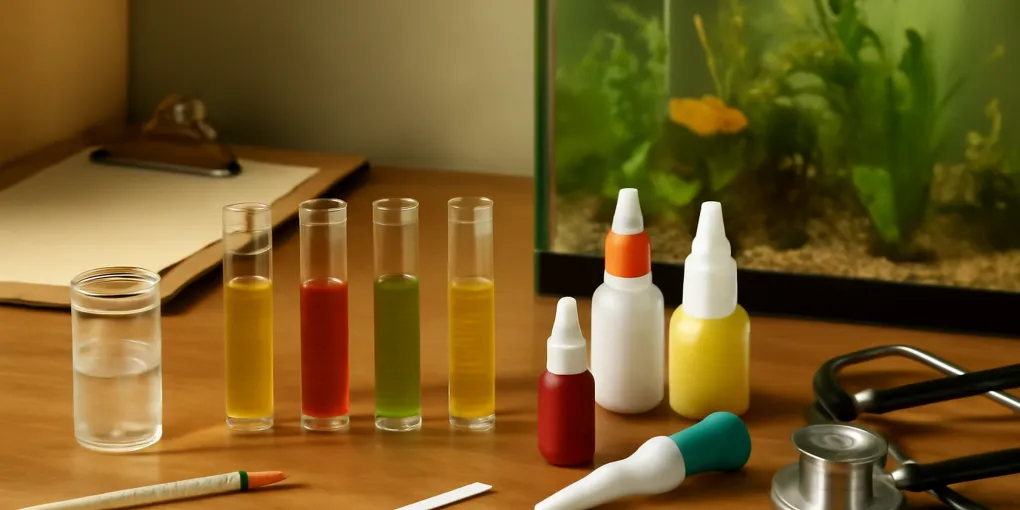
Best Aquarium Test Kits for New Tanks: What to Check Before Fish Go In
Buyer's GuideAPI Freshwater Master Test Kit
$30-$45
Quick picks
| Product | Key Specs | Pros / Cons |
|---|---|---|
| See price on Amazon | — |
|
| See price on Amazon | — |
|
| See price on Amazon | — |
|
Product availability, certifications, and retailer details can change; check the current Amazon page before buying.
Direct answer
The best aquarium test kit for a new freshwater tank is a liquid master kit that includes ammonia, nitrite, nitrate, and pH. A new tank is not judged by clear water. It is judged by whether the biological filter can process fish waste without letting ammonia or nitrite rise between scheduled checks.
For most beginners, Search Amazon for API Freshwater Master Test Kit is the most useful starting point because it covers the cycle markers in one box. Add an ammonia alert badge only as a visible backup, not as the only test.
How to judge an aquarium test kit
| Factor | Weight | Score | Why it matters for new tanks |
|---|---|---|---|
| Research | 30% | 8.5 | Ammonia and nitrite toxicity are central to aquarium cycling guidance. |
| Evidence quality | 25% | 8.0 | Water-quality thresholds are well established, while product usability is practical. |
| Value | 20% | 9.0 | A $30-$45 kit can prevent fish loss and repeated emergency water changes. |
| User signals | 15% | 8.0 | The common failure is not testing often enough or using strips that omit ammonia. |
| Transparency | 10% | 8.5 | Liquid kits are slower, but they show cycling trends better than quick strips. |
| Overall fit | 8.4/10 | A liquid kit is the safest first purchase before stocking a new freshwater tank. |
Quick picks by tank situation
- Search Amazon for API Freshwater Master Test Kit for a new freshwater tank, fishless cycle, or first aquarium.
- Search Amazon for Seachem Ammonia Alert for a quarantine tank or any setup where you want a visible warning between liquid tests.
- Search Amazon for Tetra EasyStrips aquarium tests for fast secondary checks after the tank is already stable.
What a new-tank kit must include
Buy around ammonia and nitrite first. Those are the two numbers that make a new aquarium dangerous while the filter bacteria are still developing. Nitrate matters because it shows the cycle is moving, and pH matters because extreme values change fish stress and ammonia risk.
A strip kit that checks only nitrate, hardness, alkalinity, and pH is not enough for a first tank. It may look complete because it has many color pads, but it can miss the exact spike that hurts fish during cycling.
Liquid kit versus strips
Liquid kits take longer because you fill tubes, add drops, wait, and compare colors. That extra work is why they are useful during cycling. You can see whether ammonia is dropping, nitrite is rising, and nitrate is appearing over several days.
Strips are still useful once the tank is mature. They are convenient for a quick midweek check, for travel tanks, or for owners who already know what stable numbers look like. If a strip reading looks odd, confirm with the liquid kit before making a large change.
How to test without chasing numbers
Test at the same time of day, write the date on a simple log, and read colors in bright neutral light. Do not compare a wet strip under a yellow kitchen bulb or guess from memory. If ammonia or nitrite is present, delay new fish and protect existing fish with water changes and stocking restraint.
If you are also setting up a temporary tank, pair the kit with a conservative quarantine tank setup instead of adding new fish straight to the display.
Mistakes that cause false confidence
Do not test only after a water change and assume the tank is safe for the week. Do not let expired reagents decide whether fish go in. Do not skip nitrate because ammonia reads zero once; a tank can move from ammonia to nitrite trouble before it is stable.
Also avoid buying a marine-only or reef-focused kit for a basic freshwater community tank unless the label clearly covers your water type. Freshwater beginners need the cycle kit before specialty phosphate or calcium tests.
Aquarium test kit FAQ
Can I cycle a tank without a test kit?
You can run a tank, but you cannot confirm the cycle safely. A kit is cheaper than replacing fish and guessing through cloudy-water problems.
Is a digital aquarium tester better?
Digital meters can be useful for pH or salinity in advanced setups, but they do not replace ammonia, nitrite, and nitrate testing for a new freshwater tank.
When can I add fish after checking the water?
Add fish only after ammonia and nitrite stay at zero and nitrate is present or controlled, then stock gradually. Sensitive species need extra caution.
Should I test tap water too?
Yes. A baseline tap-water test helps explain pH, nitrate, and ammonia surprises before you blame the tank.
Buyer checklist before checkout
Before buying, confirm the kit matches freshwater if that is your tank type, includes ammonia rather than only nitrate, and has enough tests for several weeks. A cycling tank may need repeated checks, so a kit with only a few strips can cost more over the first month than it looks on the shelf.
Check the expiration date when the box arrives. Reagents age, caps leak, and color charts fade if stored badly. If the color blocks are hard to distinguish, take a photo in daylight and compare it to the chart right away instead of waiting until a fish is sick.
Also check whether the kit measures total ammonia or free ammonia. Beginner liquid kits usually report total ammonia, which is still useful, but pH and temperature influence how dangerous that reading is. That is another reason to record pH beside ammonia rather than writing only “ammonia high” in a notebook.
Choosing for different aquariums
A small betta tank still needs ammonia and nitrite tests because low water volume can change quickly. A planted community tank benefits from nitrate tracking because plant growth, feeding, and water changes all move the number. A quarantine tank needs a quick ammonia warning because medication, bare bottoms, and small filters can make water quality swing faster than in the display tank.
Goldfish and other heavy-waste fish deserve extra caution. Do not rely on a strip pack with vague colors when the stocking load is high. Buy the kit before the fish, keep dechlorinator on hand, and make the first stocking plan boring and gradual.
How to store and read the kit
Store bottles closed, upright, and away from heat. Rinse tubes with tank water before the test and clean water after the test. Do not pour used chemicals back into the aquarium, and do not let children handle reagent bottles unsupervised.
When comparing colors, hold the tube against the white part of the chart in natural light. If a color sits between two blocks, record the range rather than forcing false precision. The trend matters more than pretending a purple-blue nitrite reading is an exact decimal.
Water-change decisions from test results
If ammonia or nitrite appears in a tank with fish, reduce feeding, check that the filter is running, and prepare an appropriate water change with dechlorinated water. Do not replace all filter media just because numbers look bad; that can remove the bacteria you are trying to grow.
If nitrate rises while ammonia and nitrite stay at zero, the cycle is likely processing waste, but the tank still needs water changes and conservative stocking. The goal is stable fishkeeping, not a single perfect screenshot of a test tube.
Replacement and refill planning
A test kit is not a one-time cycling purchase if the aquarium will keep running. Count the number of tanks in the home and how often you expect to test after stocking. One community tank may need only weekly checks once stable, while a fish room, quarantine tank, or child-managed aquarium needs more reagent margin.
Buy replacement bottles only when you know which tests you actually use. Many owners run out of nitrate or ammonia first and still have pH reagent left. Replacing the whole kit too early wastes money; replacing a single expired bottle too late creates bad decisions. Write the open date on the box so you are not guessing a year later.
Reading results for common beginner scenarios
If ammonia is present and nitrite is zero in the first week, the cycle is early. If ammonia falls and nitrite rises, the filter is developing but the tank is still unsafe for normal stocking. If both ammonia and nitrite stay zero after a measured food or ammonia source and nitrate rises, the tank is closer to ready.
If every reading is zero in a brand-new tank with no ammonia source, the kit did not prove readiness. It proved only that nothing has challenged the filter yet. Add fish slowly, feed lightly, and keep testing after the first animals arrive. That boring follow-up week is where the kit earns its place: it catches the quiet rise before fish behavior becomes the only warning and keeps the next purchase focused on livestock, not emergency fixes.
Sources
- University of Florida IFAS: Ammonia in aquatic systems
- Iowa State University Extension: Water quality for fish production
- University of Florida IFAS: Fish health and quarantine concepts
Frequently Asked Questions
- Ammonia, nitrite, nitrate, and pH are the core cycling checks. Clear water alone does not prove the biofilter is ready.
- They can be useful for quick checks, but a liquid kit is usually better for cycling because ammonia and nitrite trends matter.
- Test often enough to see ammonia rise, nitrite rise, and nitrate appear before adding fish gradually. Daily or every other day is common during active cycling.