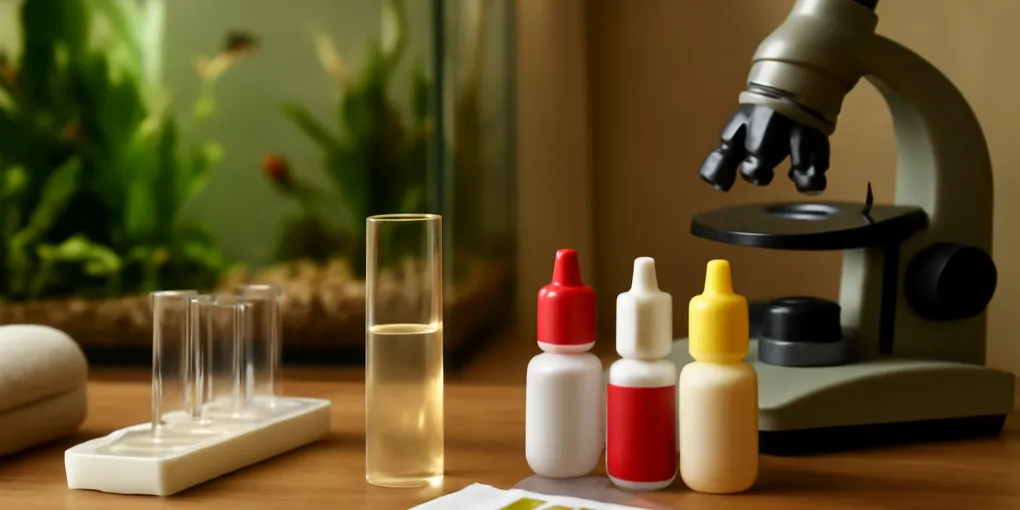
Best Aquarium Water Test Kits for Beginners: Ammonia, Nitrite, Nitrate, and pH Without Guesswork
Buyer's GuideAPI Freshwater Master Test Kit
Best beginner liquid kitTests: Ammonia, nitrite, nitrate, pH, high-range pH
$30-45
Quick picks
| Product | Key Specs |
|---|---|
| See price on Amazon |
|
| See price on Amazon |
|
| See price on Amazon |
|
Product availability, certifications, and retailer details can change; check the current Amazon page before buying.
A beginner aquarium test kit should answer four questions quickly: is there ammonia, is there nitrite, how much nitrate has built up, and is pH stable enough for the fish you keep? If a kit cannot answer those questions, it may still be useful, but it should not be your only water-quality tool.
Start here:
- See API Freshwater Master Test Kit prices on Amazon for the strongest beginner default.
- Compare Tetra EasyStrips 6-in-1 packs on Amazon for quick non-ammonia screens.
- Search Seachem ammonia monitoring tools on Amazon if you want an ammonia-focused backup.
Pair any test kit with a reliable thermometer. Our betta thermometer guide and quarantine tank protocol explain why measurement matters before fish look obviously sick.
Quick picks for beginner tanks
The API Freshwater Master Test Kit is the best starting point for most freshwater beginners because it covers ammonia, nitrite, nitrate, and pH in one box. It is slower than strips, but new tanks need repeatable readings more than speed.
Tetra EasyStrips are useful as a quick screen when you already own an ammonia test. They can flag nitrite, nitrate, hardness, chlorine, alkalinity, and pH at a glance, but a strip-only routine can miss the most urgent cycling problem if ammonia is not included.
A Seachem ammonia alert or ammonia-specific test is a backup, not a complete kit. It makes sense in hospital tanks, quarantine tanks, and newly stocked tanks where ammonia is the parameter you cannot afford to miss.
Why ammonia comes first
Fish release ammonia through waste and respiration, and decomposing food adds more. In a cycled aquarium, nitrifying bacteria convert ammonia to nitrite and then nitrate. In a new or disrupted tank, ammonia and nitrite can rise before the owner sees obvious symptoms. That is why a kit that skips ammonia is incomplete for beginners.
Do not wait for fish to gasp, clamp fins, or hover near the surface before testing. Those signs can appear after water quality is already dangerous. A test kit gives you a chance to act with water changes, feeding reduction, and equipment checks before the tank becomes an emergency.
Liquid kits versus strips
Liquid kits require measuring water into tubes, adding drops, shaking, timing, and comparing colors. That is slower, but it encourages exact repeat checks during cycling. The biggest drawback is user error: expired reagents, wrong drop count, dirty tubes, or reading colors under warm indoor light can distort results.
Strips are fast and less intimidating. They are good for travel, store counters, and quick routine checks. Their weakness is that pads can be sensitive to moisture and timing, and ammonia may be absent from the pack. If you use strips, store them dry, close the bottle immediately, and confirm any surprising result with a liquid test.
What to buy with the kit
A test kit works better with a notebook or phone log, a dechlorinator, a gravel vacuum, and a bucket used only for the aquarium. The log matters because a single nitrate number is less useful than the trend after feeding changes or water changes.
If the tank is cycling, write down the date, ammonia, nitrite, nitrate, pH, temperature, water-change amount, and any fish behavior change. This turns vague worries into a record a fish veterinarian or experienced aquarist can interpret.
Beginner mistakes to avoid
Do not add a chemical ammonia remover and then assume the tank is cycled. Do not replace all filter media just because the water looks cloudy. Do not chase pH with repeated additives before you understand your tap water and fish species. Do not compare colors under blue aquarium lights.
Also avoid buying test strips because they look cheaper per bottle without checking what they test. A low-cost strip that omits ammonia can become expensive if it misses the reason fish are stressed during cycling, stocking changes, or a filter problem.
Freshwater, betta, and planted-tank notes
Most beginners with bettas, tetras, guppies, corydoras, or community freshwater tanks should start with a freshwater liquid kit. A betta bowl or nano tank is not exempt. Small water volume can change quickly, so ammonia and temperature mistakes show up faster than they would in a larger, filtered aquarium.
Planted tanks add one more interpretation problem. Plants can consume some nitrogen, but they do not make ammonia testing optional. Melting leaves, dead plant matter, and buried uneaten food can still affect water quality. If nitrate reads very low in a planted tank, that may reflect plant uptake, low stocking, or a testing mistake; it does not prove the tank is automatically safe.
For saltwater tanks, buy a kit labeled for marine use and expect additional tests such as alkalinity, calcium, magnesium, and salinity tools depending on livestock. This beginner guide is focused on freshwater starter tanks because those are the most common first aquariums and the usual place where ammonia and nitrite testing are missed.
How to read results without overreacting
Test results should lead to specific actions. Detectable ammonia or nitrite in a stocked freshwater tank usually means reducing feeding, checking filtration, using conditioned water changes, and retesting. High nitrate points toward water-change schedule, stocking level, feeding volume, plant maintenance, and filter debris. A single strange pH reading should be repeated with clean tubes before you add chemicals.
Write down what you changed. If ammonia appears after a filter cartridge replacement, the timing matters. If nitrate climbs every week despite water changes, the fish load or feeding may be too high. If pH differs sharply between tap water and tank water, test both after the tap sample has rested, then ask a qualified aquarium professional before chasing numbers.
What a kit cannot do
A water test kit cannot tell whether a fish has parasites, bacterial disease, injury, or genetic problems. It also cannot judge oxygen directly unless you buy separate dissolved-oxygen tools. What it can do is remove guesswork around the most common environmental stressors. When a fish is gasping, hiding, flashing, clamping fins, or refusing food, water testing is the first triage step, not the final diagnosis.
Use test results alongside observation: breathing rate, appetite, fin position, swimming balance, temperature, filter flow, and recent tank changes. If fish are dying, do not spend days tweaking a single number while ignoring urgent veterinary or experienced aquarist help.
Kit expiration and storage
Reagents and strips age. Before trusting a kit that has been under a tank stand for years, check the expiration date and compare a result against a fresh kit or a reputable aquarium shop’s test. Heat, humidity, and contaminated caps can shorten useful life. Store bottles upright, close them immediately, and keep test tubes only for aquarium testing.
Color charts are another source of mistakes. Read tubes against a white background under neutral light, not under blue aquarium LEDs. Set a timer when the instructions require a waiting period, especially for nitrate tests that need shaking and timed color development. If two people read the same tube differently, write down the range and retest rather than making a major chemical change from one uncertain color match on a stressful tank day.
Buying checklist
For a first freshwater kit, confirm ammonia is included. Confirm the kit distinguishes nitrite from nitrate; those names sound similar but mean different stages of the nitrogen cycle. Check how many tests are included because cycling a new aquarium can use many tests in the first month. If the kit is bundled with chlorine or hardness strips, treat those as extras rather than substitutes for ammonia and nitrite.
Choose the product your household will actually use. If a liquid kit feels too fussy, pair it with strips so quick checks still happen, but keep the liquid kit for cycling, illness, surprise strip readings, and every unexplained fish behavior change. If a child helps with the tank, an adult should handle reagents, timing, and result interpretation.
A beginner buying for one betta, a small community tank, or a classroom aquarium should also think about replacement behavior. Liquid kits have bottles that run out unevenly, especially nitrate reagent during cycling. Strip packs lose value if the lid stays open near tank humidity. If the tank is already stocked, the best kit is the one that lets you test tonight, perform a conditioned water change if ammonia or nitrite appears, and retest the same parameter tomorrow without changing methods.
FAQ
Do beginners need a liquid aquarium test kit or are strips enough?
A liquid kit is the better first purchase for cycling because it usually includes ammonia and gives more useful repeat readings. Strips are convenient for quick screens, but many beginner strip packs omit ammonia, so a strip-only setup can miss the parameter that matters most in a new stocked tank.
Which aquarium water numbers matter first?
For a new freshwater tank, ammonia and nitrite are the urgent danger readings, nitrate shows waste accumulation after the cycle develops, and pH helps you avoid sudden chemistry swings. Temperature matters alongside the kit because cold or overheated water can stress fish even when the color chart looks acceptable.
How often should I test a new fish tank?
During cycling or after adding fish, test often enough to catch ammonia or nitrite before fish show distress. In a stable tank, weekly testing plus testing after illness, equipment failure, unusual behavior, filter cleaning, or missed water changes is a practical baseline.
Can a test kit tell me why a fish is sick?
It cannot diagnose disease, but it can reveal water-quality stress that worsens many fish problems. Abnormal ammonia, nitrite, nitrate, temperature, or pH should be corrected while you evaluate symptoms and decide whether veterinary or experienced aquarist help is needed.
Sources
- University of Florida IFAS Extension. Ammonia in aquatic systems and aquarium relevance: https://edis.ifas.ufl.edu/publication/FA031
- Merck Veterinary Manual. Disorders and diseases of fish, including environmental contributors: https://www.merckvetmanual.com/all-other-pets/fish/disorders-and-diseases-of-fish
- University of Florida IFAS Extension. The role of water quality in aquaculture and fish systems: https://edis.ifas.ufl.edu/publication/FA004