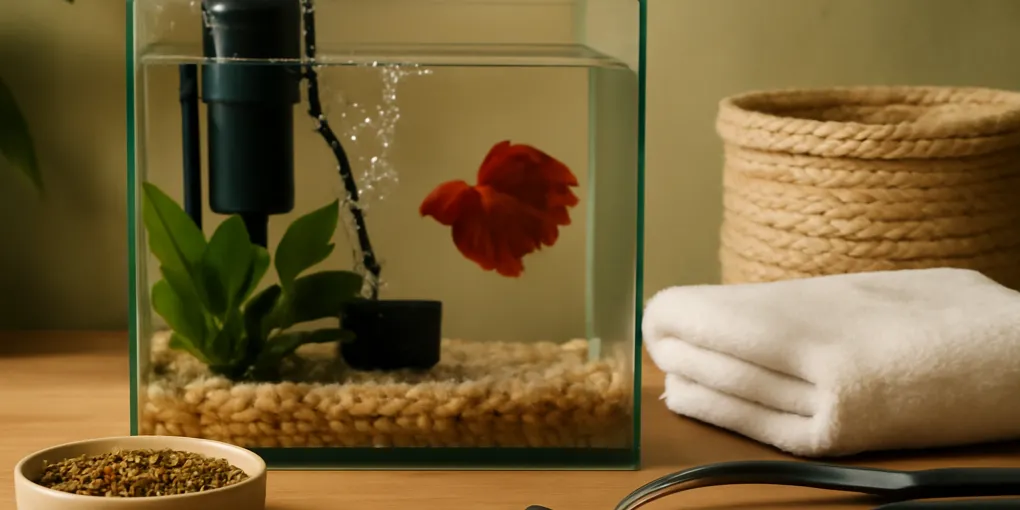
Do Betta Fish Need a Filter? Flow, Oxygen, and Water Quality Explained
Evidence ExplainerQuick picks
| Product | Key Specs |
|---|---|
| See price on Amazon |
|
| See price on Amazon |
|
| See price on Amazon |
|
Product availability, certifications, and retailer details can change; check the current Amazon page before buying.
Medical Disclaimer
This article is aquarium husbandry education, not veterinary diagnosis. Bettas that gasp, clamp fins, pinecone, stop eating, develop sores, or show sudden buoyancy changes need urgent water testing and fish-health guidance from a qualified aquatic veterinarian, experienced aquarist, or local fish professional. Do not medicate before checking ammonia, nitrite, nitrate, temperature, and recent tank changes.
PSR Evidence Score
| Criterion | Weight | Score | Weighted | Why it matters for betta filters |
|---|---|---|---|---|
| Research | 30% | 8.5 | 2.55 | Nitrogen cycling and water-quality principles are well established in aquarium care. |
| Evidence Quality | 25% | 8.0 | 2.00 | Betta-specific filter advice relies on known species behavior plus general aquatic husbandry evidence. |
| Value | 20% | 8.5 | 1.70 | A gentle filter and test kit prevent many common small-tank failures. |
| User Signals | 15% | 8.0 | 1.20 | Owners often struggle with conflicting bowl, filter, and flow advice. |
| Transparency | 10% | 9.0 | 0.90 | The recommendation is conditional: filtration helps, but only when flow and cycling are correct. |
| Composite Score | 8.4/10 | Strong practical evidence for gentle biological filtration and water testing. |
The Short Answer
Most betta fish should live in a heated, filtered, cycled aquarium with gentle flow. The filter is not there to blast the tank like a river. It is there to support beneficial bacteria, move water slowly, and make ammonia and nitrite spikes less likely.
For most 5 to 10 gallon betta tanks, use these shopping starting points: Search Amazon for small betta sponge filters, Search Amazon for adjustable aquarium air pumps with check valves, and Search Amazon for liquid aquarium water test kits. If you prefer a compact powered unit, compare Search Amazon for adjustable nano aquarium filters and verify the intake cannot trap fins.
Why the Filter Question Gets Confusing
Bettas can breathe air at the surface through a labyrinth organ, so old care advice often treated bowls as acceptable. Surface breathing does not make ammonia safe. It also does not remove waste, uneaten food, or dissolved nitrogen compounds from a small volume of water.
A filter helps with three jobs. Mechanical filtration catches particles. Biological filtration gives beneficial bacteria a place to process ammonia and nitrite. Gentle circulation reduces stagnant areas. In betta tanks, biological filtration is usually the most important reason to use a filter.
The catch is flow. Bettas, especially long-finned domestic varieties, may struggle in strong current. A filter that keeps water clean but forces the fish to fight all day is not a welfare win. The right answer is not no filter. It is a gentle filter sized and adjusted for the tank.
What a Filter Does Not Do
A filter does not instantly make a tank cycled. Beneficial bacteria need time and ammonia source to establish. A filter also does not remove the need for water changes. Nitrate can still build up, minerals can concentrate through evaporation, and debris can rot in corners.
A filter does not fix overfeeding or a tiny tank. One extra pinch of food in a small bowl can pollute the water quickly. If your betta lives in less than 5 gallons, filtration becomes harder to stabilize because the water volume gives you less margin for mistakes.
If you are leaving fish for a weekend, filter stability is only one part of the plan. Our automatic fish feeder vacation risk guide explains why feeding devices can create water-quality problems if portions are not tested first.
Best Option for Most Tanks: Sponge Filter
A sponge filter is a simple foam block or cylinder connected to an air pump. Water moves through the sponge slowly, which gives bacteria surface area and keeps flow gentle. It is hard to beat for a small betta tank.
Buy a sponge filter that is physically small enough for the tank. Oversized filters can crowd swimming space. Add a check valve to the airline so water cannot siphon backward toward the pump. If the pump is too loud or strong, use an adjustable valve or quieter pump.
Maintenance is simple but specific. During water changes, swish the sponge in removed tank water, not chlorinated tap water, so you do not wipe out the bacteria you are trying to preserve. Replace sponges only when they are falling apart, not on a calendar that throws away the biological colony.
When an Adjustable Nano Filter Works
A small internal or hang-on-back filter can work if it has adjustable flow, enough media space, and safe intake protection. Watch the fish after installation. If the betta hides behind the heater, avoids the middle of the tank, gets pushed sideways, or rests only in dead zones, reduce flow or add a baffle.
Some owners use pre-filter sponges on intakes to protect fins and shrimp. That can help, but it also needs cleaning. A clogged intake can reduce flow so much that filtration becomes inconsistent.
Avoid cartridges that require replacing the entire media pack every few weeks. That practice can remove much of the bacterial colony. Reusable sponge, ceramic media, or other permanent biological media are better choices.
Cycling and Testing Matter More Than Filter Branding
A cycled tank should show 0 ppm ammonia, 0 ppm nitrite, and a manageable nitrate level before and between water changes. Test strips can be convenient, but liquid kits that include ammonia and nitrite are more useful for new tanks and sick fish troubleshooting.
If ammonia or nitrite appears, treat it as urgent. Reduce feeding, perform appropriate water changes with dechlorinated temperature-matched water, and identify the cause. New tank, over-cleaned filter media, dead plant matter, hidden food, or a stalled cycle can all create spikes.
Do not buy a filter and assume the invisible chemistry is fine. The test kit is part of the filter system.
Betta Filter Buying Checklist
Before buying, check:
- Tank size in gallons, not just bowl dimensions.
- Lowest flow setting or air-control option.
- Intake protection for fins.
- Biological media that does not need constant replacement.
- Space around the heater and resting areas.
- Noise level if the tank is in a bedroom.
- Whether you can clean the media without destroying the cycle.
FAQ
Can a betta live in a tank without a filter?
A betta may survive in an unfiltered setup with intensive water changes, but a gentle cycled filter is usually safer and more stable for normal home care.
What filter flow is safest for long-finned bettas?
Use the lowest practical flow, protect the intake, and watch swimming. If the fish is pinned, hiding constantly, or struggling to rest, the flow is too strong.
Does a filter replace water changes for bettas?
No. A cycled filter helps process ammonia and nitrite, but nitrate, dissolved waste, and minerals still require measured water changes.
Is a sponge filter better than a hang-on-back filter for a betta?
Often yes for small betta tanks because sponge filters provide gentle biological filtration. A hang-on-back filter can work if the flow and intake are made safe.
Sources
- University of Florida IFAS Extension: The nitrogen cycle in aquariums
- RSPCA: How to take care of fish