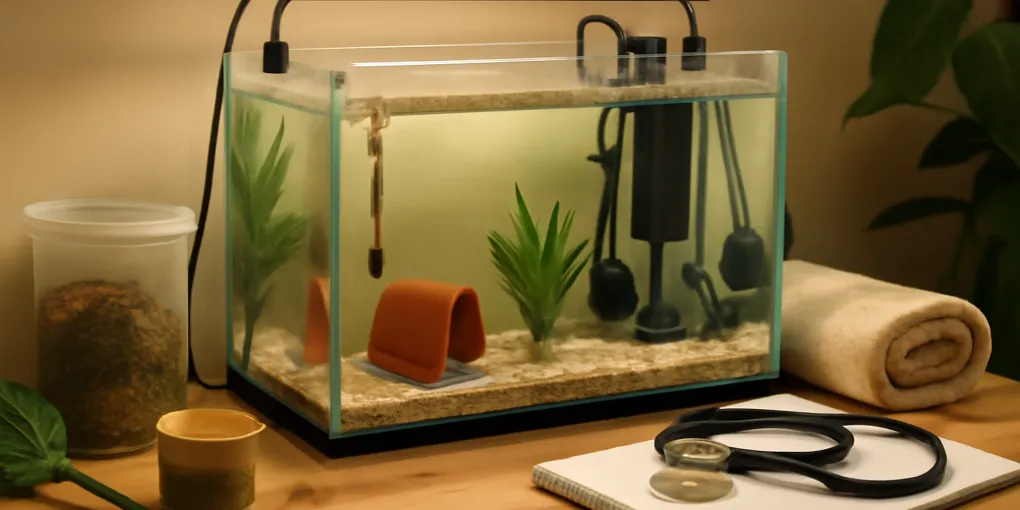
Aquarium Quarantine Tank Setup Protocol: A Safer First Stop for New Fish
ProtocolQuick picks
10-gallon glass aquarium kit
★ Top pick Common quarantine size- Why it is included: Large enough for many small freshwater fish while staying inexpensive and easy to drain between uses.
Air-driven sponge filter
Gentle filtration- Why it is included: Provides biological filtration and surface agitation without strong intake suction for stressed new fish.
Adjustable aquarium heater and thermometer
Temperature control- Why it is included: Keeps quarantine water stable enough for observation instead of adding temperature stress.
Aquarium Quarantine Tank Setup Protocol: A Safer First Stop for New Fish
An aquarium quarantine tank is a simple temporary tank used to observe new fish before they join the display aquarium. It is not a fancy second aquascape. The job is to keep water stable, make symptoms easy to see, and prevent one new purchase from exposing the whole tank to parasites, bacterial disease, or medication mistakes.
For most freshwater community keepers, the best quarantine setup is a bare-bottom 5- to 20-gallon tank, an established sponge filter, a heater, a thermometer, a tight lid, and one or two clean hides. The protocol matters more than the brand. A perfect-looking tank that is uncycled, too cold, or shared between sick fish without cleaning can create more risk than it solves.
If you are also planning vacation feeding or oxygen backup, see our automatic fish feeder risk guide and battery backup air pump guide. Quarantine is the same kind of boring equipment: it earns value when something goes wrong.
Recommended products for a quarantine tank
- Search Amazon for 10 gallon aquarium kit if you keep small community fish and need a reusable quarantine tank.
- Search Amazon for aquarium sponge filter for gentle filtration and gas exchange.
- Search Amazon for adjustable aquarium heater thermometer to match the species’ normal temperature range.
- Search Amazon for aquarium water test kit ammonia nitrite nitrate because quarantine fails quickly if ammonia goes unseen.
PSR G6 score for the protocol
| Factor | Weight | Score | Weighted contribution |
|---|---|---|---|
| Research fit | 30% | 4.4 | 1.32 |
| Evidence quality | 25% | 4.0 | 1.00 |
| Value | 20% | 4.6 | 0.92 |
| User signals | 15% | 4.1 | 0.62 |
| Transparency | 10% | 4.3 | 0.43 |
| Composite | 100% | 4.3/5 |
The score is high because quarantine solves a clear disease-control problem with inexpensive equipment. It is not a guarantee. Poor cycling, skipped water tests, and random medication can still harm fish.
Step 1: choose a plain tank that fits the fish
Pick a quarantine tank large enough for normal swimming and stable water chemistry, but small enough to observe and medicate if needed. A 10-gallon tank fits many small freshwater fish. Larger goldfish, cichlids, plecos, or active schooling fish may need more room. Tiny bowls and unheated jars are not quarantine tanks.
Use a lid. New fish jump when startled, and a bare quarantine tank has fewer plants to break momentum. Keep the tank away from sprays, smoke, cooking fumes, and sudden temperature swings.
Step 2: prepare filtration before fish arrive
A sponge filter that has been seeded in an established aquarium is the easiest option. Keep an extra sponge running in the display tank or filter compartment so it has beneficial bacteria ready for quarantine. If the quarantine filter is brand new, treat the tank as uncycled and test ammonia and nitrite closely.
Bare-bottom tanks are easier to clean because uneaten food and waste are visible. Add a PVC elbow, small ceramic hide, or plastic plant for cover. Skip gravel unless the species needs substrate; it traps waste and makes cleaning harder.
Step 3: match temperature and water basics
Set the heater before fish arrive and verify with a separate thermometer. Match the display tank’s normal temperature and water conditions as closely as practical for the species. Sudden temperature differences make a stressed shipping day worse.
Dechlorinate new water, avoid scented buckets, and label quarantine tools so they do not go back into the display tank without cleaning. Nets, siphons, and algae pads can move pathogens if they are shared casually.
Step 4: acclimate calmly and leave lights low
Float or otherwise temperature-match the bag according to your normal acclimation method, then transfer fish with minimal store water. Keep lights dim for the first day. Do not feed heavily right away. A tiny meal after the fish are settled is safer than a pile of food in an unproven tank.
Watch breathing, balance, fins, spots, flashing, clamped posture, stringy feces, and appetite. Write observations down. Quarantine is valuable because small changes are easier to notice in a plain tank.
Step 5: observe before moving to the display tank
Many aquarists use two to four weeks of observation for new fish, with longer periods when fish came from a high-risk source or symptoms appear. The right length depends on species, supplier reliability, and what the display tank would risk. The point is to catch obvious disease before introduction, not to rush the calendar.
Do not medicate every fish with every product by default. Medication has cost and stress. Use targeted treatment when symptoms, supplier guidance, or a fish-health professional point to a reason. Some species are sensitive to copper, salt, or certain parasite medications.
Step 6: transfer only when fish are normal
Move fish to the display tank only after they are eating, swimming normally, and free of visible disease signs for the chosen observation window. Use a clean net or container. Do not pour quarantine water into the display tank.
After the move, drain and clean the quarantine tank. If fish were sick, disinfect according to a veterinary or aquaculture source and let equipment dry fully before reuse. Keep the sponge-filter plan realistic: a medicated or disinfected sponge may no longer be biologically active.
Common quarantine mistakes
The first mistake is setting up the tank after the fish are already in a bag. The second is forgetting oxygen and filtration because the tank is temporary. The third is treating quarantine as punishment: no cover, bright lights, unstable water, and repeated chasing.
Another mistake is using the hospital tank for storage with soap residue, aerosols, or metal contamination. Aquarium-only buckets and tools are cheap insurance.
FAQ
How long should new fish stay in quarantine?
Two to four weeks is common for routine freshwater community fish, but the best window depends on species, source, symptoms, and display-tank risk. Sick fish should not move just because a calendar date arrived.
Does a quarantine tank need to be cycled?
Yes, it needs a way to control ammonia and nitrite. A seeded sponge filter is ideal. If the tank is not cycled, frequent testing and water changes become essential.
Should I medicate all new fish in quarantine?
Not automatically. Observe first unless you have a clear reason, reliable supplier protocol, or professional guidance. Some fish tolerate medications poorly.
Can I quarantine fish in a bucket?
A bucket can be an emergency holding container, but it is a poor routine quarantine tank because viewing, heating, filtration, and stability are limited.
Sources and veterinary references
- Merck Veterinary Manual. Health management and disease prevention in aquarium fish: https://www.merckvetmanual.com/exotic-and-laboratory-animals/aquarium-fish
- University of Florida IFAS Extension. Fish health management and biosecurity principles: https://edis.ifas.ufl.edu/publication/FA099