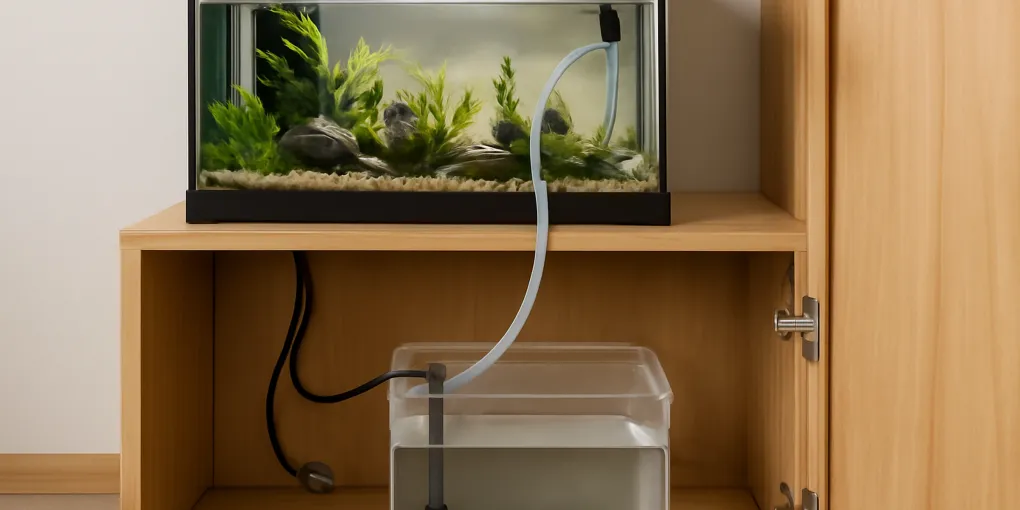
Aquarium Auto Top-Off Setup Protocol: Safer Evaporation Control Without Salinity or Sensor Surprises
ProtocolQuick picks
| Product | Key Specs |
|---|---|
| See price on Amazon |
|
| See price on Amazon |
|
| See price on Amazon |
|
Product availability, certifications, and retailer details can change; check the current Amazon page before buying.
What an auto top-off actually does
An aquarium auto top-off, or ATO, replaces water lost to evaporation. In saltwater tanks, that matters because water evaporates but salt stays behind. If the water level drops, salinity rises. If you replace evaporation with saltwater, salinity can climb even more. The replacement water should be freshwater.
Freshwater planted tanks can also benefit from stable water level, especially when filters or skimmers need a consistent height. But an ATO is not a water-change machine and not a substitute for testing. It is a pump, sensor, reservoir, and failure plan.
For related baseline checks, see our aquarium thermometer placement protocol and aquarium water test kit guide.
What to buy
The safer shopping path is a purpose-built ATO kit with a clear sensor design, a pump matched to your head height, and a documented fail-safe timeout. A bargain pump plus a mystery float switch can work until it sticks, siphons, or floods.
- Search Amazon for Tunze Osmolator auto top off
- Search Amazon for XP Aqua Duetto ATO
- Search Amazon for AutoAqua Smart ATO Lite
University of Florida Extension marine-aquarium guidance and NOAA’s basic salinity resources support the same practical point: salinity is a concentration measure, so evaporation and freshwater replacement change it differently than saltwater water changes do.
Sources: UF/IFAS marine aquarium water quality, NOAA salinity overview
Step 1: size the reservoir as a safety device
Do not automatically use the biggest container that fits. A reservoir should cover the time you are away plus a buffer, but it should not hold enough water to flood the room or crash salinity if the pump sticks on.
Measure normal daily evaporation for a week. If the tank loses one quart per day and you leave for two days, a one-gallon reservoir may be safer than a five-gallon bucket. Reef tanks with sumps may need more, but the same principle holds: limit the worst-case failure.
Step 2: mount the sensor where water level is stable
Put the sensor in the return-pump chamber of a sump or another section where evaporation actually changes the level. Do not put it where waves, bubbles, snails, floating plants, or feeding turbulence can trigger false readings.
Clean the sensor mount before sticking or clamping it. Mark the target water line with tape or a paint pen so you can see drift. If the sensor creeps down, the ATO may slowly raise the system’s normal water level.
Step 3: prevent siphons and electrical hazards
Route the top-off tube above the aquarium or sump water line so it cannot back-siphon. Use a drip loop on every cord. Keep the controller and power connections away from splash zones.
Use freshwater only for top-off. Saltwater is for water changes, not evaporation replacement. In reef systems, many owners use RO/DI water, but the core rule is simpler: replacement water should not add more salt to compensate for evaporation.
Step 4: test in short supervised runs
Fill the reservoir with a small amount of water for the first trial. Lower the tank or sump water level slightly, let the ATO activate, then watch it stop. Repeat several times. Confirm that the pump does not continue beyond the target line and that the tube does not siphon after the pump shuts off.
Then unplug and replug the unit to see what happens after a power interruption. Read the manual’s alarm and timeout behavior. If you cannot explain how the kit fails, do not leave it unattended.
For the first week, mark the reservoir level with tape each morning. The mark tells you whether the system is using the expected amount of water or quietly pumping too much. A sudden change means you should inspect the sensor, tubing, and tank level before refilling.
Step 5: write a weekly inspection routine
Once a week, clean salt creep or biofilm from the sensor, confirm the reservoir lid is clean, check tubing for kinks, and compare salinity or water level to your manual mark. In saltwater tanks, salinity should still be checked with a calibrated tool.
ATO failures often come from boring causes: a snail on a sensor, a tube that moved, a reservoir that ran dry, a pump clogged with debris, or a controller outlet getting wet. A two-minute inspection catches more than a fancy app alert.
When to skip an ATO
Skip or delay an ATO if you cannot place the reservoir safely, your tank is on a floor where a small flood is unacceptable, you do not test salinity or water quality, or you cannot inspect the system weekly. Manual top-off is better than an unattended device you do not understand.
For tiny tanks, the margin is especially small. A cup too much or too little can matter. Use a very small reservoir and conservative pump if you automate at all.
Aquarium auto top-off FAQ
Is an ATO only for reef tanks?
No, but reef and saltwater tanks benefit most because evaporation changes salinity. Freshwater tanks can use one for stable equipment water level, but the failure tradeoff still applies.
Can I put additives in the reservoir?
Do not use the ATO reservoir as a casual dosing container. Some advanced keepers dose kalkwasser or other additives through top-off systems, but that requires separate chemistry knowledge and tighter safeguards.
What is the biggest mistake?
Using a reservoir so large that a stuck-on pump can create a flood or dilute the tank severely. The reservoir is part of the safety design, not just a convenience container.
Frequently Asked Questions
- Use freshwater for evaporation replacement. Salt does not evaporate, so topping off a saltwater tank with saltwater can raise salinity.
- Large enough for normal absence, but not so large that a stuck-on pump can flood or sharply dilute the aquarium before you catch it.
- No. It stabilizes water level and salinity swings, but you still need salinity, temperature, and water-quality checks.