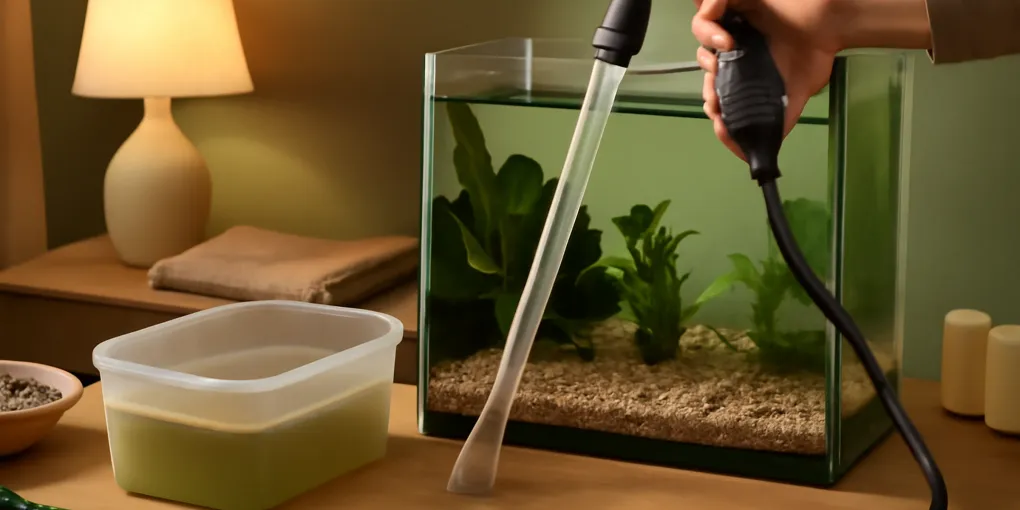
Best Aquarium Gravel Vacuums for Small Tanks: Safer Water Changes Without Draining Too Much
Buyer's GuidePython Pro-Clean Mini gravel washer
Best for most small tanksTank fit: 5-20 gallon tanks
$10-$18
Quick picks
| Product | Key Specs |
|---|---|
| See price on Amazon |
|
| See price on Amazon |
|
| See price on Amazon |
|
| See price on Amazon |
|
Product availability, certifications, and retailer details can change; check the current Amazon page before buying.
Quick answer
For most 5- to 20-gallon freshwater tanks, the best aquarium gravel vacuum is a small manual siphon with a narrow tube, a short gravel cylinder, and enough hose control that you can stop flow quickly. The Python Pro-Clean Mini is the easiest first pick because it has the right scale for desktop aquariums. Very small shrimp tanks and fry tanks usually need an airline tubing siphon instead of a normal gravel washer.
Small tanks are less forgiving than large tanks. A full-size siphon can pull five gallons before the keeper has cleaned one corner. The goal is not the strongest suction. The goal is controlled waste removal while keeping fish, shrimp, plants, substrate bacteria, and temperature stability intact. If you also keep bettas, compare this guide with our aquarium thermometer guide because water-change safety depends on replacement-water temperature as well as clean gravel.
Quick picks for small aquariums
- Search Amazon for Python Pro-Clean Mini gravel washer if you have a 5- to 20-gallon tank and want a simple weekly tool.
- Search Amazon for Aqueon Siphon Vacuum Mini if price matters and you can manage flow by pinching the tube.
- Search Amazon for hygger flow-control gravel cleaners if hand-starting a siphon is hard or you want a valve.
- Search Amazon for airline tubing siphon kits for shrimp, fry, hospital tanks, and shallow bowls.
What matters more than suction power
A gravel vacuum for a small tank should let you clean one patch at a time. Look for tubing you can pinch with one hand, a cylinder small enough to reach behind decor, and a hose length that drops into a bucket without pulling the vacuum out of the tank. A priming bulb is useful only if it does not add so many plastic joints that the tool becomes hard to clean.
Flow rate is the main safety feature. In a 5-gallon tank, removing 20 to 30 percent of the water may be only one to one and a half gallons. A strong siphon can hit that limit quickly. Slower tools give you time to lift the cylinder, avoid fish, and stop before the heater or filter intake is exposed.
Best for most small tanks: Python Pro-Clean Mini
The Python Pro-Clean Mini is the easiest recommendation for ordinary small aquariums with gravel or coarse sand. It is narrow enough for decor-heavy tanks and simple enough to rinse after use. It works best when the bucket is lower than the aquarium and the keeper practices starting and stopping flow before the first real cleaning.
Do not buy the largest Python model for a nano tank just because the brand is familiar. Larger cylinders are useful for bigger aquariums, but they move too much water and are clumsy around plants, caves, and betta resting leaves. The Mini size is the point.
Budget pick: Aqueon Mini Siphon Vacuum
The Aqueon Mini is a reasonable low-cost choice for a single small tank. It is not fancy, but it does the important job: lift mulm from the top layer of substrate and move old water into a bucket. The weakness is control. If the hose kinks from storage or the siphon runs faster than expected, you need to manage the tube manually.
This is a good pick for a keeper who already understands water-change volume. Mark the bucket at one gallon and two gallons before starting. That mark prevents accidental half-tank changes when the siphon is running well.
Adjustable-flow pick: hygger-style gravel cleaners
A cleaner with a squeeze bulb or flow valve can help people who struggle to start a siphon. The tradeoff is maintenance. Valves, bulbs, screens, and extension tubes collect grime and need rinsing. If you are buying one for a small tank, choose the smallest practical intake and test the valve with plain water before using it around fish.
These cleaners make the most sense for keepers with several small tanks or limited hand strength. For one desktop aquarium, a simpler mini siphon is often easier to keep sanitary.
Shrimp, fry, and hospital tanks: use airline tubing
Shrimp, newborn fish, and weak hospital-tank fish are easy to injure with normal suction. Airline tubing removes water slowly and lets you keep the intake close to debris without creating a strong pull. Add a coarse pre-filter sponge or rigid tube if you need more precision.
The downside is patience. Airline tubing will not clean a deep gravel bed quickly. That is acceptable in delicate tanks because the cleaning target is usually uneaten food, waste spots, and small water changes rather than a full substrate churn.
Small-tank cleaning protocol
Unplug heaters and equipment only as directed by the manufacturer, then keep them wet and safe during the change. Put the bucket below the tank, start the siphon, and clean the dirtiest visible areas first: under feeding rings, near filter outflow dead spots, and around caves. Push the cylinder lightly into gravel, lift when debris rises, and move before plant roots or fish come close.
Stop when you hit the planned water volume, not when the tank looks perfect. Replace water that has been conditioned and temperature-matched. Test ammonia, nitrite, nitrate, pH, and temperature if the tank is new, stocked heavily, or recovering from illness. If you are setting up a separate new-fish space, our quarantine tank protocol explains why stable water matters more than spotless decor.
Sand, plants, and bare-bottom tanks
Not every small aquarium has gravel. Fine sand needs a lighter touch because a strong cylinder can remove substrate along with waste. Hover the siphon just above the surface and lift loose debris instead of plunging the tube deep. If the sand bed traps gas pockets or has compacted areas, ask an experienced aquarist or aquatic veterinarian before stirring everything at once, especially in an older tank.
Planted tanks need root protection. Clean the open feeding areas and visible waste pockets first, then leave rooted zones mostly undisturbed unless debris is clearly building up. Pulling a vacuum through root tabs, plant roots, and active substrate can cloud the water and undo the planted layout you paid for.
Bare-bottom tanks are different again. They do not need a gravel cylinder. A length of airline tubing, rigid tubing, or a turkey baster-style spot cleaner may be enough to remove fish waste from corners. The advantage is visibility: you can see exactly what needs removal. The disadvantage is that waste is obvious every day, so small frequent cleanups work better than one rough weekly session.
Buying mistakes to avoid
Do not buy a sink-connected water changer for a tiny tank unless you truly need it for multiple aquariums. Those systems are excellent for larger tanks, but they can remove too much water too fast from nano setups and they make temperature matching more complicated for beginners. A bucket with volume marks is safer for most small-tank keepers.
Avoid battery vacuums as the first tool for a beginner small tank. Some are useful for debris polishing, but they do not replace planned water changes and can create a false sense that the water itself has been renewed. Fish care still requires controlled water removal, conditioned replacement water, and testing when the tank is unstable.
Also avoid tiny novelty vacuums with unclear tubing diameter, no replacement parts, or product photos that only show spotless display tanks. The useful questions are practical: can you pinch the hose, can you clean the tube, can you reach behind the filter, and can you stop before the bucket overfills?
When the vacuum is not the fix
If the tank smells bad the day after cleaning, fish gasp at the surface, ammonia or nitrite is present, or algae returns immediately, the gravel vacuum is only revealing a larger husbandry problem. Check stocking level, feeding amount, filter maturity, water-change schedule, and whether dead plant matter is collecting behind decor. Buying a stronger siphon will not compensate for an uncycled tank or chronic overfeeding.
For bettas and other slow-water fish, watch the animal during maintenance. If the fish is pushed around by the siphon current or hides in panic every time, switch to a slower tube and clean in shorter sessions. A clean tank that frightens livestock every week is not better care.
FAQ
What size gravel vacuum is safest for a 5-gallon aquarium?
Use a mini siphon or airline tubing. The safer tool is the one that lets you remove debris slowly without draining the tank before you finish cleaning.
Can a gravel vacuum remove beneficial bacteria?
Light routine vacuuming removes debris, not the entire biological filter. The risk rises when someone deep-cleans all substrate, rinses filter media under tap water, and changes a large amount of water on the same day.
How do I keep shrimp from being sucked into the tube?
Use airline tubing, add a coarse pre-filter sponge over the intake, or pinch the tube whenever livestock approaches. Never leave the siphon unattended.
Sources
- RSPCA. How to look after aquarium fish. Used for water-quality and environment stability framing.
- Aquarium Co-Op. How to use an aquarium siphon. Used for practical siphon technique and flow-control considerations.
- University of Florida IFAS Extension. Water quality in aquaculture. Used for ammonia/nitrite/nitrate caution and water-chemistry language.