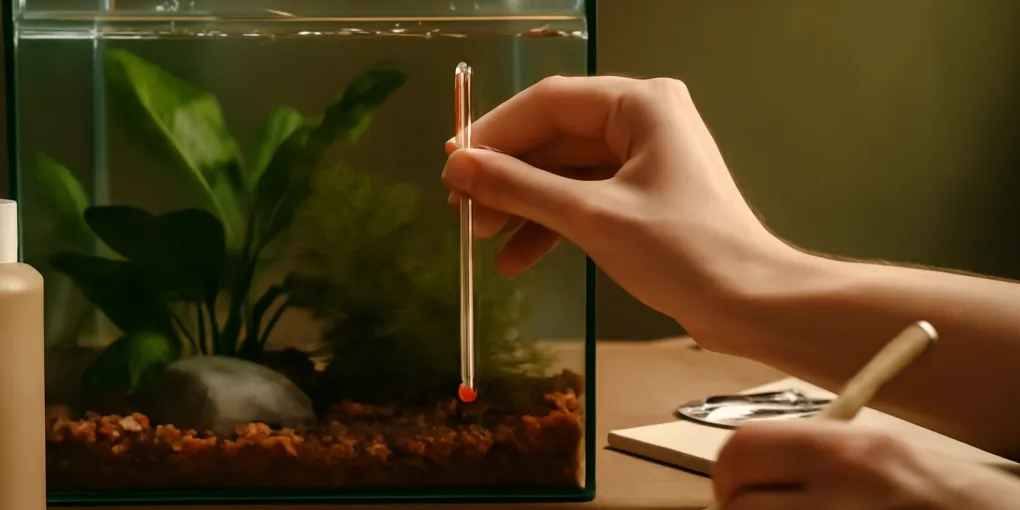
Aquarium Thermometer Placement: A Safer Protocol for Fish Tanks
ProtocolQuick picks
| Product | Key Specs |
|---|---|
| See price on Amazon |
|
| See price on Amazon |
|
| See price on Amazon |
|
Product availability, certifications, and retailer details can change; check the current Amazon page before buying.
The Safe Placement Rule
Put the main thermometer probe in the water your fish actually occupy, with normal circulation moving past it, but not touching the heater, filter intake, substrate, glass lid, or a dead corner. That sounds simple, but many bad readings come from placing a probe where it measures equipment heat instead of tank temperature.
If you are setting up a new tank, read this with our quarantine tank setup guide. Quarantine tanks are often small, lightly decorated, and heated by budget equipment, so one misleading temperature reading can matter.
Product Starting Points
| Check current options | Best use | Placement note |
|---|---|---|
| Search Amazon for digital aquarium thermometer probes | Everyday monitoring | Probe in the main water column, display outside splash range |
| Search Amazon for aquarium temperature controllers | Extra heater protection | Controller probe in moving water, heater plugged into rated controller outlet |
| Search Amazon for floating aquarium thermometers | Manual backup checks | Use briefly in an open area and compare to the digital reading |
How We Score This Protocol
| Criterion | Weight | Score | Weighted | Why it matters here |
|---|---|---|---|---|
| Research | 30% | 8.5 | 2.55 | Fish health depends on stable species-appropriate temperature and oxygen conditions. |
| Evidence Quality | 25% | 8.0 | 2.00 | Aquarium temperature guidance is strongest when tied to husbandry, heater failure prevention, and water-change practice. |
| Value | 20% | 9.0 | 1.80 | A low-cost second thermometer can prevent overcorrection and catch failed heaters. |
| User Signals | 15% | 8.0 | 1.20 | Owners often discover problems after fish gasp, hide, or become lethargic during heat swings. |
| Transparency | 10% | 9.0 | 0.90 | Buyer guidance emphasizes visible wattage ratings, probe style, waterproofing limits, and return terms before purchase. |
| Composite Score | 8.5/10 | High-value safety habit for any heated aquarium. |
Placement Protocol
- Put the heater near water flow, following the heater manual.
- Put the thermometer probe several inches away from the heater, in moving water.
- Keep the probe below the waterline during normal evaporation.
- Route the cable with a drip loop so water cannot run into electronics.
- Wait at least 30 minutes after moving the probe before judging the reading.
- Check the far side of the tank with a backup thermometer during setup and after major scape changes.
- Recheck after water changes, heat waves, room-temperature drops, and heater replacement.
The goal is not to chase a perfect number every hour. It is to know whether the tank is stable, whether the heater is overshooting, and whether the reading represents the fish’s environment.
Where Not to Put It
Do not attach the sensor directly to heater glass, behind dense hardscape with little flow, in the filter intake stream, above the normal low-water mark, or on the outside of thick glass as your only measurement. Stick-on strips can help you notice trends, but they measure through glass and room air influence.
For tanks with a sump, measure the display tank as well as the equipment chamber when troubleshooting. A sump reading can look stable while the display has a cold pocket or a heater return problem.
When a Controller Makes Sense
A temperature controller is most useful when the downside of heater failure is high: large aquariums, delicate species, expensive livestock, turtle or amphibian systems with powerful heaters, or homes with big seasonal room swings. The controller does not make a bad heater good, but it adds an independent shutoff point if the heater thermostat sticks on.
Before buying, check the heater wattage, controller rating, plug layout, waterproofing limits, and whether alarms are audible enough for your room. Place the controller probe where it sees real water temperature, not heater-glass heat.
Species and Water-Change Context
Different fish have different safe temperature ranges. Match your target range to the species you keep rather than using a generic tropical number. The RSPCA fish environment guidance emphasizes stable, appropriate water conditions, and the University of Florida IFAS aquarium guidance explains why water quality changes can stress ornamental fish systems.
Sources: RSPCA fish environment guidance, UF IFAS ornamental fish water quality
During water changes, match replacement water temperature before it enters the tank. A thermometer in a bucket can be more useful than guessing by hand. Hands are poor instruments, especially when the room is cold or the water volume is small.
Troubleshooting Odd Readings
If the thermometer says the tank is too hot or too cold, do not immediately twist the heater dial several degrees. First compare with a second thermometer. Then check probe placement, heater indicator light, water flow, room temperature, and whether the probe has slipped above the waterline.
If two reliable readings disagree by more than a degree or two, replace the suspect thermometer or use a calibrated kitchen-safe reference only for a brief comparison, not as permanent tank equipment.
Aquarium Thermometer FAQ
Can I put the thermometer on the front glass?
Yes, if it is a submerged probe or an internal thermometer and the location has normal water movement. A stick-on strip on front glass is easy to read, but it should not be your only safety reading for sensitive tanks.
Should the probe be high or low in the tank?
Mid-water is a good default. Low corners can be cooler in weak-flow tanks, while the water near a heater can be warmer. Compare both areas when setting up.
How often should I check aquarium temperature?
Check daily at feeding time and any time the room temperature changes sharply. Also check after power outages, heater changes, water changes, and filter maintenance.
Frequently Asked Questions
- Not directly beside the heater. Place the probe in moving water where fish actually live, then use a second check near the far side when troubleshooting.
- Stick-on strips are useful trend indicators, but a submerged probe or reliable backup thermometer is better for decisions about heater adjustment.
- For small stable tanks, one reliable digital probe may be enough. For large, delicate, or expensive setups, a second independent reading helps catch heater or probe errors.