Best Dog Life Jackets for Swimming and Boating: A Safety-First Buying Guide
Buyer's Guidedog life jacket for boating
Best fitBest for: Secure flotation during boating and open-water outings
Varies
Quick picks
| Product | Key Specs |
|---|---|
| See price on Amazon |
|
| See price on Amazon |
|
| See price on Amazon |
|
Product availability, certifications, and retailer details can change; check the current Amazon page before buying.
How We Score This Buying Guide
| Criterion | Weight | Score | Weighted | Why it matters here |
|---|---|---|---|---|
| Research | 30% | 8.5 | 2.55 | Canine water safety is supported by veterinary emergency guidance, boating safety principles, and rescue-handling experience, even though jacket-to-jacket trials are limited. |
| Evidence Quality | 25% | 8.0 | 2.00 | The strongest evidence is practical and biomechanical: buoyancy, fit, visibility, and recovery handles reduce predictable risks. |
| Value | 20% | 8.5 | 1.70 | A good vest is inexpensive compared with emergency care and can last several seasons if rinsed and dried. |
| User Signals | 15% | 8.5 | 1.28 | Owners consistently reward secure handles, bright colors, easy buckles, and jackets that do not twist when wet. |
| Transparency | 10% | 9.0 | 0.90 | This guide separates safety-critical features from cosmetic extras and explains when a product should be returned. |
| Composite Score | 8.4/10 | A high-value safety purchase for boats, docks, lakes, pools, and recovery-prone dogs, as long as fit is tested before the trip. |
The Short Answer
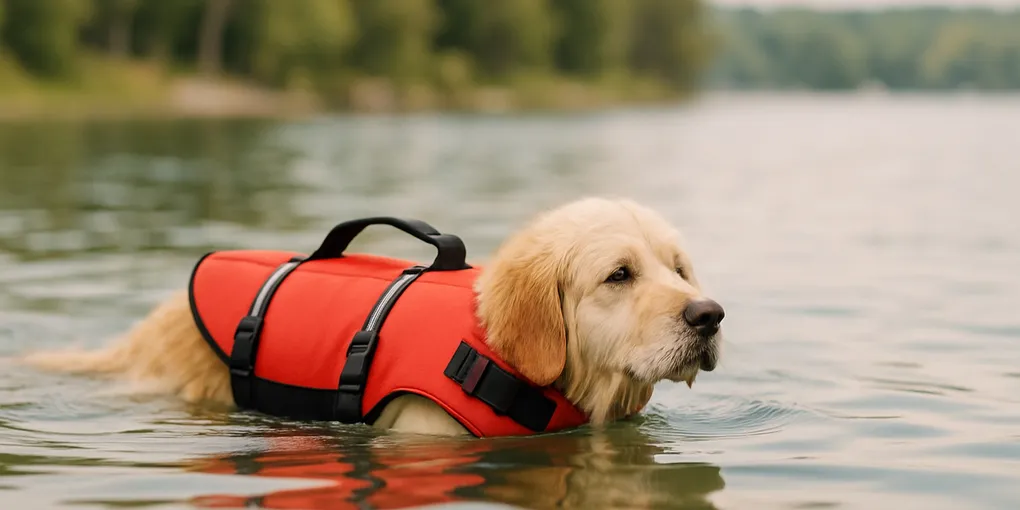
The best dog life jacket is the one your dog can wear without slipping, rubbing, overheating, or panicking. Brand matters less than fit. A safe vest keeps the dog level in the water, leaves the shoulders free enough to paddle, supports the chest and abdomen without squeezing the rib cage, and gives a human a strong handle for lifting or guiding the dog toward a ramp. Bright fabric and reflective trim matter because many water emergencies are visibility problems before they become medical problems.
For most families, the safest buying path is to measure the chest girth, weight, neck base, and back length, then choose a jacket with two or three belly closures, an adjustable chest panel, a top handle sewn into reinforced webbing, and enough buoyant material under the chest to keep the front end from sinking. Dogs with long backs, heavy heads, short muzzles, thick coats, or low body fat need more careful fitting than the size chart suggests.
Useful searches before comparing models:
- Search Amazon for dog life jacket for boating
- Search Amazon for high visibility dog life vest
- Search Amazon for dog life jacket with handle
- Search Amazon for dog flotation vest chest support
Because sizing and inventory change often, the safest choice depends on the current size chart, buoyancy design, handle strength, and return policy for your dog.
Who Actually Needs a Dog Life Jacket?
Any dog on a boat, paddleboard, dock, kayak, canoe, or open-water shoreline should wear one. The same is true for senior dogs, puppies, dogs recovering from orthopedic injury, dogs with low stamina, and dogs that swim in cold, moving, or murky water. A life jacket is especially important when the exit route is not obvious. Many dogs can enter a pool, pond, or lake but cannot find the ramp, stairs, or shoreline once they are tired.
Strong swimmers still benefit. Retrievers and spaniels may love water, but enthusiasm is not the same as endurance. Dogs can chase toys past their limits, inhale water while turning, cramp in cold conditions, or panic when another dog climbs over them. The jacket buys time, keeps the dog visible, and gives you a handle that is safer than grabbing a collar.
Flat-faced breeds need an extra safety margin. Bulldogs, French Bulldogs, Pugs, and some Boxers have less efficient airways and may struggle to keep the muzzle clear while swimming. A vest can help support them, but it should not be used as permission for deep-water exercise in heat. Keep sessions short, stay close, and stop before the dog is panting hard.
What to Look For First: Fit, Then Features
Start with chest girth at the widest point behind the front legs. This is usually the controlling measurement. Weight is useful, but two dogs at the same weight can have very different chest shapes. If your dog falls between sizes, read the manufacturer’s guidance and check whether the smaller size restricts shoulders or the larger size slides backward when wet.
A good jacket should be snug enough that you can lift slightly on the handle without the vest rotating. You should still fit two fingers under straps. The neck opening should not press the throat when the dog looks down, and the belly panels should not rub behind the elbows. After a wet trial, check for red skin in the armpits, sternum, and neck base. Wet nylon can chafe more than it appears in a dry living-room fitting.
The first test should be on land. Let the dog wear the vest for five minutes while eating treats and walking. Then test in shallow water where the dog can stand. Watch the body line. If the back end sinks, the front rides too high, or the dog twists to one side, the jacket is wrong for that body.
Feature Ranking: What Is Worth Paying For?
The most valuable premium feature is a reinforced top handle. In a real emergency, you may need to guide a dog to a swim platform, pull a dog toward a dock ladder, or steady the dog while another person brings the boat hook or ramp. Handles should be sewn into webbing that wraps around the jacket, not simply stitched into thin fabric. For large dogs, two handles can help distribute force.
The second feature is visibility. Orange, yellow, red, and bright blue are easier to spot against water than dark green, gray, or black. Reflective strips help in low light but do not replace bright color during the day. If you boat at dawn or dusk, pair the jacket with a waterproof light or reflective collar, but avoid dangling attachments that can snag.
The third feature is secure belly construction. Narrow straps alone can dig into the abdomen. Broad padded panels distribute pressure and protect skin, but they can trap heat. For hot climates, look for panels that balance support with drainage. For cold water, a little more coverage may be useful, but the jacket should still dry completely between uses.
Best Overall Type: Adjustable High-Visibility Vest
The best default for most dogs is a high-visibility vest with adjustable neck and belly straps, a sturdy handle, and moderate flotation along the chest and sides. This type works for boat days, lake swimming, dock practice, and vacation rentals because it is versatile. It also tends to fit mixed-breed dogs better than highly specialized designs.
Look for a size range that gives actual girth numbers, not only breed suggestions. Breed examples are marketing shortcuts. A lean 55-pound Border Collie mix and a thick 55-pound Bulldog mix should not be fitted the same way. Choose the jacket that matches the measuring tape, not the photo on the product page.
Useful search: Search Amazon for adjustable high visibility dog life jacket.
Best for Boating: Handle-Forward Rescue Design
For boat use, prioritize lift control. A boat dog may need to be helped over a gunwale, guided onto a swim platform, or prevented from slipping near a dock cleat. A handle-forward design places the main handle near the dog’s center of mass instead of far back over the hips. That makes assisted movement smoother and reduces twisting.
Boating jackets should have bright colors, reflective trim, secure buckles, and minimal loose straps. Long dangling strap tails can catch under deck hardware. Trim or secure extra length according to the manufacturer’s instructions. Rinse the jacket after saltwater and dry it fully before storage, because salt and mildew degrade fabric and hardware.
Useful search: Search Amazon for dog life jacket boating handle.
Best for New Swimmers: Front-Float Support
New swimmers often lift the front legs too high, splash vertically, or point the head up while the back end drops. A jacket with extra front/chest flotation can help the dog find a level body position. It should support the dog without pushing the throat backward. If the dog coughs, gags, or fights the vest, stop and refit.
Pair the jacket with controlled water introduction. Start at the shoreline. Reward voluntary steps. Let the dog turn back. Avoid throwing toys into deep water during the first sessions because the retrieve drive can override caution. The jacket is there to reduce risk, not to rush learning.
Useful search: Search Amazon for dog life jacket front flotation.
Best for Small Dogs: Lightweight Low-Bulk Vest
Toy and small breeds need flotation without heavy hardware. A vest that looks sturdy on a Labrador can feel bulky on a Chihuahua, Yorkie, or miniature Dachshund. Low-bulk designs with soft edges, small buckles, and a short back panel are often better. Watch for jackets that cover so much of the dog that the dog cannot bend, sit, or climb steps.
Small dogs also cool down quickly in water. Do not assume a life jacket solves cold stress. Dry the dog after swimming and keep sessions short. For very small dogs on boats, a carrier or secure lap position may be safer than letting the dog roam, even with a jacket.
Useful search: Search Amazon for small dog life jacket lightweight.
Best for Seniors: Easy-On Jacket With Soft Edges
Senior dogs may have arthritis, reduced muscle mass, and less tolerance for awkward handling. Choose a jacket that opens wide, fastens without lifting painful legs too much, and has soft binding around the neck and armpits. A handle is useful not only in water but also around ramps and docks, where senior dogs slip.
Do not use the handle as a routine lifting harness unless the product explicitly supports that use. Most life jacket handles are for assistance and control, not full-body carrying. Support the chest and hindquarters separately for dogs with back disease, hip pain, or neurologic weakness.
Useful search: Search Amazon for senior dog life jacket easy on.
Red Flags That Mean Return It
Return a jacket that rotates around the dog, forces the neck upward, rubs behind the elbows, traps the front legs, or cannot be tightened without restricting breathing. Also return jackets with weak handles, confusing size charts, chemical odor, sharp seams, or buckles that pop open when wet. A bargain jacket is not a bargain if you cannot trust it when a wet dog is tired.
Avoid novelty shark fins or decorative pieces if they reduce visibility or snag risk. Cute designs are fine only after the safety requirements are met. The water is not the place to prioritize a costume over a rescue handle.
Fit Test Before the First Trip
One week before boating or travel, do a full rehearsal. Put the vest on dry, reward the dog, walk around, and practice coming when called. Then visit shallow water. Let the dog enter voluntarily and swim a few feet while you hold a long line or stay within arm’s reach. After the dog exits, inspect skin and recheck strap tightness. Wet straps often loosen.
If the dog panics, do not keep trying. Panic in water is dangerous for the dog and the handler. Go back to land desensitization and consider a trainer who uses force-free water introduction. Some dogs never enjoy swimming, and that is acceptable. They can still wear a jacket for dock and boat safety.
Maintenance and Storage
Rinse after chlorine, salt, mud, or algae exposure. Hand wash with mild soap if needed. Dry in shade with straps open. Store flat or hanging, not crushed under heavy gear. Before each season, inspect stitching, buckles, reflective trim, and handle attachment. Replace the jacket if foam is compressed, fabric is torn, or the handle stitching is loose.
Do not leave a wet jacket in a hot car or sealed boat compartment. Mildew smells are unpleasant, but the bigger issue is material degradation. A jacket you maintain is more likely to fit and function when you need it.
Bottom Line
A dog life jacket is one of the few pet safety products that makes sense even for careful owners. Choose bright fabric, a reinforced handle, secure belly support, and a fit that stays centered when wet. Practice before the trip, supervise constantly, and remember that flotation buys time; it does not replace water awareness, heat caution, or a safe exit route.
Sources
- American Veterinary Medical Association pet travel and outdoor safety guidance.
- U.S. Coast Guard boating safety principles for flotation, visibility, and emergency retrieval.
- American Kennel Club canine water safety recommendations.
- Veterinary emergency guidance on heat stress, drowning risk, and respiratory risk in brachycephalic dogs.
Frequently Asked Questions
- Yes. Even strong swimmers can become tired, disoriented, injured, or separated from the boat. A properly fitted canine life jacket adds flotation, visibility, and a grab handle for recovery.
- Fit is first, followed by buoyancy distribution, a secure belly/chest system, a strong handle, and high-visibility fabric. A premium jacket that rubs or slips is less safe than a simpler one that fits correctly.
- No. It is a safety aid, not a swimming lesson. Introduce water gradually, keep sessions short, and never force a dog into water.
- They can help, but brachycephalic dogs need extra caution because breathing and heat stress risks are higher. Keep them in shallow water, avoid heat, and choose a jacket that supports the chest without restricting the airway.