Betta Feeding Ring Setup: Keep Food Out of the Filter and Measure Portions
ProtocolQuick picks
| Product | Key Specs |
|---|---|
| See price on Amazon |
|
| See price on Amazon |
|
Product availability, certifications, and retailer details can change; check the current Amazon page before buying.
A betta feeding ring gives food one repeatable place to land. That makes it easier to see whether the fish ate, whether pellets are escaping toward the filter, and whether a portion is too large. It does not improve water quality by itself; the benefit comes from catching uneaten food before it breaks apart in the tank.
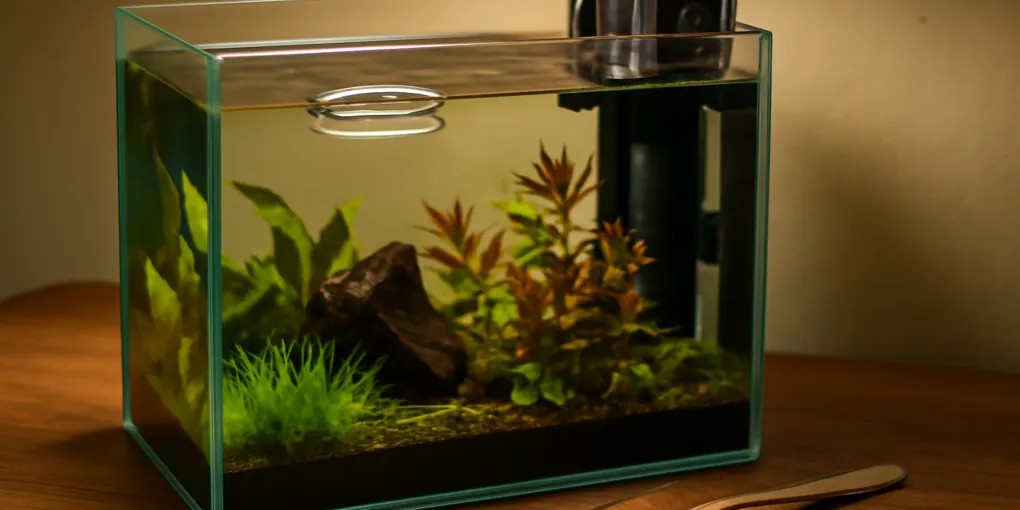
Use a suction feeding ring sized for a small aquarium on clean glass where you can watch it; See price on Amazon. Keep it clear of the filter intake and outflow. If the ring is pulled across the surface by current, placement—not the fish—is the first thing to fix.
Pick the quietest visible surface zone
Start with the filter running. Look for a patch of water with gentle surface movement where the betta can rise without being pushed across the tank. Attach the ring there, at least several inches from the intake and heater. Avoid placing it below a lid hinge or in a corner where food will collect behind equipment.
A floating ring should stay level and have no split plastic, sharp molding seam, or loose suction cup. Inspect it during every water change. If it becomes coated in biofilm or food residue, remove it, clean it with aquarium-safe methods, rinse thoroughly, and reinstall only after checking the attachment.
Feed small portions you can actually observe
Add only the amount your betta can pursue at the surface. Watch from the first pellet to the last. A ring makes the response visible: quick eating may mean the portion was small; ignored pellets, repeated spitting, or food dropping through the ring means stop adding more.
A tiny fine-resolution scale can help a household recognize how much dry food is being used over several days; See price on Amazon. It is not a prescription for a particular fish. Pellet size, food density, water temperature, life stage, body condition, and veterinary advice all matter. The daily observation is more useful than copying a pellet count from another tank.
The Merck Veterinary Manual notes that water quality and feeding management are central to fish health; see its ornamental fish management overview. Food that is not eaten becomes part of the water-quality workload.
Adjust current before blaming the ring
If pellets immediately leave the ring, turn attention to the filter outflow. Do not disable filtration to create a still surface. Instead, use the filter’s intended flow adjustment, redirect an approved output, or add an appropriate baffle only if it is designed and safe for the equipment. Confirm that oxygenation and tank circulation remain adequate.
A betta may also ignore a feeding ring if it is new, the tank is disturbed, the water is cold or poor quality, or the fish is ill. Observe breathing, posture, appetite, feces, fins, and body condition. A sudden change in appetite deserves a water-parameter check and, when signs persist, fish-veterinary or experienced aquatic-professional advice.
Remove leftovers before they become a water test problem
Keep a fine net or turkey baster used only for the aquarium nearby. After the feeding window, remove uneaten pellets from the ring and surface. If food has already sunk, siphon it rather than stirring it into the substrate. This is especially important in small betta aquariums, where a small excess is a bigger share of the system volume.
Clean the tool after it contacts tank water and store it with other aquarium-only equipment. Household basters, nets, or cups that have touched soap, food, or cleaning products do not belong in the tank. A dedicated tool makes it easier to remove leftovers immediately instead of postponing cleanup while looking for one.
Use a water test kit when appetite changes coincide with cloudy water, odor, surface film, unusual behavior, or a missed maintenance session. Our beginner aquarium water-test kit guide explains why ammonia and nitrite are urgent signals rather than a reason to add more food or conditioner blindly.
Keep a seven-day feeding note when portions drift
If several people feed the tank, write down the food type and each feeding for one week. The point is not to calculate a universal ration; it is to discover accidental double feeding and to compare what reaches the ring with what remains afterward. Take the note out of the aquarium area so ink, paper, and wet hands do not become a contamination problem.
During the same week, inspect the ring before each feeding. A ring with a cloudy film, trapped food, or a failing suction cup is not ready for another meal. Remove it, clean it, and let it air dry. This small routine is particularly useful in a filtered nano tank, where a few missed pellets can quickly become part of the next water-quality problem.
Betta feeding ring FAQ
Can I use a ring for frozen food?
Yes, if the thawed food stays contained and you can remove leftovers. Thaw and portion according to the food instructions; do not dump a cube directly into the tank where excess spreads quickly.
Does a feeding ring train a betta to come to the surface?
A predictable spot can make feeding easier to observe, but it is not a training requirement. Do not chase or tap at the fish to force it into the ring.
What if food collects under the ring?
Move the ring away from the outflow, reduce inappropriate surface turbulence through the filter’s intended controls, and feed a smaller amount. Remove trapped leftovers immediately.
Sources
- RSPCA, fish care advice: https://www.rspca.org.uk/adviceandwelfare/pets/fish
- University of Florida IFAS, ornamental fish nutrition: https://edis.ifas.ufl.edu/publication/FA096
Frequently Asked Questions
- No. It creates a predictable surface zone, but strong flow, floating pellets, and a hungry fish can still move food. Adjust current and remove leftovers promptly.
- No. Keep it where you can observe feeding and away from the filter intake, heater guard, and the strongest surface turbulence.
- Remove obvious leftovers after a short feeding window rather than letting them sink and decay. The exact time depends on food type and tank conditions, but uneaten food should not become substrate.