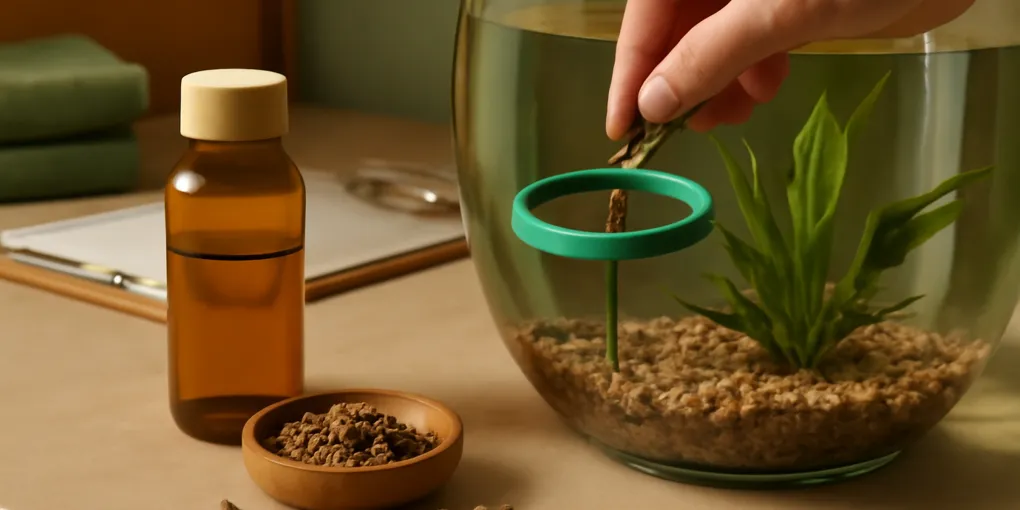
Fish Feeding Ring Setup Protocol: Cleaner Food Delivery for Small Aquariums
ProtocolQuick picks
floating aquarium feeding ring
★ Top pick- Best for: Keeping flakes or pellets in one surface area
- Check first: Strong filter flow can push food under or around the ring.
- Rationale: A simple ring makes it easier to see uneaten food before it sinks.
suction-cup betta feeding ring
- Best for: Small tanks where the ring needs to stay in one corner
- Check first: Remove or reposition if the fish guards the corner aggressively.
- Rationale: A fixed ring can help slow-feeding bettas find food without chasing current.
fine aquarium net for leftover food
- Best for: Removing excess flakes during the first week of portion testing
- Check first: A net is cleanup support, not permission to overfeed.
- Rationale: A net helps correct overfeeding before food breaks down.
What a feeding ring actually solves
A fish feeding ring is not a water-quality device. It is a behavior and portion-control tool. By keeping flakes, pellets, or floating food in one surface area, it lets you see whether the fish are eating promptly or whether food is drifting into plants, filter intakes, and substrate.
Aqueon’s care guidance for bettas and goldfish emphasizes appropriate feeding and water conditions, while RSPCA fish-care guidance stresses a suitable environment. A ring helps only if it supports those basics: controlled portions, stable water, and less waste.
Feeding-control scorecard
| Criterion | Weight | Score | Why it matters here |
|---|---|---|---|
| Research | 30% | 7.5 | Fish-care sources support controlled feeding and water-quality management. |
| Evidence quality | 25% | 7.0 | Feeding rings are practical tools rather than clinically tested equipment. |
| Value | 20% | 8.5 | The part is cheap and can prevent visible food scatter during portion testing. |
| User signals | 15% | 8.0 | Uneaten food, current drift, and fish aggression are easy to observe. |
| Transparency | 10% | 8.0 | The protocol does not claim a ring replaces filtration or water changes. |
| Composite | 7.8/10 | Useful for small tanks when flow and portions are adjusted. |
Recommended products for feeding-ring setup
- Search Amazon for aquarium feeding rings for most community tanks with floating flakes or pellets.
- Search Amazon for betta feeding rings when a betta needs a calm, predictable feeding corner.
- Search Amazon for fine aquarium nets for removing excess food during the first week of testing.
Step 1: choose the calmest surface zone
Place the ring where surface food stays visible for at least a minute. Avoid the waterfall from a hang-on-back filter, bubbler turbulence, and tight corners where timid fish cannot enter.
In a betta tank, the ring should sit away from the strongest flow and away from sharp decor. In a goldfish tank, expect more surface disturbance and test whether the ring stays put before feeding a full meal.
Step 2: reduce the first portion
Use less food than usual on the first day. The ring makes overfeeding obvious, and that can be uncomfortable if the old routine scattered food everywhere. Feed a small pinch, wait, and add more only if the fish finish promptly.
Remove visible leftovers after a few minutes. If food sinks before the fish approach, the problem may be flow, food type, stress, or overfeeding, not the absence of a ring. Owners using vacation feeders should test the same portion logic before leaving; the failure modes overlap with the automatic fish feeder weekend-trip setup.
Step 3: watch social behavior
A single feeding station can create guarding in some tanks. If one fish blocks access, use two rings or remove the ring and scatter smaller portions in separate areas. Community tanks need access, not just neatness.
For shy fish, pair the ring with a consistent cue: same spot, same time, lights already on, and no tapping on glass.
Step 4: clean the ring weekly
Biofilm and food residue collect on floating plastic. Rinse the ring during routine maintenance with aquarium-safe handling. Do not wash it with scented soap or household cleaners.
Replace suction cups that harden or lose grip. A floating ring that breaks loose and pins food behind decor is no longer doing its job.
One-week adjustment log
For the first week, write down the food amount, whether leftovers appeared, where the ring drifted, and whether any fish were blocked from eating. The useful pattern is not perfection on day one; it is a smaller, repeatable portion that all intended fish can reach without food collecting behind plants or the filter.
If the tank contains surface feeders and bottom feeders, do not let the ring starve the bottom feeders by keeping every food item at the top. Feed sinking food separately, then remove only true leftovers. If a fish becomes bolder at the ring while another disappears during meals, add a second station or stop using the ring for that tank. That choice is especially important in mixed community tanks, where tidy feeding should never matter more than every species getting its normal ration.
When to skip a feeding ring
Skip it for fish that eat sinking wafers, graze from surfaces, or become aggressive around one feeding spot. A ring is also less useful in tanks with extremely high surface agitation unless flow is adjusted safely.
If water tests show ammonia or nitrite problems, fix filtration, stocking, cycling, and maintenance first. A feeding ring can reduce waste visibility, but it cannot rescue unsafe water.
Fish feeding ring FAQ
Will a feeding ring stop flakes from sinking?
No. It slows drift, but flakes still absorb water and sink. Feed smaller portions and remove leftovers.
Can I make my own aquarium feeding ring?
You can, but avoid materials that leach, rust, shed foam, or have sharp edges. A cheap aquarium-safe ring is usually simpler.
Should the ring stay in the tank all day?
It can if fish ignore it and it stays clean, but removing it between meals makes cleaning easier and prevents curious fish from treating it as cover.
Does a ring help automatic feeders?
Sometimes. It can catch floating food under the feeder, but test for clogging, humidity, and portion size before leaving the tank unattended.
Sources
- Aqueon: Betta care guide
- Aqueon: Goldfish care guide
- RSPCA: Fish environment advice
Frequently Asked Questions
- It can help you control where food goes, but water quality still depends on correct portions, filtration, and maintenance.
- Yes, many bettas do well with a calm fixed feeding spot if the ring does not trap them or create territorial stress.
- Place it away from the strongest current, where fish can approach without being pushed into decor or the filter intake.