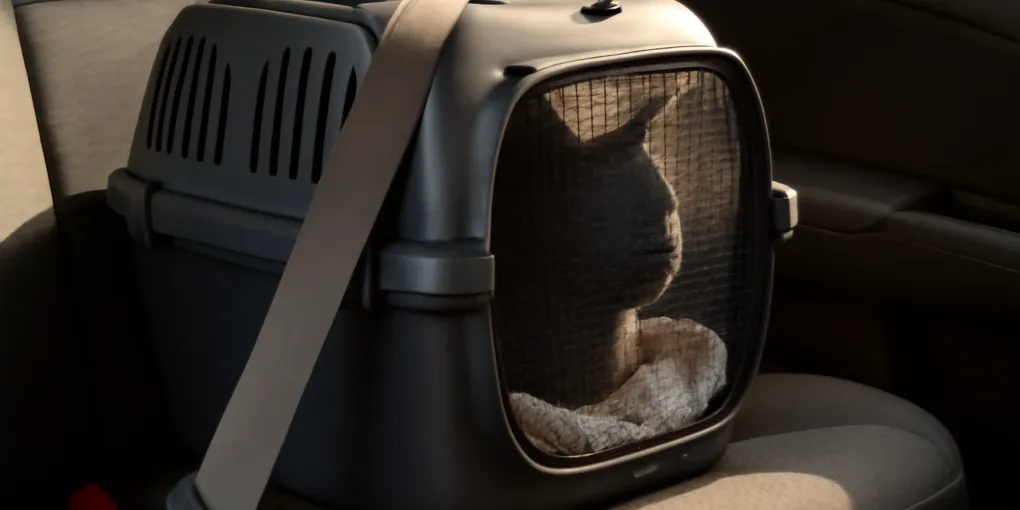
Cat Carrier Crash Test Safety Guide: What Actually Matters in the Car
Evidence ExplainerQuick picks
Sleepypod-style crash-tested pet carrier
★ Top pick Best evidence-first option- Note: Prioritize published crash-test documentation and correct seat-belt routing over soft-sided convenience alone.
Sturdy two-door hard cat carrier
Best vet-visit fallback- Note: A rigid carrier with secure latches is often easier for vet visits, but it still needs a safe position in the vehicle.
Washable carrier liner and pee pad set
Best trip support- Note: Absorbent, low-bulk liners help with stress accidents without blocking ventilation or door closure.
Direct answer
The safest cat carrier for car travel is one your cat can load into calmly and that can be secured exactly as the manufacturer and crash-test evidence intend. A carrier should not sit loose on a seat, hang from a shoulder strap, or wedge in the front passenger footwell. For a nervous or rarely traveled cat, the practical best pick is often a well-documented crash-tested carrier for car trips plus a separate easy-loading hard carrier for routine vet handling.
The Center for Pet Safety publishes independent carrier and crate test information that shows why marketing language alone is not enough (Center for Pet Safety carrier results). The AVMA travel FAQ also emphasizes planning, identification, restraint, and safe handling during travel (AVMA pet travel FAQ). Use those ideas together: evidence matters, but so does whether your actual cat can enter, turn, breathe, and stay contained.
Quick picks for cat car travel
- Choose a Search Amazon for Sleepypod-style crash-tested cat carriers when car safety documentation is the top priority and your cat fits the listed weight and size range.
- Choose a Search Amazon for two-door hard cat carriers when the immediate problem is getting a cat to the veterinarian without fighting a single front door.
- Add a Search Amazon for washable cat carrier liners when stress accidents are likely, but keep padding thin enough that the door and latch still close cleanly.
Crash-tested does not mean universally safe
A crash-tested label only helps if the tested setup matches how you use the product. Check the exact model name, size, weight limit, belt path, and orientation. A carrier tested with the seat belt through a specific strap may not perform the same way if the belt is looped around a handle or if the carrier is turned sideways because it fits the seat better.
Do not buy by pet weight alone. A long cat may exceed a carrier’s comfortable length before reaching the weight limit. The cat should be able to sit normally, turn around, and lie in a natural position for the trip length. For short rides to the vet, secure containment matters most. For longer drives, fit, ventilation, and a liner that can be swapped without escape become more important.
Seat placement and belt routing
The back seat is usually the starting point. Keep the carrier away from front airbags and from loose cargo that could slide into it. Follow the carrier’s instructions for the seat belt. If the belt path is not obvious, do not improvise with a handle unless the maker says that handle is load-bearing for vehicle restraint.
A carrier should not rock, tip, or slide during normal braking. After buckling it, push gently from several directions. Movement in a real stop will be greater than your hand test, so obvious looseness is a fail. Avoid stacking carriers, hanging them from headrests, or using bungee cords as a primary restraint.
Door and latch details
A safe carrier keeps the cat inside after a bump, a panic leap, or a dropped corner in the parking lot. Doors should close squarely, latches should engage fully, and zippers should not creep open under pressure. Soft carriers need zipper locks or clips if your cat paws at openings. Hard carriers need screws or secure side fasteners; loose plastic clips can pop apart.
Two-door designs help because a vet can lift the top or side instead of pulling the cat through one small opening. For cats that brace at the door, a removable top can turn a stressful extraction into a calmer exam. That handling benefit does not replace car restraint, but it affects whether the carrier is actually used.
Ventilation, sight lines, and stress
More mesh is not always better. A cat needs airflow, but too much exposure can make the ride feel threatening. Many cats do better with ventilation on several sides plus the option to cover part of the carrier with a towel after airflow is checked. Never block vents in summer heat, and never place the carrier in direct sun inside a parked vehicle.
Use the carrier at home before the trip. Leave it open with a familiar blanket, feed treats near it, and practice closing the door for short calm intervals. A technically excellent carrier that appears only on vet day becomes a warning signal.
When a hard carrier is still the better choice
Some crash-tested soft carriers are excellent for cars but awkward for frightened cats, very large cats, or cats that need top access at the clinic. A rigid two-door carrier may be the better everyday tool if it gets the cat safely contained without injury. If you use that route, place it low and stable, buckle or position it according to the product guidance, and drive as though you are carrying fragile cargo.
For multi-cat homes, use one carrier per cat. Shared carriers increase fighting risk and make emergency handling harder. Label carriers, keep a spare towel inside each one, and make sure each cat’s microchip and ID information is current before travel.
Cat car carrier FAQ
Should the carrier face forward or sideways?
Follow the carrier’s instructions. Some products are designed for a specific orientation and belt path. If the instructions are missing or vague, do not assume a handle or shoulder strap can take crash loads.
Are backpack carriers safe in the car?
Most backpack carriers are designed for carrying convenience, not vehicle crash protection. Use them only if the manufacturer provides clear vehicle-restraint instructions and your setup follows them.
What if my cat soils the carrier?
Use a thin washable liner or disposable pad under a familiar towel. Do not over-pad the floor so much that the cat loses headroom or the door no longer latches securely.
Internal next step
If the trip is a vet visit, pair carrier choice with the cat carrier training for vet visits plan. If the car setup includes a dog too, read how to secure a dog in car so cargo, crates, and leashes do not conflict.
Sources
- Center for Pet Safety: Carrier test results
- AVMA: Traveling with your pet FAQ
Frequently Asked Questions
- No. A loose cat can distract the driver, hide under pedals, escape when a door opens, or be injured in a sudden stop.
- No. The carrier also has to tolerate load, keep doors closed, and use the belt path the maker tested or recommends.