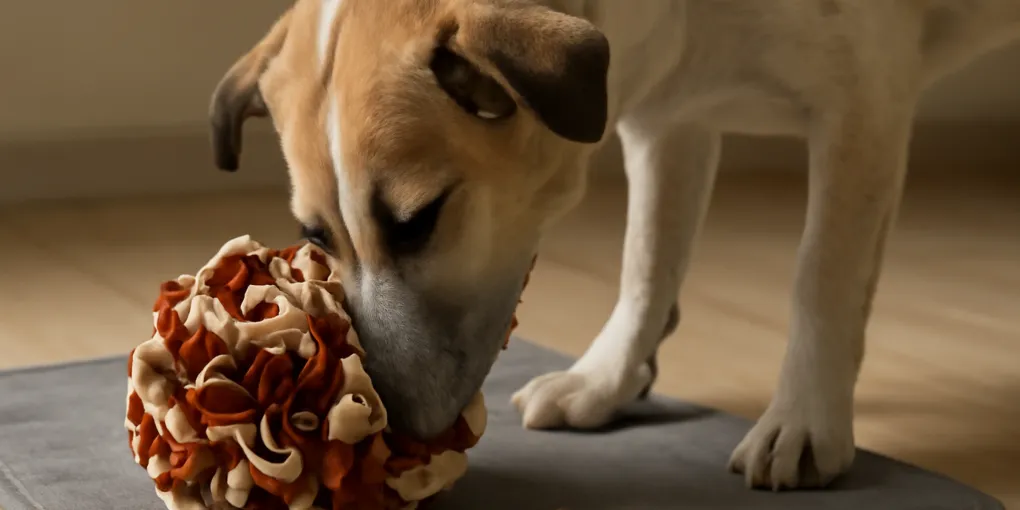
Do Snuffle Balls Help Dogs? Enrichment Benefits, Choking Risks, and Better Uses
Evidence ExplainerQuick picks
Washable snuffle ball for dogs
★ Top pick Best for supervised scent games- Why it is included: Good for dogs who gently nose fabric folds; supervise closely because fabric strips are unsafe for chewers who swallow pieces.
Flat snuffle mat
Safer first option- Why it is included: Safer first option for beginners, seniors, and dogs frustrated by rolling toys; still needs washing and portion control.
Do Snuffle Balls Help Dogs? Enrichment Benefits, Choking Risks, and Better Uses
Snuffle balls can help some dogs by turning a few pieces of kibble into a short scent-foraging game. They are most useful for gentle dogs who like sniffing fabric folds and need a low-impact indoor activity. They are not a chew toy, anxiety treatment, or substitute for walks, training, veterinary care, or safe social contact.
A flat snuffle mat is often the better first purchase. A ball rolls, hides food deeper, and can frustrate dogs who paw, rip, or swallow fabric. The right choice depends on how your dog plays when food is involved.
For related enrichment, see our dog snuffle mat routine guide and dog puzzle toys guide.
Recommended products and safer starting points
- Search Amazon for washable snuffle ball for dogs if your dog is gentle with fabric and already understands food-search games.
- Search Amazon for flat snuffle mat for dogs if this is your dog’s first nose-work feeding toy.
- Search Amazon for dog slow feeder bowl if the main problem is inhaling meals, not boredom.
- Search Amazon for washable dog training treat pouch if you plan to use measured kibble for short search sessions.
PSR G6 score for snuffle balls
| Factor | Weight | Score | Weighted contribution |
|---|---|---|---|
| Research fit | 30% | 3.8 | 1.14 |
| Evidence quality | 25% | 3.4 | 0.85 |
| Value | 20% | 4.0 | 0.80 |
| User signals | 15% | 4.0 | 0.60 |
| Transparency | 10% | 4.1 | 0.41 |
| Composite | 100% | 3.8/5 |
The score reflects a plausible enrichment tool with limited direct research on the ball format itself. The stronger evidence supports species-appropriate foraging, environmental enrichment, and food-puzzle use when matched to the individual dog. A washable ball with tight seams scores higher for gentle sniffers; a flat mat scores higher for puppies, seniors, and fabric chewers.
What snuffle balls actually do
A snuffle ball hides dry food between fabric folds. The dog has to sniff, nudge, rotate, and separate the folds to find pieces. That slows access to food and gives the nose a job.
This matters because many pet dogs eat from bowls in seconds and spend much of the day with little problem-solving. Short, successful search games can provide mental work without high-impact running. They can be useful on rainy days, during crate-rest boredom if your veterinarian allows it, or for senior dogs who still enjoy food puzzles.
Where the evidence is stronger and weaker
The strongest case is not that snuffle balls have unique clinical proof. It is that controlled foraging and food puzzles fit broader animal-welfare principles: animals benefit from opportunities to perform natural behaviors and make simple choices.
The weaker part is product specificity. A snuffle ball has not been proven superior to a flat mat, scatter feeding in grass, a towel roll, or a slow feeder. If a seller claims the ball cures separation anxiety, stops barking, or replaces training, treat that as marketing.
Snuffle ball vs snuffle mat
Choose a snuffle ball for a dog who already noses gently, enjoys rolling toys, and does not shred fabric. It is more compact than a mat and can make small portions last longer.
Choose a flat snuffle mat for beginners, seniors, flat-faced dogs, cautious dogs, or dogs who get frustrated by moving toys. A mat is easier to inspect, easier to teach, and less likely to become a fabric tug object.
Choose a slow feeder bowl when the main problem is gulping meals. A snuffle ball is usually too small and too chewable for full meals unless the dog is calm and the portion is tiny.
Safety checks before every session
Inspect seams, fabric strips, and hidden pockets. Retire the toy if strips loosen, stuffing appears, or the dog starts tearing instead of sniffing. Use dry food only unless the manufacturer says it is washable enough for moist food.
Supervise the first sessions. Pick the toy up when the food is gone. Do not leave a fabric snuffle ball in a crate with a dog who chews bedding, swallows socks, or destroys plush toys.
For multi-dog homes, separate dogs before using food puzzles. A toy that is calming for one dog can trigger guarding when another dog approaches.
How to introduce a snuffle ball
Start easy. Place a few high-smell treats loosely on the outside folds so the dog wins quickly. Then tuck kibble only slightly deeper. Keep the first session under three minutes.
If the dog bites and shakes the ball, pause and switch to a flat mat. If the dog gives up, make it easier. If the dog eats fabric, stop using fabric food toys and ask a trainer or veterinarian for safer enrichment options.
Portion control matters
Use part of the dog’s normal meal, not unlimited treats. Snuffle balls can quietly add calories because the activity feels wholesome. Measure the food before loading the toy and subtract it from dinner.
Dogs with pancreatitis history, food allergies, diabetes, kidney disease, or prescription diets should use veterinarian-approved food only. The enrichment method does not make random treats safe.
FAQ
Are snuffle balls safe for puppies?
They can be safe for supervised puppies who sniff gently, but many puppies chew fabric. Start with a flat mat or scatter feeding and remove the toy immediately if the puppy mouths, rips, or swallows material.
Can a snuffle ball replace a walk?
No. It can provide indoor mental work, but dogs still need appropriate exercise, elimination breaks, training, and social contact. Use it as one small activity, not the whole day.
Is a snuffle ball better than a slow feeder bowl?
Only when the goal is scent enrichment with a small portion. For dogs who inhale meals, a stable slow feeder bowl is usually easier to clean, portion, and supervise.
How often can I use one?
Daily use is fine for the right dog if you count the food and keep sessions short. Rotate with mats, training, walks, and rest so the toy stays interesting.
Sources and veterinary references
- ASPCA. Canine DIY enrichment ideas: https://www.aspca.org/pet-care/dog-care/canine-diy-enrichment
- WSAVA Global Nutrition Committee. Body condition and treat-calorie guidance: https://wsava.org/global-guidelines/global-nutrition-guidelines/
- Merck Veterinary Manual. Normal social behavior and environmental needs of dogs: https://www.merckvetmanual.com/dog-owners/behavior-of-dogs/normal-social-behavior-in-dogs