LickiMat Review for Dogs: Calming Tool, Messy Gimmick, or Useful Slow Feeder?
ReviewLickiMat Classic Soother or Buddy
Reviewed pickBest for: Supervised licking sessions with spreadable food and gentle dogs
$7–$15
Quick picks
| Product | Key Specs |
|---|---|
| See price on Amazon |
|
| See price on Amazon |
|
Product availability, certifications, and retailer details can change; check the current Amazon page before buying.
LickiMat Review for Dogs: Calming Tool, Messy Gimmick, or Useful Slow Feeder?
A LickiMat is worth buying if your dog will calmly lick a thin smear of wet food, yogurt, pumpkin, or canned diet while you supervise. It can slow snack time, give the dog a predictable settling task, and make grooming or post-walk decompression easier. It is not a treatment for severe anxiety, and it is a bad fit for dogs that chew mats or guard food.
The best use is small and specific: spread a measured amount of dog-safe food into the texture, put the mat on a washable surface, supervise, then wash it thoroughly. If you expect it to solve separation anxiety, entertain a power chewer alone, or replace behavior care, it will disappoint you.
For more active food enrichment, compare our KONG Wobbler review and snuffle mat setup routine. A lick mat is the quiet, stationary member of that enrichment drawer.
Best fit and buying links
- Search Amazon for LickiMat Classic dog lick mat if your dog is gentle and you want the lowest-cost trial.
- Search Amazon for LickiMat Tuff dog lick mat if you want a more rigid version that is easier to handle.
- Search Amazon for dog-safe silicone spatula if you want to spread food thinly instead of piling calories on the mat.
- Search Amazon for dog lick mat suction cups if you plan to use one on tile during baths and can supervise closely.
PSR G6 Composite Score for LickiMat
| Factor | Weight | Score | Weighted contribution |
|---|---|---|---|
| Research fit | 30% | 4.0 | 1.20 |
| Evidence quality | 25% | 3.7 | 0.93 |
| Value | 20% | 4.4 | 0.88 |
| User signals | 15% | 4.1 | 0.62 |
| Transparency | 10% | 4.2 | 0.42 |
| Composite | 100% | 4.0/5 |
The score is strong for cost, clarity, and low noise. It is lower as an anxiety product because licking can support relaxation for some dogs but does not erase fear, panic, pain, or separation distress.
What LickiMat does well
The mat turns a small amount of spreadable food into a longer licking task. That matters because licking is quiet, repetitive, and easier for many dogs than a puzzle that slides, bangs, or requires pawing. For dogs that become excited by treat balls, a stationary mat can be a better evening option.
It also gives owners an easy way to pair mild handling with food. Nail-file practice, brushing one body area, bath setup, or drying paws can be less chaotic when the dog has a safe licking job. The session should still be voluntary and gentle. A mat should not be used to force a dog through painful grooming.
The Classic mat is cheap and flexible. The Tuff version is easier to pick up, less floppy during washing, and often a better first choice if your dog paws at food toys.
Where it falls short
Chew risk is the first limitation. Some dogs finish the food and immediately bite the mat. If your dog swallows toy pieces, skip flexible lick mats or use only a sturdier product under direct supervision. Retire any mat with missing chunks, torn edges, or deep tooth damage.
Cleaning is the second limitation. Food pressed into grooves can become residue if you rinse casually. Use warm water, dish soap, a brush, and full drying. If the product is labeled dishwasher-safe, use the top rack as directed, but still inspect grooves afterward.
The third limitation is calorie creep. Peanut butter and cream cheese can turn a calming tool into a high-fat snack fast. Use a thin smear of dog-safe wet food, soaked kibble paste, plain pumpkin, or veterinary diet that already fits the meal plan. Avoid xylitol-containing peanut butter.
Anxiety claims: helpful but limited
A lick mat can help a dog settle during mild arousal because it provides a predictable, rewarding task. It may help during baths, grooming setup, or quiet time after a walk. It is not a stand-alone fix for dogs that panic when left alone, destroy exits, shake through storms, or cannot recover after triggers.
For severe fear, ask your veterinarian or a qualified behavior professional. The mat can be part of a plan, but it should not delay medical or behavior care.
Food and LickiMat texture choices
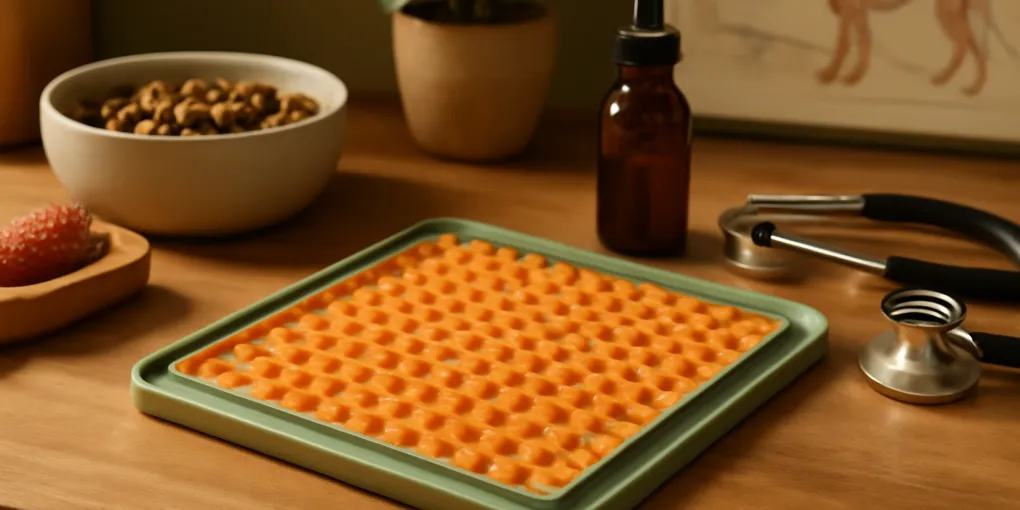
Start with a pea-thin smear across one quadrant of the LickiMat Soother or Buddy pattern, not a pile of peanut butter. If the dog finishes in thirty seconds, spread the same measured food across more grooves, choose the smaller-grid texture, or freeze a teaspoon of soaked kibble paste into the surface. If the dog paws, folds, or mouths the mat, switch to the rigid LickiMat Tuff style or stop the session.
Good starters include wet dog food, soaked kibble mashed with water, plain canned pumpkin, or a small amount of plain yogurt if your dog tolerates it. Avoid grapes, raisins, chocolate, macadamia nuts, xylitol, and rich leftovers. For dogs on renal, GI, allergy, or weight-loss diets, use the approved canned version of the same diet so the mat does not quietly change the nutrition plan.
Who should skip it
Skip lick mats for dogs that guard food around people or other pets unless a trainer has built a safety plan. A mat can make the dog stay in one place with a valuable resource, which may intensify guarding. Use separate rooms for multi-dog homes.
Also skip it for dogs that chew and swallow flexible material, dogs on strict medical diets unless the food is approved, and dogs that become frantic when food is stuck in grooves. Enrichment should lower stress, not create a wrestling match.
Final verdict
Buy a LickiMat if you want a cheap, quiet, supervised food-enrichment tool and your dog is likely to lick rather than chew. Choose the Tuff style if washing and rigidity matter. Skip it if your dog destroys soft items, guards food, or needs help for serious anxiety.
The best version of this purchase is part of a routine: measured food, short session, supervision, wash, dry, and storage. Used that way, it earns a place beside a snuffle mat or treat toy. Left on the floor after the food is gone, it becomes clutter or a chew hazard.
FAQ
Can I leave a dog alone with a LickiMat?
No. Use it as a supervised food activity, then pick it up when the food is gone. Dogs that chew mats can swallow pieces.
What food should I put on a lick mat?
Use a thin layer of the dog’s normal wet food, soaked kibble paste, plain pumpkin, or another veterinarian-approved option. Avoid xylitol peanut butter and rich human foods.
Is LickiMat good for grooming?
It can help with mild handling if the dog is comfortable and the grooming is not painful. Stop if the dog freezes, growls, bites, or ignores the food from stress.
Which LickiMat is best for chewers?
No lick mat is best for unsupervised chewers. If your dog mouths the mat after food is gone, try a sturdier rigid version only under close supervision or choose a different enrichment tool.
Sources and veterinary references
- Ohio State University Veterinary Medical Center. Puzzle toys and enrichment for pets: https://vmc.vet.osu.edu/sites/default/files/documents/behavioral-med-puzzle-toys-2024.pdf
- ASPCA. Dog enrichment and care resources: https://www.aspca.org/pet-care/dog-care
- WSAVA Global Nutrition Committee. Nutrition guidelines and calorie-control resources: https://wsava.org/global-guidelines/global-nutrition-guidelines/