SureFeed Microchip Pet Feeder Review: Worth It for Food-Stealing Cats?
ReviewSureFeed Microchip Pet Feeder
Reviewed pickBest for: Multi-cat homes where one cat needs protected food access
$150–$220
Quick picks
| Product | Key Specs |
|---|---|
| See price on Amazon |
|
| See price on Amazon |
|
Product availability, certifications, and retailer details can change; check the current Amazon page before buying.
SureFeed Microchip Pet Feeder Review: Worth It for Food-Stealing Cats?
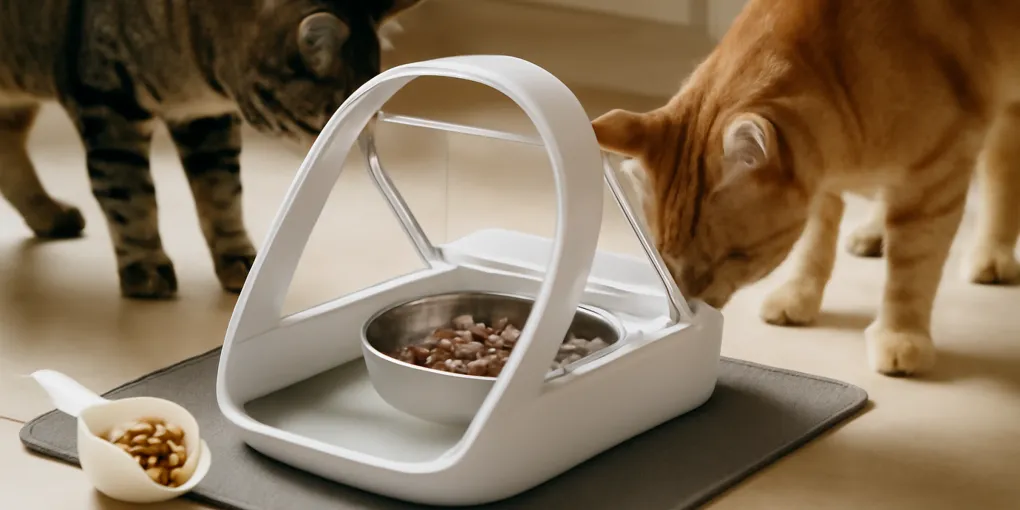
The SureFeed Microchip Pet Feeder is worth considering when one cat steals another cat’s food, one pet needs a prescription diet, or a slow eater keeps losing meals to a faster housemate. Its value is not that it makes feeding automatic. It creates a controlled bowl that opens only for a registered microchip or collar tag.
It is not the right first purchase for every feeding problem. If the issue is obesity, vomiting, food aggression, diarrhea, or a prescription diet change, a veterinarian should guide the plan. If the issue is two cats politely eating from separate rooms, a closed door and timed meals may solve it for less money.
For broader feeding routines, see our automatic feeder introduction protocol and automatic wet-food feeder guide.
Best fit and buying links
- Search Amazon for SureFeed Microchip Pet Feeder if a specific cat needs protected access to wet or dry food.
- Search Amazon for SureFeed rear cover if another cat tries to sneak in from behind.
- Search Amazon for RFID cat feeder collar tag if microchip reading or product availability makes an alternative necessary.
- Search Amazon for washable cat feeding mat because protected feeders still spill crumbs and wet food.
PSR G6 score for SureFeed Microchip Pet Feeder
| Factor | Weight | Score | Weighted contribution |
|---|---|---|---|
| Research fit | 30% | 4.0 | 1.20 |
| Evidence quality | 25% | 3.8 | 0.95 |
| Value | 20% | 3.9 | 0.78 |
| User signals | 15% | 4.4 | 0.66 |
| Transparency | 10% | 4.2 | 0.42 |
| Composite | 100% | 4.0/5 |
The score reflects a strong use case, not a guarantee. The feeder can protect access, but nutrition outcomes still depend on the diet, portions, training, and whether other pets learn to defeat the setup.
What the feeder does well
The SureFeed solves one specific problem: identifying the allowed pet at the bowl. That matters in multi-cat homes where one cat needs kidney, urinary, allergy, weight-loss, or kitten food and another pet should not eat it. It also helps slow eaters who graze over several hours while a bolder cat patrols the bowls.
The lid helps keep food covered between visits. That is useful for wet food, although it does not make wet food safe indefinitely at room temperature. The bowl still needs cleaning, and leftovers still need time limits based on your veterinarian’s food-safety advice.
The feeder is also clearer than many app-based products. There is no promise that it diagnoses health problems. It either opens for the registered pet or it does not.
Where it disappoints owners
Training is the main friction. Some cats dislike the moving lid. Others eat only if the owner stands nearby at first. A cat that has been bullied at bowls may need a quiet room, multiple sessions, and a rear cover before trusting the feeder.
The second disappointment is sneak access. A determined housemate may push in beside the authorized cat or reach from behind. Placement against a wall, use of the rear cover, and supervision during the first week matter.
The third issue is price. If you need two or three units, the cost rises quickly. The feeder is easiest to justify when the protected food is medically important or expensive enough that theft creates real waste.
Prescription diet use case
This is the strongest reason to buy. Cats on urinary, kidney, hypoallergenic, gastrointestinal, or weight-management diets may need consistent separation from other foods. If one cat eats the wrong food, the diet trial or treatment plan can fail.
A microchip feeder can reduce accidental sharing, but it does not replace household management. Keep the feeder in a low-stress location. Watch the first meals. Weigh or measure portions. Tell your veterinarian if the cat eats less because the device makes mealtime intimidating.
Food stealing and weight control
For a food-stealing cat, the feeder protects the victim’s portion. It does not automatically help the thief lose weight. The stealing cat still needs measured meals, enrichment, and possibly a separate feeding station. If hunger seems intense or weight changes suddenly, ask the veterinarian about medical causes such as diabetes, hyperthyroidism, intestinal disease, or medication effects.
The protected cat may gain confidence when food remains available, but monitor body condition. A feeder that allows all-day grazing can increase calories if portions are not measured.
Wet food practicality
The feeder can hold wet food, but hygiene remains the owner’s job. Use clean bowls, discard old food on a safe schedule, and wash parts thoroughly. In warm rooms, wet food should not sit for long periods just because it is covered. If your cat eats poorly, test whether the problem is the lid, bowl shape, food temperature, or room location before blaming the microchip reader.
Microchip and collar tag reliability
Most cats with standard microchips should be compatible, but placement and reading angle can vary. Register the cat slowly and confirm the door opens consistently before trusting the feeder unsupervised. If the cat is not microchipped, the included or compatible collar tag can work, but collars must be breakaway and monitored.
If the feeder misses reads, check batteries, feeder position, competing metal surfaces, and whether the cat approaches at an odd angle. Do not let a medical-diet cat miss meals while you troubleshoot.
Training plan
Start with the lid open or training mode if available. Put familiar food in the bowl and place the feeder where the cat already feels safe. Let the cat approach without pressure. Reward calm investigation. Over days, allow the lid to move more until the cat accepts normal operation.
In multi-cat homes, train the authorized cat alone first. Then supervise with the other cat nearby. If the other cat crowds the feeder, add a wall corner, rear cover, or separate room.
Cleaning and maintenance
Food feeders fail when owners underestimate cleaning. Remove bowls, wash food-contact parts, wipe the lid area, and check for dried food in seams. Replace batteries before they die. Keep a normal bowl available temporarily if the feeder malfunctions, especially for cats that cannot safely miss meals.
Do not place the feeder next to a litter box, loud appliance, or high-traffic doorway. A protected bowl still needs a cat-friendly feeding location.
Who should skip it
Skip it if your cats can already be separated reliably at meals, if the real issue is fast eating that a slow feeder could solve, or if a cat is losing weight, vomiting, having diarrhea, or refusing food before a veterinarian checks the medical problem. Delay it if your household cannot monitor training; a rushed introduction can make a timid cat eat less.
Final verdict
Buy the SureFeed Microchip Pet Feeder when protected access has real value: prescription food, multi-cat stealing, slow eaters, or expensive wet food that should not be shared. It is a strong tool for a specific household problem. It is weaker as a generic upgrade for a single cat who already eats well.
The best setup is the feeder in a quiet location, trained gradually, cleaned often, paired with measured portions, and checked during the first week for sneaking or avoidance.
FAQ
Does the SureFeed feeder stop one cat from stealing food completely?
It can reduce stealing, but determined cats may sneak beside or behind the authorized cat. Placement, supervision, and rear-cover accessories may be needed in homes with persistent food thieves.
Can I use wet food in a microchip feeder?
Yes, but covered wet food still has time and temperature limits. Wash bowls daily, discard old food, and ask your veterinarian about safe timing if your cat needs medical wet food.
What if my cat is scared of the moving lid?
Use the slowest training mode available, start with familiar food, and let the cat approach without pressure. If the cat eats less or avoids the room, pause and rebuild confidence before relying on the feeder.
Is a microchip feeder worth it for one cat?
Usually only if there is a specific access problem, such as keeping a dog out of cat food or protecting measured portions. For a single cat without theft or medical-diet issues, a normal bowl or timed feeder may be enough.
Sources and veterinary references
- International Cat Care. Feeding cats and reducing feeding stress: https://icatcare.org/advice/feeding-your-cat/
- AVMA. Pet healthy-weight guidance for owners: https://www.avma.org/resources-tools/pet-owners/petcare/your-pets-healthy-weight
- WSAVA Global Nutrition Committee. Nutrition toolkit and body condition resources: https://wsava.org/global-guidelines/global-nutrition-guidelines/
- Cornell Feline Health Center. Feline health and owner observation resources: https://www.vet.cornell.edu/departments-centers-and-institutes/cornell-feline-health-center/health-information