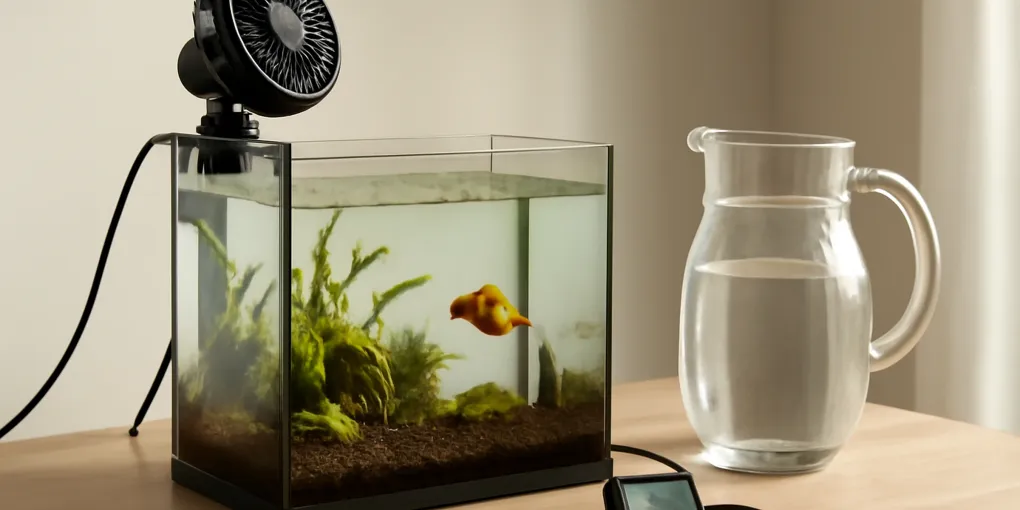
Aquarium Cooling Fan Setup Protocol: Lower Tank Temperature Without Shock
ProtocolQuick picks
| Product | Key Specs |
|---|---|
| See price on Amazon |
|
| See price on Amazon |
|
Product availability, certifications, and retailer details can change; check the current Amazon page before buying.
Direct answer
An aquarium cooling fan can help a warm tank, but it should be treated like a controlled evaporation tool, not a panic button. The safe setup is: independent thermometer, gradual airflow across open water, a secure lid or jump barrier, conditioned top-off water, and a species-specific temperature limit.
The mistake is chasing a number too quickly. Fish experience the water around them, not your intention. Sudden ice packs, big cold water changes, and fans that drop water level below the filter intake can create a second problem while you are trying to solve heat.
The RSPCA’s fish-environment guidance emphasizes that fish need a suitable aquatic environment, correct water quality, and species-appropriate conditions (RSPCA). Temperature is part of that environment. Fishkeeping guidance also notes that tropical fish temperature targets vary by species and that stability matters when managing tank heat (Fishkeeping.co.uk).
Step 1: confirm the problem with a real thermometer
Before buying a fan, measure. Use a digital probe thermometer or a reliable glass thermometer and record readings in the morning, late afternoon, and after lights have been on. Put the probe away from the heater and out of direct light. If you only look once, you may miss the hottest part of the day.
Compare the readings with the needs of the actual livestock. A betta, goldfish, shrimp colony, axolotl, and tropical community tank do not share one safe target. If you cannot identify a fish or its temperature range, pause and look that up before changing hardware.
Step 2: reduce room heat first
Fans work better when the room is not fighting them. Close blinds on sun-facing windows. Move the tank away from direct sun if that can be done safely. Shorten light intensity or photoperiod temporarily if the light fixture is adding heat, but avoid sudden blackout changes for planted tanks unless heat risk is urgent.
Do not move a full aquarium. If the location is truly unsafe, drain and relocate with a plan, or get experienced help. A small desktop tank may be movable; a larger tank can crack, twist a stand, or spill if shifted while loaded.
Step 3: mount the fan for evaporation, not splash
A clip-on fan should blow across the water surface. That increases evaporation and can lower temperature gradually. It should not spray water into power strips, push floating plants into the filter intake, or vibrate the rim. Use a drip loop on cords and keep plugs below the outlet path so water cannot run into them.
If the tank has a tight lid, open only the section needed for airflow and preserve a jump barrier. Many fish jump when stressed, startled, or chasing food. A cooling setup that leaves a wide open gap above hatchetfish, bettas, killifish, or active community fish creates a new risk.
Step 4: top off correctly
Evaporation removes water, not dissolved minerals. Top off with dechlorinated freshwater for freshwater tanks, not extra salt or medication unless a veterinarian or aquatic specialist directs it. Mark the normal waterline with a small piece of tape, then top off before the filter intake gurgles or the heater becomes exposed.
For very small tanks, evaporation changes can happen fast. Check water level twice daily during the first hot spell. If the fan drops the tank temperature but causes constant level swings, reduce fan speed or running time.
Step 5: use a schedule instead of all-day guessing
Run the fan during the hours when the tank actually climbs. Many tanks do not need overnight cooling; a fan left on all night can drop temperature too far if the room cools. Use the thermometer log to decide. A cheap outlet timer can keep the fan from running after the dangerous window.
If you use an aquarium controller, set conservative thresholds and verify with an independent thermometer. Controllers fail, probes drift, and a fan cannot solve every heat problem.
What to avoid
Avoid floating loose ice cubes in the tank. They can create cold pockets, introduce unconditioned water, and encourage emergency tinkering instead of measured correction. Avoid large cold water changes unless an aquatic veterinarian or experienced fish professional gives a specific plan. Avoid aiming a household fan so strongly that it chills one corner while the heater tries to compensate.
Also avoid blocking gas exchange with plastic wrap or improvised covers after opening the lid for a fan. Oxygen demand can rise as water warms. Keep filtration and surface movement functioning while managing jump risk.
Buying notes
Buy the thermometer first. A fan without a thermometer is guesswork. A search Amazon for probe aquarium thermometers gives you a baseline before you add a search Amazon for clip-on aquarium cooling fans. For nano tanks, a small multi-speed clip-on fan is usually easier to control than a large desk fan. For larger or heavily stocked tanks, a fan may only buy a few degrees; the real fix may be room AC, a chiller, reduced lighting heat, or moving the aquarium away from a hot wall.
If the tank repeatedly overheats, review stocking, filtration, and location rather than treating every summer afternoon as an emergency. A stable environment is more useful than a dramatic rescue.
Aquarium cooling fan FAQ
How much can a fan cool an aquarium?
It depends on room humidity, airflow, exposed surface area, and tank size. Some tanks may drop a couple degrees; others barely change. Measure the actual tank rather than relying on product claims.
Should the heater stay plugged in during summer?
Usually yes, but check that it is working correctly and not stuck on. A thermostat-controlled heater can protect against overnight drops after daytime fan use. If you suspect heater failure, unplugging is not enough; replace or remove it with a safe temperature plan.
Can I use a cooling fan on a betta tank?
Yes, if the betta’s species-appropriate temperature range is respected, the top remains jump-safe, and the fan does not create stressful current. Small betta tanks can swing quickly, so check temperature and water level often.
Internal next step
If your tank also needs backup oxygen during storms, pair this with the aquarium air pump backup protocol. If the problem is cycling a new tank, fix ammonia and nitrite first; cooling hardware does not make unstable water safe.
Sources
- RSPCA: Fish environment and welfare guidance
- Fishkeeping.co.uk: Aquarium temperature guidance
Frequently Asked Questions
- Usually no. Fans can reduce temperature through evaporation in mild heat, but a room that stays too warm or sensitive livestock may require an AC, chiller, relocation, or expert plan.
- Avoid sudden ice swings. Rapid local chilling can stress fish, and unconditioned meltwater is a separate risk. A controlled fan and room-temperature management are safer first steps.