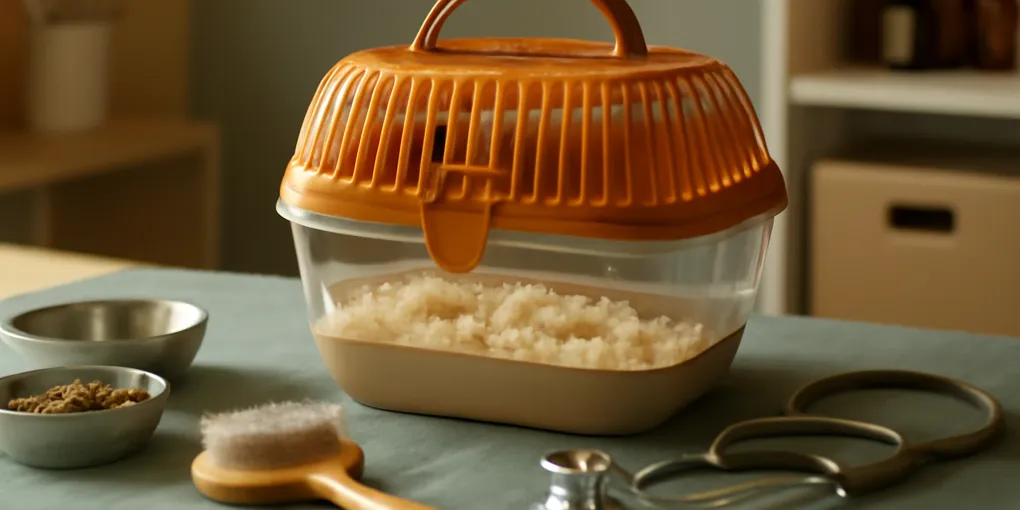
Hamster Travel Carrier Setup for Vet Visits: Bedding, Ventilation, and Stress Control
ProtocolQuick picks
Hard-sided ventilated small-pet carrier
★ Top pick Best vet-trip base- Easy to clean
- Better chew resistance than fabric
- Vet can inspect through clear sides
- Latch and ventilation holes still need checking
- Too much empty space can make sliding worse
Unscented paper small-pet bedding
Best carrier bedding- Soft footing
- Holds familiar scent
- Disposable after the trip
- Dust levels vary by brand
- Needs enough depth to prevent sliding
A hamster vet trip should look boring: a small secure carrier, familiar bedding, enough ventilation, no loose heavy objects, and a route that keeps temperature stable. The goal is not to recreate the whole cage. It is to prevent escape, sliding, overheating, chilling, and panic during a short necessary trip.
This setup is for routine veterinary visits and short local transport. If your hamster is collapsed, bleeding, gasping, cold to the touch, or unable to walk, call the veterinary clinic first so they can tell you how to transport safely and whether emergency care is needed.
Quick picks for a short vet trip
- Carrier: Use a hard-sided ventilated small-pet carrier with a secure latch. Search Amazon for hard-sided hamster carriers.
- Bedding: Add a thick layer of unscented paper bedding, ideally with a small amount of clean familiar bedding from the enclosure. Search Amazon for unscented paper bedding.
- Moisture: For a short trip, a tiny cucumber slice or other vet-approved watery food is usually safer than a leaky bottle.
- Cover: Bring a light towel to shade the carrier, but do not block airflow.
Do not add a wheel, ceramic bowl, glass bottle, tall platform, sand bath, or heavy hide that can slide during braking.
Step 1: Choose a carrier the hamster cannot chew through quickly
A fabric pouch or cardboard box is not a reliable carrier for a hamster. Teeth, stress, and a waiting room delay can turn a temporary container into an escape. A small plastic carrier with a locking lid is usually the safer base. Before the appointment, inspect every ventilation slot, hinge, and corner. Dwarf hamsters can fit through gaps that look harmless.
The Merck Veterinary Manual notes that hamsters are small prey animals that can be stressed by handling and environmental change, so calm containment matters during examination and transport (Merck hamster overview). A secure carrier keeps the trip from adding an avoidable escape emergency.
Step 2: Add enough bedding for grip and scent
Line the carrier with two to three inches of soft unscented paper bedding. The bedding cushions turns, gives the hamster something to burrow into, and helps keep the carrier from feeling like a bare plastic box. Add a handful of clean bedding from the main enclosure so the carrier smells familiar.
Avoid cedar or pine shavings, scented bedding, dusty litter, and fluffy nesting fiber. If your hamster is visiting the vet for respiratory signs, skin irritation, or eye discharge, keep bedding simple so the clinic can see droppings, urine, and discharge clearly.
Step 3: Keep the inside low and uncluttered
A hamster may feel better with a hide, but the safest hide for a car ride is light, low, and soft enough that it will not injure the animal if it shifts. A small cardboard half-tube or paper hide is safer than a ceramic house. If the veterinarian needs to observe breathing, gait, or skin, they may ask you to skip the hide or remove it on arrival.
The carrier should be snug enough that the hamster cannot build up speed across a large empty floor. It should not be so tiny that the hamster has no bedding area or airflow.
Step 4: Manage food and water for the appointment length
For a routine local visit, pack a small portion of the hamster’s normal dry food and one small moisture source, such as cucumber, if your hamster already tolerates it. A water bottle often leaks in a carrier and can soak bedding. A water dish spills even faster.
For longer travel, surgery drop-offs, diabetic hamsters, or animals with special diets, ask the clinic exactly what to include. Do not withhold food before a routine visit unless the veterinarian gives species-specific instructions.
Step 5: Control temperature before loading
Small carriers heat and chill quickly. Warm or cool the car before moving the hamster. Keep the carrier out of direct sun, away from heater blasts, and away from air-conditioning vents. Never leave the carrier unattended in a parked car.
Use the towel as a shade or visual barrier, not as a seal. If condensation builds up or the carrier feels stuffy, airflow is not adequate. The American Veterinary Medical Association’s pet travel guidance emphasizes planning for temperature and secure restraint during car transport (AVMA traveling with pets).
Step 6: Place the carrier where it cannot tip
Put the carrier on the floor behind a front seat or secure it on a seat so it cannot slide. Do not let a child hold it loosely. Do not place it on a lap near an airbag. Keep the trip quiet: no loud music, no opening the lid in the car, and no passing the carrier around.
If the hamster escapes in a vehicle, pull over safely before trying to catch it. Preventing that scenario is the reason for checking the latch twice before leaving home.
What to bring into the clinic
Bring a written note with the hamster’s age, diet, bedding brand, cage size, wheel size, symptoms, medication history, and when eating or droppings changed. Bring photos of the enclosure if the visit is about chewing, skin, respiratory signs, or weight loss. This helps the vet judge husbandry without making the hamster spend more time exposed in the room.
For new hamster owners, our hamster wheel cleaning protocol covers a separate daily-contact item that can affect odor, footing, and skin irritation.
Hamster carrier FAQ
How early should I put my hamster in the carrier?
Load as close to departure as practical, after the carrier is fully prepared. For a nervous hamster, place a treat inside and let it walk in if time allows.
Can two hamsters travel in one carrier?
Usually no. Hamsters are commonly housed alone, and stress can trigger fighting. Transport each hamster separately unless your veterinarian tells you otherwise for a specific bonded species and situation.
Should I clean the carrier after every trip?
Yes. Discard bedding, wash and dry the carrier, and inspect chew marks or latch damage before storing it for the next visit.
Frequently Asked Questions
- Usually no. Large cages are hard to secure, heavy objects can shift, and wire bars or platforms can injure a hamster during braking. Use a small secure carrier.
- For short vet trips, use a small watery food piece and familiar dry food rather than a bottle that can leak. Ask your vet for longer trips.
- Warm or cool the car before loading, keep the carrier out of direct sun and drafts, and avoid leaving the hamster in a parked car.