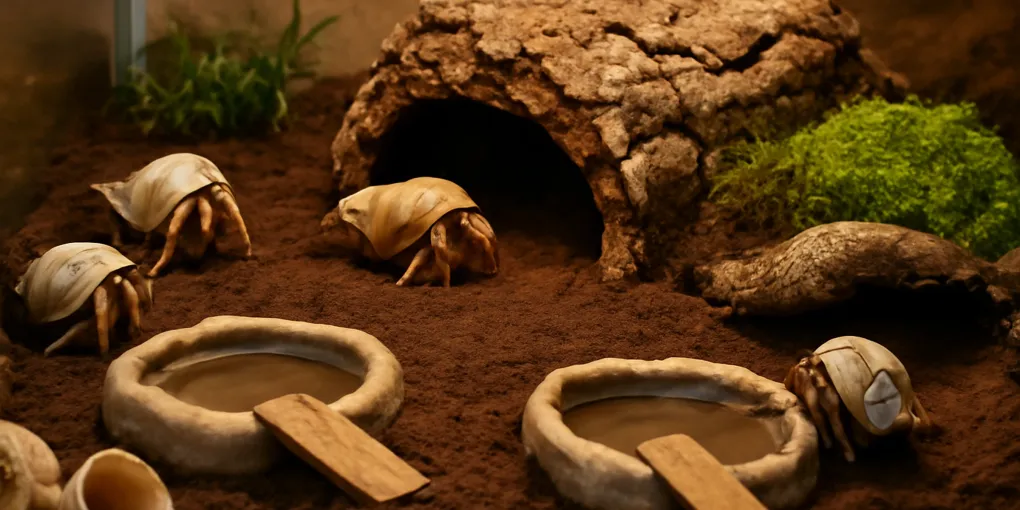
Hermit Crab Humidity Setup Protocol: Gauges, Substrate, and Safer Shell Changes
ProtocolQuick picks
| Product | Key Specs |
|---|---|
| See price on Amazon |
|
| See price on Amazon |
|
| See price on Amazon |
|
| See price on Amazon |
|
Product availability, certifications, and retailer details can change; check the current Amazon page before buying.
Land hermit crabs are often sold like simple desk pets, but their habitat needs are specific. They breathe with modified gills, dig to molt, choose shells as they grow, and need access to both fresh and saltwater. A dry, shallow, brightly decorated starter kit is not a complete home.
This protocol focuses on humidity because it is the failure point that quietly affects everything else: breathing, substrate, molting, and shell changes. It does not replace an exotic-pet veterinarian, and it does not cover every species variation. It gives a safer home setup for common land hermit crab care. As with other species-specific tools, the right purchase depends on the animal’s body and behavior; a brush that is sensible for rabbit molting has a completely different safety job than a hermit crab shell assortment or humidity gauge (rabbit grooming brushes).
The setup that matters first
A workable hermit crab habitat needs:
- A tank that holds humidity better than an open wire cage.
- A digital hygrometer and thermometer inside the enclosure.
- Deep, damp substrate that can hold tunnels.
- Freshwater and marine-grade saltwater pools with exits.
- Multiple natural shells in appropriate sizes.
- Hides, climbing items, and a lid that reduces drying.
Search Amazon for digital hygrometer thermometers before guessing at humidity. Search Amazon for natural hermit crab shells if the tank has only one spare shell or painted novelty shells.
Why humidity is not optional
Land hermit crabs are not dry-desert animals. They need humid air to support gill function. The Smithsonian National Zoo describes land hermit crabs as tropical animals that live near shorelines and use modified gills, which is why humid conditions are important (Smithsonian National Zoo: land hermit crab). The University of Michigan Animal Diversity Web describes the Caribbean hermit crab’s tropical coastal range and shell use, which is why captive care has to support humid air, digging, and shell choice rather than a dry desk display (Animal Diversity Web: Caribbean hermit crab).
Room humidity is not tank humidity. Air conditioning, winter heat, mesh lids, shallow substrate, and dry sand can pull moisture out of an enclosure quickly. A gauge inside the tank is the only practical way to know what the crab experiences.
Step 1: use a tank that can hold humidity
A glass aquarium with a fitted lid is easier to manage than an open cage. Ventilation still matters, but too much open mesh can make the enclosure chronically dry. If humidity constantly falls, first check lid coverage, substrate moisture, and pool size before adding gadgets.
Avoid placing the tank in direct sun, under an air vent, or beside a drafty window. Fast temperature swings can make humidity readings unstable and encourage condensation in the wrong places.
Step 2: measure temperature and humidity where the crabs live
Place a digital hygrometer/thermometer inside the enclosure above the substrate but away from direct soaking. A wall-mounted gauge near the middle zone is usually more useful than one sitting on a wet pool rim. If readings seem impossible, compare with a second gauge.
Do not chase the number every hour with misting. Repeated misting can flood the surface while the deeper substrate remains wrong. The goal is a stable habitat, not a constantly sprayed one.
Step 3: build deep, damp substrate
Hermit crabs need to dig, especially for molting. A shallow layer prevents normal burrowing and can force dangerous surface molts. Many experienced care groups use a sand and coco-fiber style base damp enough to hold shape but not wet enough to drip. The exact depth should allow the largest crab to fully bury with room below; small tanks often fail simply because they cannot hold enough substrate.
Avoid calcium sand as the main substrate. It can clump, dry oddly, and does not create the deep tunnel structure most setups need. If you are replacing a poor substrate, do it carefully and avoid disturbing any crab that may already be buried.
Step 4: provide both water types with exits
Hermit crabs need access to dechlorinated freshwater and marine-grade saltwater. Use products intended for marine aquariums, not table salt. Dishes should be deep enough for appropriate access but safe to exit. Pebbles, mesh ramps, or textured ramps can prevent drowning, especially for smaller crabs.
Clean water dishes often. Food, substrate, and waste can foul shallow pools quickly. If the dishes constantly dry out, the habitat is probably losing humidity too fast.
Step 5: offer shell choices before a crisis
A crab without good shell options may fight, stress, or stay in a poor-fitting shell. Provide several natural, clean shells per crab in nearby sizes and compatible opening shapes. Do not wait until the current shell looks obviously too small. Shell shopping should happen before the crab is desperate.
Painted shells are a poor default because paint can chip and hide the shell surface. Natural shells let you inspect cracks, rough interiors, and opening size more easily.
Step 6: avoid disturbing buried crabs
A buried crab may be molting. Digging it up can be fatal. If a crab disappears into the substrate, keep the habitat stable: humidity, temperature, fresh food, water, and quiet. Do not rearrange the tank deeply unless there is an emergency such as flooding, collapse, or foul odor that suggests a serious problem.
When a product is worth buying
Buy measurement and habitat basics before decorations. A gauge, enough substrate, suitable water dishes, and shells are more important than a colorful hut. Decorations are useful only if they are easy to clean, cannot trap a crab, and do not crowd the digging area.
If you want one upgrade after the basics, choose a second hygrometer/thermometer or better shell assortment. Bad readings and poor shell access are common hidden problems.
Hermit crab humidity FAQ
Can I fix low humidity by misting more?
Sometimes misting helps briefly, but chronic low humidity usually means the tank leaks moisture, the substrate is too dry, pools are too small, or the room conditions are pulling humidity out. Fix the habitat structure first.
How deep should hermit crab substrate be?
It should be deep enough for the largest crab to bury completely and molt safely. Many small retail kits cannot hold enough substrate. If the enclosure looks like a thin tray of sand, it is probably too shallow.
Do hermit crabs need friends?
Land hermit crabs are social, but adding crabs to a poor habitat increases competition for shells, water, and molting space. Stabilize the enclosure before adding animals.
Bottom line
A safer hermit crab setup starts with stable humidity, deep tunnel-holding substrate, water access, and shell choice. Buy the gauge before the decoration, measure the tank instead of the room, and treat buried crabs as animals that need quiet rather than pets that need to be checked by hand.
Frequently Asked Questions
- Many land hermit crab care references target roughly 70 to 80 percent relative humidity or higher, depending on species and setup. Use a gauge and stable habitat rather than guessing from room humidity.
- Usually no. Many small kits lack deep substrate, accurate gauges, enough shell choices, and proper water access. Build the habitat around humidity, digging, and shell-change needs.
- Natural, unpainted shells are the safer default. Paint can chip, obscure shell quality, and add unnecessary exposure risk.