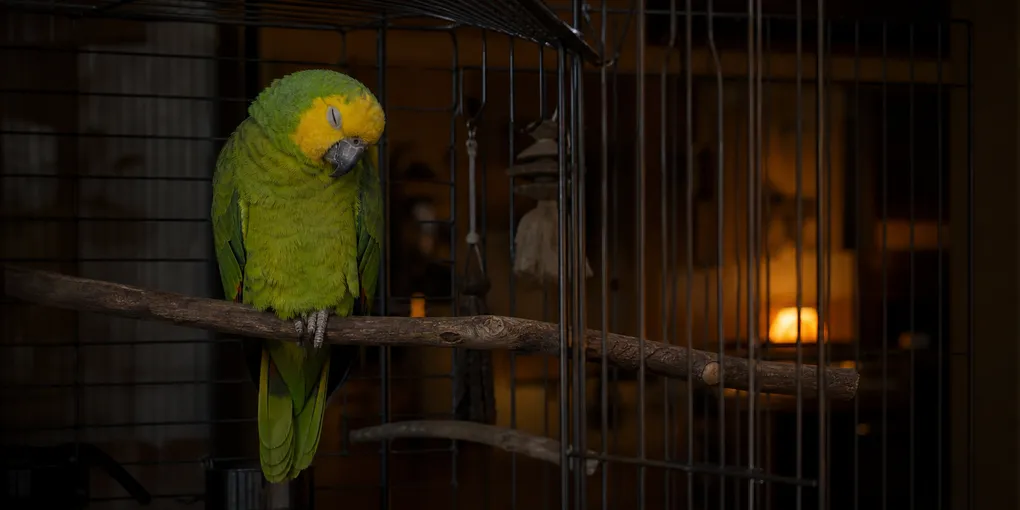
Parrot Sleep Schedule: Build a Dark, Quiet Night Routine
Evidence ExplainerMost companion parrots adapt to a dependable rhythm of about 12 hours of light and 12 hours of darkness. That does not mean every species, age, or household needs the same minute-by-minute schedule. It does mean the bird needs a predictable opportunity for uninterrupted rest, rather than a television, kitchen lights, and conversation that continue until the household goes to bed.
Merck advises uninterrupted sleep as part of environmental care for pet birds, and VCA notes that many healthy pet birds become accustomed to roughly 12 hours of light and 12 hours of dark. Build the routine around the bird’s usual wake time and the home’s actual noise pattern, then keep it stable.
Pick a schedule the household can keep
Start with a 12-hour dark window, such as 8 p.m. to 8 a.m. Put the bedtime and wake time on the family calendar. A weekend exception that moves several hours later can undo the predictability that makes the routine work.
The sleep space should be dark, quiet, and safely ventilated. It should not be beside a TV, gaming setup, kitchen, laundry machine, barking dog, or a doorway with repeated bright light. Avoid drafts and sudden temperature changes. If the normal cage is in a busy room, a second safe sleep cage in a calm room can be more practical than asking the rest of the house to go silent.
Set an alarm for the household, not for the bird. A reminder 30 minutes before bedtime gives everyone time to finish noisy chores and lower lights without rushing the bird. If sunrise, work shifts, or children’s schedules make a 12-hour window unrealistic on some days, choose the most consistent dark period the household can reliably protect and ask an avian veterinarian for species-specific guidance. A predictable routine is more useful than a perfect schedule that changes every weekend.
Make the last hour boring and consistent
An hour before lights-out, finish active training, loud music, vacuuming, and high-energy play. Refresh water, remove perishable fresh food, and check that the bird is safely positioned on a familiar perch. Dim lights gradually if possible, then use the same short verbal cue each night.
Do not wake a sleeping bird to offer a snack, show a visitor, or clean the cage. A healthy bird may shift, preen briefly, or change feet at night. Repeated falling, frantic wing beating, or screaming is different: turn on enough light to prevent injury, approach quietly, and look for an immediate hazard rather than grabbing the bird.
Decide whether a cover helps
A cover is optional, not a requirement. It can block a late sunset or an unavoidable light leak, but it must leave ample airflow and stay clear of heat sources. Choose a smooth, breathable fabric that cannot be pulled into the cage. Never use a cover to make an already hot, stuffy, or smoky room acceptable.
Some birds become frightened when a cover shifts or when they wake in complete darkness. If the bird has a night fright, keep the response simple: illuminate the room softly, speak quietly, check for a loose toy or predator-like shadow, and allow the bird to settle. Repeated episodes, injuries, or a sudden new fear pattern justify an avian-veterinarian call.
Use the same observation before and after a change. If a cover is introduced, watch the bird settle for several evenings and make sure it is not chewing fabric, climbing into folds, or becoming more alarmed when the room changes. A cover should never be clipped tightly against the cage or used to conceal a room that remains loud, bright, or poorly ventilated.
Separate normal rest from a health change
Birds often hide illness. Call an avian veterinarian promptly for a bird that is newly sleepy during active daytime hours, remains fluffed and inactive, eats less, has changed droppings, breathes with effort, sits on the cage floor, or cannot perch normally. A late night can cause fatigue, but it should not be used to explain away a cluster of changes.
Keep a small routine log for one week after changing bedtime: lights-off time, first household light, any overnight disruption, morning appetite, and daytime behavior. This gives the veterinary team useful context and shows whether the household is truly preserving the dark period.
A practical seven-night reset
On night one, choose the sleep room and remove obvious sources of light and sound. Nights two through four, hold the same bedtime and wake time without adding new toys or a cover. On nights five and six, review whether a predictable sound or light still interrupts the bird. On night seven, keep the routine and assess the daytime pattern rather than changing several variables at once.
The goal is not to force a bird to sleep. It is to provide a secure, quiet interval in which sleep can happen naturally. Consistency, ventilation, and prompt attention to illness signs matter more than a particular cover or bedtime ritual.
If a household shift is unavoidable, move the schedule in small increments and keep the morning wake cue consistent. A sudden late movie, overnight guests, or a new cage location can be noted in the log alongside the next day’s appetite and behavior. That distinction helps prevent a routine disruption from being mistaken for a medical explanation.
Sources
- Merck Veterinary Manual, Skin and Feather Disorders of Pet Birds
- VCA Animal Hospitals, Nursing Care for Sick Pet Birds
Frequently Asked Questions
- Not necessarily. A dark, quiet, well-ventilated room can work. A cover is only useful if it does not reduce ventilation, snag, or create a night fright risk.
- Many birds nap. A new increase in daytime sleeping, reduced appetite, or fluffed posture deserves an avian-veterinarian call because birds often conceal illness.
- Most companion birds do best with a consistent dark period. Discuss a very dim safety light with an avian veterinarian only if the bird has repeated night frights.