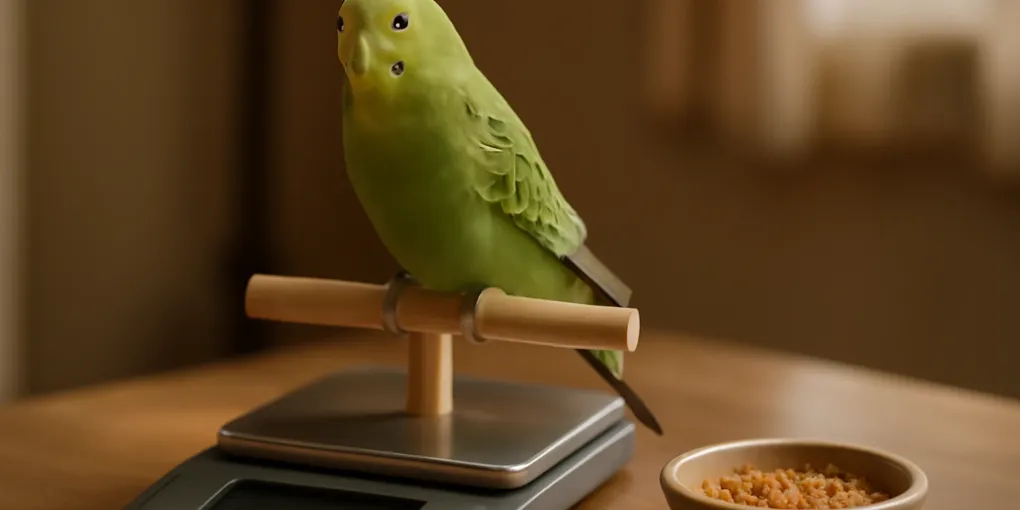
Pet Bird Scale Setup: How to Weigh a Parakeet or Cockatiel Without Drama
ProtocolQuick picks
Digital gram kitchen scale with tare function
★ Top pick Best basic scale- Note: Choose a stable scale that reads in grams and can tare a perch or small travel box.
Bird perch scale attachment or T-stand perch
Best calmer stance- Note: A familiar perch can be less stressful than asking a bird to stand on a flat metal platform.
Small clear travel carrier for emergency weighing
Best backup method- Note: Useful when a sick or untamed bird cannot safely perch on a scale.
Direct answer
A pet bird scale setup is a small gram scale, a stable perch or carrier, a calm training routine, and a written weight log. It is useful because small birds can hide illness until weight has already changed. The scale does not diagnose disease, but it can tell you when a bird’s pattern is drifting enough to call an avian veterinarian.
The AVMA’s pet bird guidance notes that birds need careful housing, diet, and veterinary planning (AVMA pet birds). Merck’s pet bird overview also emphasizes that nutrition, environment, and observation are central to keeping birds healthy (Merck Veterinary Manual pet birds). Home weighing supports that observation when it is calm and consistent.
Quick picks for a weighing station
- Start with a Search Amazon for digital gram scales with tare that reads small changes clearly and has a platform wide enough for a perch base.
- Add a Search Amazon for bird scale perch attachments if your parakeet, cockatiel, conure, or small parrot is more comfortable stepping onto a perch than a flat tray.
- Keep a Search Amazon for small bird travel carriers as a backup when a bird is untamed, weak, or not safe to handle loosely.
Step 1: pick a scale that reads grams
Bird weights should be recorded in grams, not pounds and ounces. A kitchen scale is fine if it is stable, quick to settle, and has a tare button. For very small birds, one-gram resolution is the minimum practical target. If the number jumps constantly, the perch may be wobbling or the scale may be too insensitive.
The platform should sit on a firm table away from drafts, dogs, cats, ceiling fans, and open doors. Weighing should not happen on the edge of a counter where a startled bird can fall or launch into a hazard.
Step 2: choose perch or carrier method
Tame birds often do best with a perch. Attach the perch securely, press tare so the display reads zero, then cue the bird to step up. The perch should be wide enough for normal footing and low enough that a hop down is not dangerous. Avoid slippery dowels and unstable homemade towers.
Untamed, newly adopted, or sick birds may need the carrier method. Place a small travel carrier or ventilated box on the scale, tare it, then put the bird inside briefly. This is less precise if the bird moves a lot, but safer than chasing a frightened bird around the room.
Step 3: train before you need the number
Leave the scale visible near the normal training area. Reward the bird for looking at it, stepping near it, touching the perch, and finally standing long enough for a reading. Keep sessions short. A seed treat or tiny favorite food can help, but do not turn weigh-in into a full meal that changes the number.
For flock birds, train one bird at a time. Another bird landing on the scale or shoulder can make the reading useless and turn the routine into a scramble.
Step 4: weigh at the same time and condition
The best weight log compares like with like. Weigh before breakfast or at the same time of day, using the same perch or carrier. A bird can weigh more after drinking, bathing, or eating. Egg laying, crop fullness, and wet feathers also affect readings.
Write down the date, time, weight, and any context: molt, diet change, medication, new cage, travel, egg behavior, or appetite change. A single odd number may be a scale problem. A trend across several readings matters more.
Step 5: know when to call the vet
Call an avian veterinarian if weight drops suddenly, keeps trending down, or changes with fluffed posture, sleeping more, tail bobbing, breathing changes, reduced droppings, appetite changes, vomiting, or sitting low in the cage. Small birds have little reserve. Waiting for obvious illness can be dangerous.
For birds on a diet transition, medical plan, or reproductive monitoring, use the veterinarian’s target range and frequency. Do not cut food based only on a home scale without professional guidance.
Cleaning and safety details
Wipe the scale platform or perch after droppings. Do not soak electronics. If the perch is removable, wash and dry it fully before the next use. Keep millet dust and seed hulls out of buttons so tare still works.
Never force a bird to stand on the scale by grabbing tightly unless medical handling is necessary and you know how to restrain safely. Stress can injure trust and, in fragile birds, can become a health risk. If home weighing is impossible, ask your avian clinic to show a safer method.
Bird scale FAQ
Can I use a bathroom scale for a bird cage?
No. Bathroom scales are not precise enough for parakeets, cockatiels, finches, or small parrots. Use a gram scale and weigh the bird, perch, or carrier method directly.
What if my bird keeps flying off?
Go back to training steps. Reward looking at the scale, then touching the perch, then one foot, then two feet. Use the carrier method if the bird is sick or the room cannot be made safe.
Should I weigh baby birds at home?
Only with breeder or avian veterinarian guidance. Young birds can change quickly and need species-specific feeding and health monitoring.
Internal next step
A weight log is most useful when paired with daily observation. For feeding enrichment that does not hide appetite changes, compare this with the parrot foraging toy rotation protocol and best parakeet foraging toys.
Sources
- AVMA: Pet birds
- Merck Veterinary Manual: Pet birds overview
Frequently Asked Questions
- Many owners use weekly weights for stable adult birds, but sick, young, breeding, or medically monitored birds need an avian veterinarian's schedule.
- For small birds, yes. A few grams can be meaningful, especially if the trend continues or behavior changes.