Aquarium Filter Media Cycling Protocol: How to Protect the Biofilter
ProtocolQuick picks
Aquarium sponge filter or pre-filter sponge
★ Top pick Best biofilter backup- Large bacterial surface
- Easy to seed in an established tank
- Can run during emergencies
- Needs airflow or filter intake fit
- Can clog if neglected
Ceramic biomedia rings
Best long-term canister or HOB insert- Durable
- Reusable after tank-water rinse
- Good for permanent filter baskets
- Not instant-cycle magic
- Loose media needs a bag in some filters
Most filter crashes are not mysterious. A caregiver changes the cartridge, rinses everything under hot tap water, adds fish the same week, and then wonders why ammonia appears. The filter was moving water, but the living biofilter was partly discarded.
Aquarium filter media should be treated as habitat for nitrifying bacteria, not just as a dirty insert. The safer routine is to separate mechanical debris removal from biological media preservation. You can still keep the filter clean. You just do it in a way that keeps enough wet, oxygenated surface area alive for the fish load.
Quick comparison: safer filter media choices
For most small and medium home tanks, use three layers of protection:
- Reusable sponge or pre-filter sponge: Keep one permanent sponge in the filter path or on the intake. Search Amazon for aquarium sponge filter media.
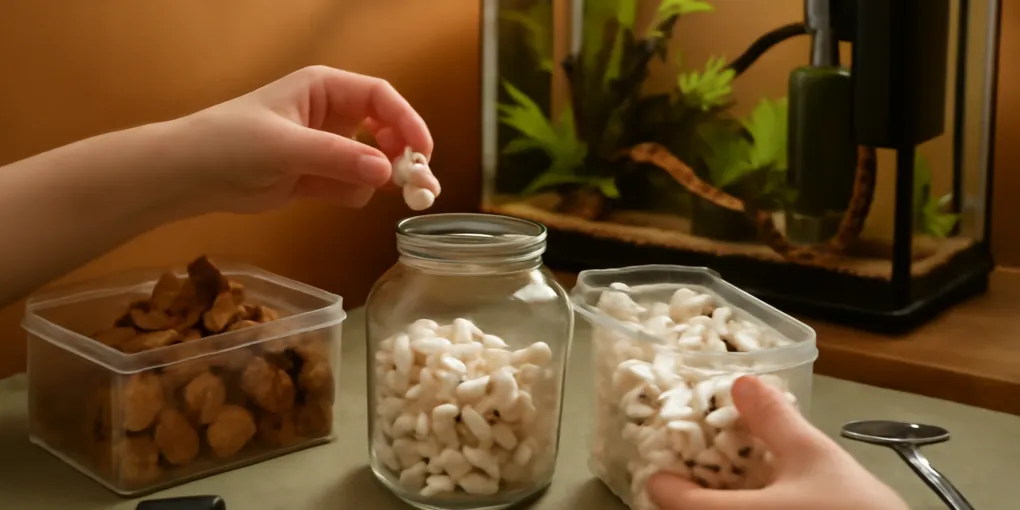
- Ceramic biomedia: Use ceramic rings or porous media in a bag or basket where water flows through it. Search Amazon for ceramic aquarium biomedia.
- Replaceable floss only for polish: Treat fine pads as mechanical polish, not as the only biological filter.
If you are setting up a hospital or quarantine tank, pair this article with our aquarium quarantine tank setup protocol so the temporary tank has seeded media before the fish arrives.
The rule: never remove every bacterial surface on the same day
Nitrifying bacteria need oxygenated surfaces. They are not all floating in the water column. That is why a complete cartridge swap can cause trouble in a stocked tank, especially when the old cartridge was the main surface for bacteria.
The University of Florida IFAS ammonia guidance explains why ammonia can become toxic in aquaculture systems and why pH, temperature, and biological conversion matter (UF IFAS ammonia in aquatic systems). In a home aquarium, the practical lesson is simple: protect the bacteria that convert ammonia before fish are exposed to it.
Protocol: routine media maintenance
Weekly: inspect flow, not just color
A brown sponge is not automatically bad. Poor flow is the problem. If the filter output slows, swish the sponge or biomedia gently in a bucket of removed tank water. Do not scrub it white. The goal is to clear sludge while leaving the bacterial film.
Every water change: remove debris separately
Use a gravel vacuum and mechanical pad to remove debris. If the pad is disposable, replace only that pad while leaving the permanent sponge or ceramic media in place. If your filter uses a cartridge with carbon, cut away the floss only after a permanent biological layer has been running for several weeks.
Monthly: check backup media
Keep one small sponge filter, intake sponge, or biomedia bag seeded in the established tank. If a heater fails, a fish needs isolation, or a filter motor dies, this backup gives you living media instead of starting from zero.
After medication or contamination
Medication, aerosol exposure, soap, or a dead fish can change the plan. Follow the medication label and veterinarian or aquatic specialist advice. If carbon must be used, place it after permanent biological media so it can be removed later without throwing away the biofilter.
How to change a cartridge without crashing the tank
- Add a sponge or ceramic media bag behind or beside the existing cartridge.
- Run both old and new biological media together for several weeks.
- During that period, feed lightly and test ammonia and nitrite.
- Remove only the disposable cartridge once the permanent media is established.
- Keep the permanent media wet and oxygenated during future cleanings.
Do not believe packaging that implies a fresh cartridge is automatically healthier than established media. The tank needs clean water, but it also needs stable biology.
What to do after an ammonia reading
First, confirm the test with a liquid kit or fresh strip. Then reduce feeding, do a partial water change with dechlorinated water, and protect oxygenation. Do not add more fish. Do not replace all media in a panic.
The RSPCA fish environment guidance emphasizes stable water quality and appropriate filtration for fish welfare (RSPCA fish environment advice). In practice, that means the emergency response should dilute ammonia and preserve the biofilter at the same time.
Common mistakes
- replacing every cartridge because it looks dirty
- rinsing sponge or biomedia under chlorinated tap water
- letting media dry on the counter during a cleaning session
- adding bottled bacteria but no surface area or test plan
- stocking the tank before ammonia and nitrite are consistently controlled
- using carbon cartridges as the only permanent filter layer
Aquarium filter media FAQ
Is ceramic media better than sponge?
Neither is universally better. Sponge is cheap, easy to seed, and useful as a backup. Ceramic media is durable and fits baskets well. Many tanks benefit from both.
Can bottled bacteria replace seeded media?
Bottled bacteria may help in some situations, but it should not be treated as permission to skip testing. A seeded sponge or established biomedia gives you a physical bacterial surface you can move and protect.
How wet does media need to stay during cleaning?
Keep biological media submerged or at least damp in dechlorinated tank water. Long drying periods can reduce the bacteria population and make the tank behave like a newer system.
Bottom line
Build the filter so one permanent sponge or biomedia layer survives every cleaning. Replace dirty polish pads if needed, but keep the living biofilter wet, oxygenated, and in the water path.
For planted tanks, pair stable filtration with an appropriate photoperiod using our smart aquarium light guide.
Frequently Asked Questions
- Avoid replacing all biological media at once unless it is contaminated by a known toxin. Change mechanical floss separately and keep established sponge or ceramic media wet in dechlorinated tank water.
- Rinse reusable biological media in removed tank water or dechlorinated water. Chlorinated tap water and aggressive scrubbing can reduce the bacteria you are trying to preserve.
- Keep a sponge or small bag of biomedia in an established filter for several weeks before relying on it for a quarantine tank or emergency holding tub.