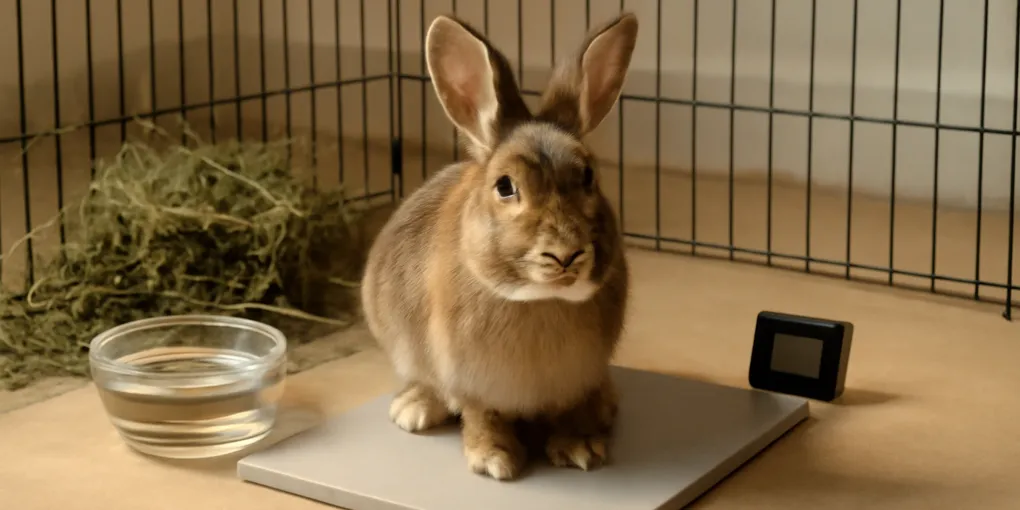
Do Rabbit Cooling Tiles Help? Heat Safety Evidence and Setup Limits
Evidence ExplainerQuick picks
Unglazed ceramic or marble rabbit cooling tile
★ Top pick Best passive cool spot- Note: Choose a heavy smooth tile that cannot be chewed into pieces and that stays dry, shaded, and optional.
Pet-safe digital room thermometer
Best heat-warning tool- Note: Measure the actual rabbit area, not just the thermostat across the house.
Clip-on fan for room air movement
Best air-movement support- Note: Aim for room airflow, not a strong direct blast at a rabbit that cannot move away.
Direct answer
Rabbit cooling tiles help as a passive comfort option: they give a rabbit a cooler surface to choose when the room is warm. They do not make a hot room safe. If the air temperature, humidity, sunlight, or ventilation is unsafe, a tile becomes a small patch of relief in a dangerous environment. For emergency supplies beyond heat control, pair this with a rabbit emergency kit setup so transport and vet-contact basics are ready before a crisis.
Use a Search Amazon for rabbit-safe cooling tiles as one part of a summer setup, alongside a Search Amazon for pet habitat thermometers, shade, fresh water, and controlled airflow from a Search Amazon for quiet clip-on fans when needed. The tile should be optional, dry, smooth, and large enough for the rabbit to rest beside or partly on.
Quick picks for a safer rabbit cool-down setup
| Buy/search | Best role in the pen | Safety caveat |
|---|---|---|
| Search Amazon for rabbit-safe cooling tiles | Passive cool surface in a shaded indoor area | Keep it optional, dry, smooth, and paired with softer flooring for sore hocks |
| Search Amazon for pet habitat thermometers | Checking the actual rabbit-height temperature | Put it near the enclosure, not across the room by the house thermostat |
| Search Amazon for quiet clip-on fans | Moving warm room air without moving the rabbit outdoors | Keep cords outside chewing range and let the rabbit move away from airflow |
Why rabbits are heat-sensitive
Rabbits handle heat poorly compared with many people expect. They do not pant like dogs to cool efficiently, and thick fur can trap warmth. Heat risk rises when rabbits are in direct sun, hutches with poor airflow, warm apartments, garages, sheds, enclosed patios, or rooms where the thermostat does not reflect the animal’s actual corner.
RSPCA rabbit environment guidance emphasizes protection from weather extremes, access to shade, and housing that lets rabbits move away from heat or cold (RSPCA rabbit environment). PDSA’s rabbit heatstroke guidance also treats overheating as a serious emergency risk and lists warning signs owners should act on quickly (PDSA heatstroke in rabbits). The practical takeaway is simple: measure the rabbit space and remove heat sources before relying on accessories.
What a cooling tile actually does
A tile feels cool because stone or ceramic conducts heat away from the body faster than fleece, bedding, or plastic. A rabbit that lies against it can dump some heat into the surface. This is useful when the surrounding room is only mildly warm and the rabbit can choose among surfaces.
The effect is limited. The tile warms up as it absorbs heat. If the room is hot, sunny, or humid, the tile will not stay cool for long. If the tile is the only comfortable surface, the rabbit has no real choice. The goal is to create a temperature gradient: hay and bedding in one area, a cool tile in shade, water nearby, and enough room to move.
Safer tile setup
Choose a heavy, smooth ceramic, porcelain, or stone tile with no sharp corners, loose glaze chips, adhesive backing, rubber feet, or chewable coatings. Place it on a flat surface where it will not rock. If the rabbit has sore hocks, do not make the entire resting area hard; keep softer flooring available.
Do not freeze the tile unless your veterinarian has advised a specific emergency plan. Freezing can create condensation, slippery surfaces, and extreme cold spots against skin. A chilled object wrapped in a towel may be useful in some supervised situations, but it should not create damp bedding or force contact. For routine comfort, room-temperature stone in shade is safer.
Keep the tile clean. Urine or spilled water can make the surface slick and unhygienic. If the rabbit chews edges or refuses to approach it, remove it and try a different heat-control strategy.
The heat-control hierarchy
Start with the room, not the product. Move rabbits out of direct sun. Close blinds before the room heats up. Use air conditioning when available. Improve airflow without blasting a trapped rabbit. Provide fresh water in a stable bowl and, if your rabbit uses one well, a bottle as backup.
A thermometer belongs at rabbit height, near the enclosure, not on a distant wall. Warm air pockets, sun patches, and poorly ventilated corners can differ from the household thermostat. Check the reading at the hottest part of the day.
For outdoor rabbits, heat risk is higher and harder to control. Shade moves, hutches trap warmth, and predators or weather may limit ventilation. A tile in an outdoor hutch is not enough if the hutch itself is hot. Move rabbits to a cooler protected area when conditions exceed what the enclosure can safely manage.
When to use a fan
A fan can help air movement, but rabbits must be able to move away from it. Aim the fan to circulate room air rather than blasting the animal’s face. Keep cords outside chewing range. Fans do not cool air the way air conditioning does; they can make evaporation and airflow more comfortable, but they will not fix a dangerously hot room.
If you use frozen water bottles near the pen, wrap them so condensation does not soak bedding and so the rabbit cannot chew plastic. Place them beside the rabbit’s route, not blocking the litter box, food, or exit. Some rabbits like leaning near a cool bottle; others ignore it. Choice matters.
Heat-stress warning signs
A rabbit that is too hot may breathe rapidly, stretch out, become weak, drool, have red or very warm ears, refuse food, seem dull, stumble, or collapse. This is not a wait-and-see moment. Contact a veterinarian or emergency clinic. Move the rabbit to a cooler area while avoiding sudden ice-water shock.
Rabbit Welfare Association guidance for warm weather emphasizes shade, cool areas, and acting before rabbits overheat (RWAF keeping rabbits cool). For rabbits, the safe household strategy is prevention: keep the environment from reaching that point.
How to judge whether your setup works
Watch behavior. A rabbit using the tile occasionally, eating hay, drinking normally, grooming, and moving between areas is choosing comfort. A rabbit pressed flat against the tile all afternoon, refusing food, or breathing fast is not simply enjoying the accessory; the setup may be too warm.
Check the litter box and water. Reduced droppings, reduced appetite, and changed water intake can become urgent quickly in rabbits. Heat can overlap with dental pain, gut slowdown, or other illness, so do not explain every summer behavior change as temperature alone.
Rabbit cooling tile FAQ
Is marble better than ceramic?
Either can work if it is smooth, heavy, safe at the edges, and easy to clean. Fit and placement matter more than the material name.
Can I use a kitchen tile sample?
Yes, if it has no adhesive backing, sharp edges, sealant odor, loose chips, or coating the rabbit can chew. Wash and dry it before use.
What should I buy today?
Buy a simple smooth cooling tile and a thermometer first. If the thermometer shows the room gets too warm, spend money on environmental cooling, shade, or relocation before adding more rabbit accessories.
Frequently Asked Questions
- They can give a rabbit an optional cool surface, but they do not replace shade, ventilation, air conditioning, fresh water, or emergency vet care for heat stress.
- Chilling a tile can make it too cold or wet with condensation. A room-temperature ceramic or stone tile in a shaded space is usually safer and more comfortable.
- Fast breathing, weakness, drooling, red ears, stretching out, refusal to eat, collapse, or unresponsiveness are urgent warning signs. Contact a veterinarian immediately.